- Home
- ISLAMIC RESISTANCE
- SECRETARY-GENERAL
-
Full Speeches
- Speeches-2000
- Speeches-2006
- Speeches-2007
- Speeches-2008
- Speeches-2009
- Speeches-2010
- Speeches-2011
- Speeches-2012
- Speeches-2013
- Speeches-2014
- Speeches-2015
- Speeches-2016
- Speeches-2017
- Speeches-2018
- Speeches-2019
- Speeches-2020
- Speeches-2021
- Speeches-2022
- Speeches-2023
- Speeches-2024
- Speeches-2025
- Speeches-2026
- Speech-Reports
- SG
-
Full Speeches
- Voices
- Ten Day Dawn
- The Biggest Crime
- Martyr Leaders

Yemen Peace Negotiations Back on Track

Local Editor
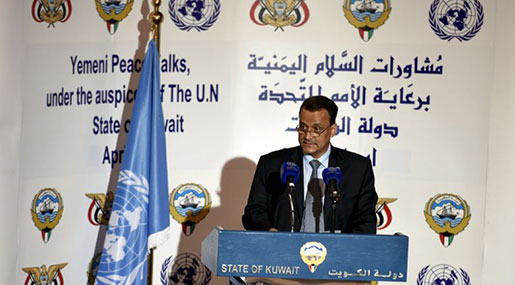
Yemen's warring factions agreed on an agenda Tuesday for UN-backed peace negotiations, delegates said, following heavy pressure from world powers.
Meanwhile, in the southern town of Zinjibar, a suspected US drone strike killed three prominent al-Qaeda leaders overnight Monday, according to Yemeni security and tribal officials.
The talks to end fighting between Ansarullah and supporters of Saudi-backed President Abed Rabbou Mansour Hadi were launched last week but were suspended Sunday amid bickering about flights over Yemen by the Arab-led coalition.
The Ansarullah argued that the flights constitute a violation of the truce that began on April 10 to facilitate the talks.
The stability of Yemen, where al-Qaeda and Daesh [Arabic acronym for Takfiri "ISIS" / "ISIL"] are vying for influence, is of international concern as the country neighbors Saudi Arabia, the world's top oil exporter, is also near key shipping lanes.
Differences over the agenda had made it difficult for the two sides to start real negotiations to end the 13-month war that had killed more than 6,200 people, wounded more than 35,000 and displaced more than 2.5 million people.
The two sides had agreed last week to a five-point agenda outlined by the UN special envoy to Yemen, Ismail Ould Cheikh Ahmed.
Delegates said the two sides had agreed Tuesday to work in two parallel committees. "The talks will start tomorrow [Wednesday] to discuss this agenda," one delegate said.
Kuwait's Emir Sheikh Sabah al-Ahmad al-Sabah, whose country is hosting the talks, had personally waded into the dispute, helping to smooth differences over the truce and over the agenda, delegates said.
Al-Qaeda in the Arabian Peninsula and Daesh had exploited the crisis to expand their control in Yemen and to recruit new followers.
Hadi supporters, backed by the Arab-led coalition, had attacked the AQAP stronghold in southern Yemen over the past two days, driving them from the Hadramawt provincial capital and from key Arabian Sea ports.
And Yemeni security and tribal officials said Tuesday that a suspected US drone strike killed three prominent al-Qaeda leaders overnight in the southern town of Zinjibar, adding that one of those killed in the strike was in charge of the group's finances in Yemen.
Delegates said Tuesday's talks followed strong pressure from the five permanent members of the UN Security Council. "The diplomats were quite tough and used harsh language, telling them that peace in Yemen was important for regional security and that no one would be allowed to leave Kuwait without an agreement," one source told Reuters.
Source: News Agencies, Edited by website team
Comments
- Related News