US, «Israel» Narrow Differences for New Talks on Aid
Local Editor
The US and "Israel" have narrowed their differences over what could be decisive negotiations this week to seal a multibillion-dollar military aid package for Washington's top Middle East ally, officials said on Monday.
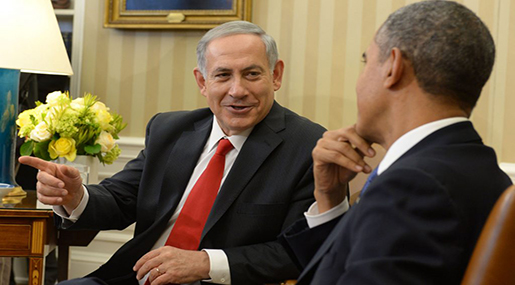
Raising hopes for removal of a key sticking point, the "Israeli" apartheid regime signaled it may accept the Obama administration's demand that US military funds, until now spent partly on "Israeli" arms, will eventually be spent entirely on US-made weapons, according to congressional sources.
It would mark a major concession by "Israeli" Prime Minister Benjamin Netanyahu after months of tense negotiations over the 10-year aid pact.
But Netanyahu, who has had a fraught relationship with President Barack Obama, had apparently decided it would be best to forge a deal with him rather than hoping for better terms from the next US president, according to officials on both sides. Obama leaves office in January.
Differences on the package had underscored continuing friction over last year's US-led nuclear deal with Iran.
The US and the apartheid entity had also been at odds over the Palestinians as the US State Department last week criticized Tel Aviv for planned illegal settlement expansion on occupied land.
Netanyahu sent its security council's Jacob Nagel to Washington on Monday to lead three days of talks. A person briefed by Netanyahu said the "Israeli" primer expressed hope that Nagel would be able to "finalize" negotiations on a new memorandum of understanding and that it would mean increased funding.
A senior US official reiterated the Obama administration's pledge to sign a new MOU that would "constitute the largest single pledge of military assistance to any country in US history."
The current pact, signed in 2007 and due to expire in 2018, gave the apartheid entity around $30 billion in so-called foreign military financing.
US negotiators are believed to have stuck to a previous offer of $3.5 billion to $3.7 billion annually for "Israel" under the new MOU, substantially less than the $4 billion a year Netanyahu has sought but still a substantial increase.
A key disagreement has been over Washington's insistence on ending a special arrangement that has allowed the apartheid entity to spend 26.3 percent of its US military aid on its own military industries rather than on American products.
"Israeli" officials argue that the provision, which is given to no other country receiving US military assistance, was needed to maintain the entity's "qualitative military edge" against regional threats.
Another sticking point has been Washington's desire to end a provision allowing the "Israeli" apartheid entity to spend around $400 million annually from the package on military fuels.
The congressional source said Nagel was expected to try to work out final details but not actually sign an agreement.
US officials said progress was likely, but were reluctant to predict a breakthrough.
The Obama administration wants a new deal before the president leaves office.
Netanyahu angered the White House in February when he suggested the agreement could wait for the next president.
But officials on both sides believe he prefers to get the deal before Obama leaves office. They see Netanyahu seeking to avoid uncertainties surrounding the policies of the next president, whether Democrat Hillary Clinton or Republican Donald Trump, and wanting to give the "Israeli" entity's military establishment the ability to plan ahead.
Source: News Agencies, Edited by website team
Comments