The ‘Israeli’ Army Is Suffering Heavy Losses on the Front of Quality
Local Editor
An ongoing erosion of the combat ethos among recruits from higher socioeconomic backgrounds is having worrying effects on the army's quality of command.
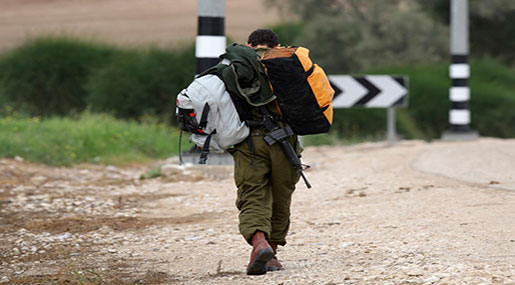
The data was presented to the General Staff almost a year ago, but the conclusion has not previously been made public: The ‘Israel' Occupation Forces is facing a crisis of quality in its field units and, even more troubling, among its junior officer corps, because it is finding it increasingly difficult to recruit combat soldiers from certain parts of the population.
According to an analysis piece for Haaretz by Amos Harel, since the IOF recruits officers mainly from among its rank-and-file combat soldiers, this is liable to undermine the quality of higher-ranking officers down the line.
In recent years, the IOF's behavioral science unit has noticed an ongoing erosion of willingness to join field units among recruits it ranks as high-quality. Many of the recruits who score highest in the army's quality assessments, and especially those from wealthier towns and neighborhoods, prefer to join technology units, whose prestige is growing, rather than combat units.
Although the IOF continues to glorify the ethos of combat, that ethos is now ‘in danger.'
The problem is especially severe in field units that are considered "dull," like the armored, engineering and artillery corps. It is less noticeable in the infantry brigades and nonexistent in elite units.
Nevertheless, the numbers are unequivocal: Recruits with the highest quality rankings, even if they are medically fit for combat service, largely prefer units associated with high-tech, like cyber warfare, drones and aerial ‘security.'
Among the men who score highest in the quality assessments, the number willing to serve in field units has fallen by at least 20 percent in recent years.
Because the Zionist entity still has a draft, the IOF has an enormous advantage in recruiting high-quality soldiers compared to other Western armies, which rely on volunteers, most of whom come from weak socioeconomic backgrounds.
But the fact that the army itself has put greater emphasis on its technological units in recent years, coupled with the fact that serving in these units is often personally beneficial to the draftees, means that more and more outstanding recruits have been going into technology units rather than combat units. This is one of the main challenges with which the new head of the IOF's manpower directorate, Maj. Gen. Moti Almoz, will have to contend.
One result that has already become evident is that the quality of command in some of these units is declining, because the army simply has fewer high-quality recruits from whom to select future officers. Consequently, it must rely more on officers from the periphery, who continue to flock to combat service, whether because they still see it as a path to social mobility or because they are more convinced of its importance. High-quality recruits also come from the religious Zionist community, where combat service remains prestigious.
Nevertheless, both the number and the diversity of high-quality recruits in combat units is shrinking. And that affects the quality of the officer corps.
After the Second Lebanon War of 2006, Maj. Gen. Elazar Stern, then head of the IOF's manpower directorate [and today a Knesset member for Yesh Atid] sparked a public furor when he said that not one of the bereaved families he visited during the war lived in Tel Aviv. As usual, he was exaggerating. But 10 years later, it seems that such a claim wouldn't be all that far from the truth.
Source: Haaretz, Edited by website team
Comments