‘Israeli’ Torture as Described by the Interrogators Themselves
Local Editor
For years, the ‘Israeli' establishment has tried to conceal what happens in interrogation rooms.
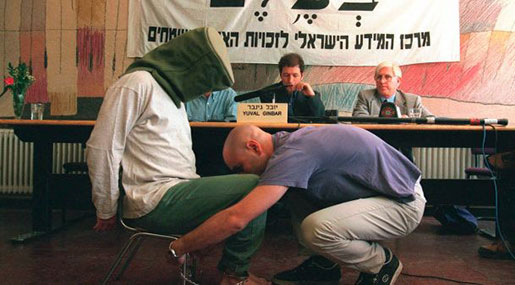
When interrogators use torture - or "special means," to use the establishment's term - the concealment efforts are redoubled. Even when testimony of torture reaches the public, the system does everything it can to leave the interrogators' role in darkness, including signing lenient plea bargains with suspects who were tortured to ensure that the conspiracy of silence remains unbroken.
People who have undergone interrogation have described various methods, from interrogators screaming in their ear, to blows, to being forced into painful positions for long periods. To date, however, all these descriptions have come from the complainants.
But recently, a conversation among interrogators in the presence of several witnesses provided a chance to hear from the interrogators themselves about the kinds of torture used in major cases, who approved it and what information it produced.
N., a former senior interrogator who was authorized to approve "special means," insisted that it's not like Guantanamo; he and his colleagues don't make suspects stand naked in 10-below-zero weather, he added. He said the methods used are carefully chosen to be effective enough to break the suspect's spirit, but without causing permanent damage or leaving any marks.
Those methods made headlines in December 2015 after suspects Amiram Ben-Uliel and a minor, A., said they had been tortured. Their statement sparked nationwide demonstrations. The interrogators admitted to using torture, but denied "harassment, [extreme physical torture] and spitting."
A.'s torture complaint is still under investigation. In it, he said he was put on a chair, blindfolded and given "a slap that made my head fly off." Later, he said, a senior interrogator forced him into a "half-reclining" position, with his back hanging off the edge of the chair and the investigator pinning his legs in place.
"At some point, I couldn't hold it anymore," he said. "My stomach muscles hurt. I went down the rest of the way, like a bow, and everything started to hurt." While he was lying there, the interrogator also punched him - "I think in the thigh."
"This went on for hours," he added. "They bent my back backward, then raised it a bit to change the position. At some point, I started to cry. I screamed and wept from pain."
His complaint matches the methods described by the interrogator, N. Slaps were the first method that N. listed. He said the force used is moderate, but the goal is to hurt sensitive organs like the nose, ears, brow and lips. The suspect is blindfolded as a safety measure, N. said, so he won't see he's about to be slapped and move his head in a way that results in vital organs being injured.
The issue of torture comes up in public debate fairly often, and human rights organizations aren't the only ones who raise it. In 1999, the High Court of Justice outlawed torture, which had been permitted until then.
After the High Court issued its ruling, the torture techniques in use were changed, and they were also used less often. But in recent years, that trend has started to reverse.
An investigative report by Haaretz in May 2015 found that the use of torture was on the rise.
The report found that people were being forced to stand for hours with their arms outstretched, kicked for refusing to sit down, tickled with a feather while handcuffed and unable to move, slapped, screamed at in the ear and blindfolded for long periods.
N. said it was important to make it clear to the suspects that an interrogation isn't just questions and answers, and that in their effort to obtain information, interrogators aren't limited to verbal methods of persuasion only.
Source: Haaretz, Edited by website team
Comments