Hizbullah Boosted By Battleground Successes in Syria Conflict
Local Editor
As Syrian forces closed in on the last terrorists' strongholds in Aleppo, a militant commander braced himself for the worst scenario: fighters from Hizbullah who seemed to keep advancing no matter what.
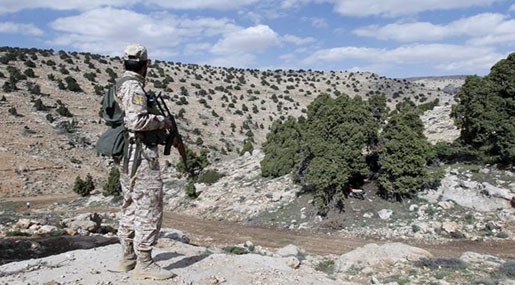
An analysis piece published by the Financial Times cited Omar Salakho, the militant commander, as saying: "to fend off the attack, his forces laced their area with what they called "thread mines" - so sensitive to pressure that a bird would set them off."
But in December the militants were forced to surrender in the northern city, their biggest loss in the five-year war against President Bashar al-Assad and one of the most potent symbols of how powerful the regional forces such as Hizbullah have become.
When Hizbullah fighters first poured into Syria, many observers expected it to be worn down and its reputation as the pre-eminent anti-‘Israel' force to be tarnished. Instead, Hizbullah looks set to emerge more powerful than before - one of the big winners of Syria's war.
"They set an unpopular policy in Syria, even for their own constituents, and steamrollered it through; they set off on military expeditions far outside their borders and were successful," according to an ‘Israeli' consultant who asked not to be named.
Meanwhile, it is considered a development that ‘Israel' has been watching warily.
Hizbullah delivered the ‘Israeli' Occupation Force [IOF] a bloodied nose in a month-long war in 2006. The IOF has been monitoring how Hizbullah has used its role in Syria to stockpile its armories with new short and medium-range missiles.
Fighting in Syria also means Hizbullah fighters have a much better understanding of conventional armies, intelligence gathering and the use of air power, regional diplomats and analysts say.
IOF officials said in December that research they conducted on Hizbullah indicated the group had a 30,000-strong force.
Meanwhile, the bigger issue for the Zionist entity is the lessons Hizbullah picked up on Syria's battlefields, an IOF official said.
"They are learning," the official said. "I don't know how relevant it is for a war with ‘Israel', but experience is important."
He and other officials raised concern that surface-to-air missiles, coastal missiles such as Russian Yakhonts or surface-to-surface missiles might fall into Hizbullah's hands.
For its part, Hizbullah says it has no intention of starting a war with the occupation entity and would act only in self-defense.
Respectively, the threat Hizbullah poses to US interests could stretch beyond ‘Israel'. Growing ties between Hizbullah and other resistance groups namely in Iraq has in effect created a roving force that may seek to continue wielding power in the region.
For the time being, and in spite of its broadened horizons, Zionist officials claim they have seen few weaknesses in Hizbullah's defenses near the Lebanese-‘Israeli'-occupied border.
"Although they are overstretched in fighting in Syria, they constantly build the force against ‘Israel', all the time," the IOF official said at the December briefing. "We don't see them stopping one day. Weapons coming from Syria to Lebanon will be used against ‘Israel'."
In this respect, a regional official who asked only to be identified as a member of the Axis of Resistance said Hizbullah will be a different force should it face a war with ‘Israel' again.
"They know [Hizbullah] has abilities much better than before - and it will make them [‘Israel'] think 100 times before they pick a fight," he said.
Source: FT, Edited by website team
Comments