Aoun in NCG: It is high time for Christians to overcome their frustrations

Source: Daily Star, 3-7-2008
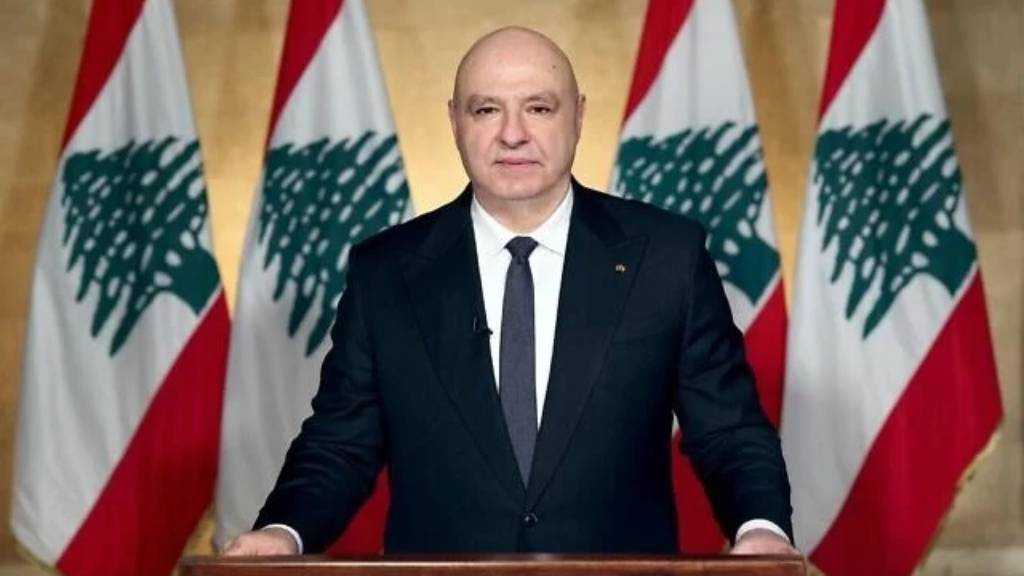
BEIRUT: Reclaiming the Christians' pivotal role in Lebanese politics and developing a common Christian outlook on internal and regional issues are the main objectives Free Patriotic Movement (FPM) leader MP Michel Aoun has fixed for the upcoming period. "It is high time for Christians to overcome their frustrations and wipe away the general feeling of pessimism," Aoun told reporters during a press briefing on Tuesday ahead of a large-scale meeting scheduled for Friday.
Around 150 political, economic and intellectual Christian figures are expected to take part in the National Christian Gathering (NCG), called for by the Christian members of the opposition, including the FPM and the Marada Movement.
NCG's inaugural meeting is scheduled for Friday at 6 p.m. at Le Royale Hotel in Dbayyeh.
Sources close to the NCG said the meeting is expected to tackle "topics and issues that are a source of concern to Christians, such as the naturalization of Palestinians and the electoral law, as well as political and administrative reforms."
Christian groups in the pro-government coalition such as the Lebanese Forces (LF) and the Phalange Party did not receive invitations to the event, according to LF MP Antoine Zahra, who described the gathering as "a joke not likely to bring anything new."
Aoun told reporters on Tuesday that his opponents describe him as "crazy, twisted whenever I take up challenges," citing his visit to the US Congress in 2003 to promote the Syria Accountability and Lebanese Sovereignty Restoration Act, which called for ending Syria's presence in Lebanon, as well as his triumph in the 2005 parliamentary elections.
Aoun explained that the NCG was a "political and intellectual gathering aimed at bolstering inter-Christian ties."
"The gathering seeks to revive the concepts of modernity and reform which have been historically espoused by Christians," he added.
"Once Lebanese Christians overcome their fears and become self-confident enough they will regain their crucial role in Lebanese politics," Aoun said.
The former Lebanese Armed Forces commander said Christians should "adapt themselves to regional political changes."
"Christians nowadays no longer have a mother or a father," he said, adding that Christians should "start coming up with ways to assert their role and position within Lebanese and regional politics," alone and without anyone's help.
"With the degree of liberty they own, Christians in Lebanon and Syria are responsible for preserving and promoting Christian presence in the region," he added.
Aoun also warned against "the great dangers" of naturalizing Palestinians in Lebanon, while calling on the United States "to take a clear-cut stand concerning the issue.
"Naturalizing the 600,000 Palestinians in Lebanon would jeopardize the diverse structure of the Lebanese society and promote the Sunni sect at the expense of others," he added.
Asked about his relationship with Hizbullah, Aoun dismissed claims about his subsidiary position.
"Who led talks during the Doha meetings [to solve the 18-month old deadlock]? And who is currently leading negotiations concerning the formation of a new government?" Aoun asked.
Political analysts were not enthusiastic about the possible outcomes of such a meeting.
"It is true that such a meeting is likely to launch a new dynamic among Christians, as well as consolidate their position and agenda inside the Lebanese structure," head of the Universite Saint Joseph's political science department Fadia Kiwan told The Daily Star.
But "the meeting can be seen as a form of confrontation and a way to isolate or embarrass the president," she added.
Kiwan said Christians in Lebanon are currently faced with a dead end, "with the Christians of the March 14 Forces failing to present a coherent position and Aoun's aspirations to become a president."
According to Kiwan, the deadlock on the Christian scene could be broken, "through an initiative by Suleiman."
"He is actually urged to launch some kind of dialogue among Christians," she added.
Likewise, the director of the Carnegie Middle East Center, Paul Salem, did not see "the urgency behind such a meeting."
"Right now there are no particular emergencies on the Christian scene but rather national issues involving all the Lebanese that ought to be discussed," Salem said.
"There is no crisis on the Christian scene and no one is attacking Christians," he said.
Salem added he was never in favor of sectarian gatherings, which he described as a "pattern in Lebanese politics that mushrooms ahead of elections."
"One of the strengths of the FPM was its ability to stay away from the sectarian game," Salem said, adding that FPM recently moved away from these past principles, "which is a major problem."