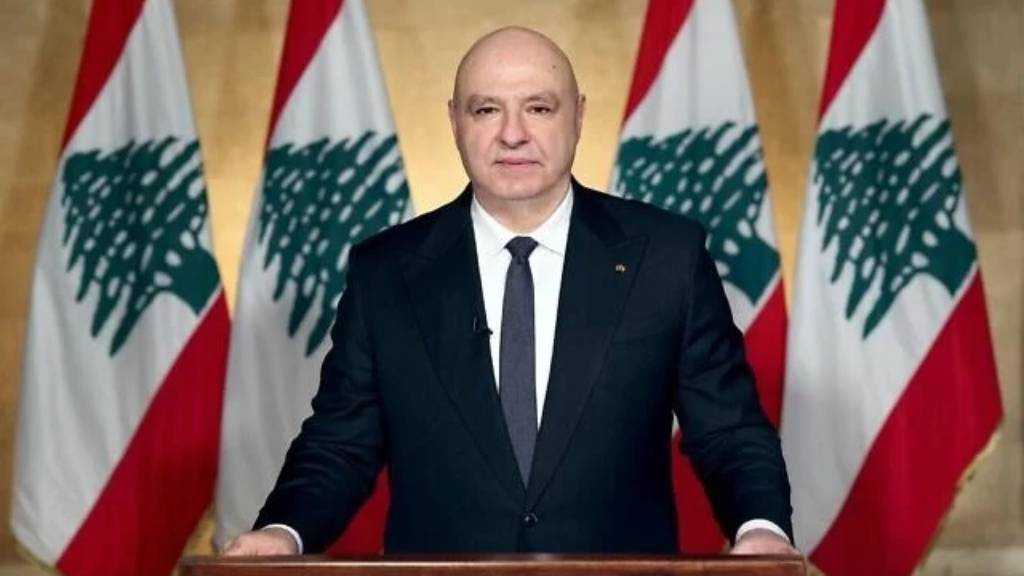
Berri: Doha Agreement Remains Major Winner

Source: Al-Manar TV, 27-8-2008
While Lebanon witnesses a notable diplomatic dash with daily visits paid by Arab and Western delegates amid international concern over the security situation in the country, all outstanding issues seem to be settled by the "magical formula of delaying." Indeed, just as the government delayed on Thursday the security nominations until reaching consensus, the Parliament delayed on Tuesday the endorsement of the electoral districting, referring the proposal to the Administration and Justice parliamentary Commission. For its part, the commission unanimously agreed on the draft law of redistricting based on the Qadaa (large constituency) and the majority system. The committee also agreed on banning "propaganda from circulation" in the last week before the elections. Any media organizations that breach this decision will be closed for up to three days.
The exit, stipulating that the decision on the distraction be postponed until September 25 so that the law can be drafted in full, was proposed by Parliament Speaker Nabih Berri. Unlike some "March 14" figures who rushed to consider the exit as their "own victory," Berri stressed all rival blocs won by adopting this solution, noting at the same time that the Doha Agreement remained the major winner.
However, Interior Minister Ziad Baroud told Lebanese daily As-Safir that "postponing the adoption of the electoral law until September will increase fears of entering the danger zone." He added that the electoral law should be approved by October, or else there will be a problem.
Baroud noted that he was waiting for the approval of the electoral law and was preparing magnetic cards to be used in the 2009 legislative elections. He pointed out that electronic cards will be provided to 3.5 million citizens, and that 700,000 voters still did not have any voting cards, which meant there was much work to be done before the elections.
He also said that the parliamentary elections could take place in a single day so as to decrease tensions, but the issue would be studied and discussed, because, he said, there needed to be 18,000 security officers on duty that day.
Earlier, Telecommunications Minister Gebran Bassil held the March 14 Forces responsible of the delay in endorsing the electoral law. "The Lebanese people should be aware of the parties who are aiming to delay the approval of their rights," Bassil noted, warning that this delay propagates tensions on the political level. "The decision to delay was adopted by all March 14 members, and particularly the Christians within this alliance," he stressed.
SECURITY REMAINS MAIN CONCERN
Meanwhile, Berri voiced concern over the security situation in north Lebanon and played down reports of tension in Beirut. He said that the sporadic fighting in Tripoli and the August 13 bombing there were more dangerous than the current skirmishes in Beirut.
"I am not concerned by what has happened in Beirut because it is instantaneous ... and can be contained easily. But what happens in the north if frightening," Berri said, adding that "real treatment for the situation in Tripoli and the north is through development projects; the role of security forces comes after that."
Berri also announced that the army commander would be appointed during the next cabinet meeting; a meeting that is set to be delayed because of Palestinian President Mahmoud Abbas's visit to Beirut scheduled on Thursday.
In this context, government sources told Lebanese daily An-Nahar that the Council of Ministers will meet Friday or Saturday to discuss the list of preferred nominees for army commander compiled by Defense Minister Elias Murr. The list will include the names of eight generals for the position of army commander, including: Ataf Njeim, Antoine Karim, Ibrahim Kanaan, George Msaad, Nabil Shadeed, George Khoury, Jean Kahwaji and Charles Shiekhani.

13 Killed in ’Israeli’ Strikes on Southern Lebanon
one month ago