Gaza revival battles “Israeli” controls
source: BBC, 7-11-2005.
By Alan Johnston
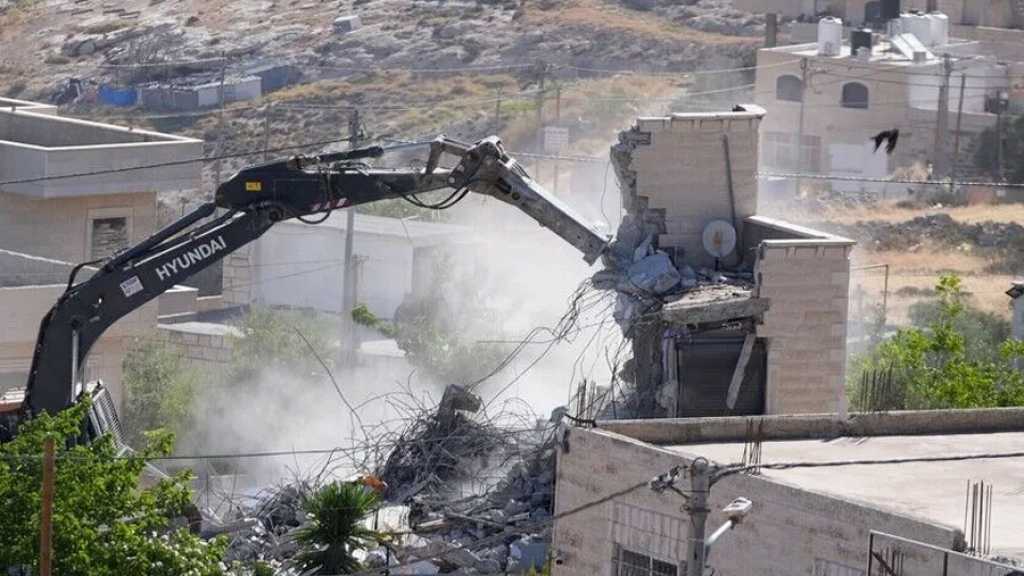
summary: At first sight the abandoned "Israeli" settlement of Netzarim in the Gaza Strip seems to be a complete ruin.
Nearly two months after the army smashed all the houses and pulled out, no clear-up operation has begun. I watched two Palestinian girls herd their sheep slowly through the ruins.
The girls perched on the rubble of the settlers homes, looking on as their animals grazed in what used to be the gardens.
But Netzarim is not a complete wasteland. There are signs of new, Palestinian economic life.
The ranks of huge greenhouses that the settlers left have been put back into action. Repairs have been made, water supplies reconnected, and replanting is underway.
In just one greenhouse, nearly the size of a football pitch, the soil was carpeted with tens-of-thousands of pepper plants.
All down the Gaza Strip, the agricultural industry that was the wealth of the settlements is being revived.
The Palestine Economic Development Company is doing the work. Its chief, Bassil Jabir says that there were "Israeli" suggestions that Palestinians would not have the capacity and the expertise to take over.
"It was a challenge for all or us," Mr. Jabir said. "We were determined that we could do it. Let this occupation end and we will be capable of managing our lives and our country. Now we can say that we`ve done it."
Border controls
But a shadow hangs over his operation. There is no guarantee that the firm will be able to export its produce.
Although "Israel" has withdrawn from Gaza, it retains control over all the territory`s routes to the outside world.
A deal may be struck soon that would open the border between Gaza and Egypt. But much more important to the economy here is the movement of goods between Gaza and "Israel".
The "Israelis" operate an extremely tight security regime that has reduced the flow of trade to a trickle, and sometimes shuts it off altogether.
Recently - at best - just 35 trucks a day have been getting through. Five or six times that number will be needed if Gaza`s coming harvest season is to be a success.
The greenhouse entrepreneurs worry that quantities of their tomatoes and peppers and cut flowers will rot on Gaza`s border - never reaching the supermarkets of Europe.
"How can we put together a realistic strategy to overcome the economic crisis if we are not guaranteed secure access to the outside world," says Mohammed al-Samhouri, a senior official involved in planning Gaza`s economic recovery.
Palestinians believe that "Israel" is simply bent on keeping a stranglehold on Gaza.
And the special envoy of the international community, James Wolfensohn, said recently that on access issues "Israel" had been behaving as if there had been no withdrawal from Gaza at all.
Acclaimed Security threat
But "Israel" denies that it is deliberately throttling the territory.
"We`d like to see the economy flourish," says Mark Regev an "Israeli" Foreign Ministry spokesman.
"If it`s better for the Palestinians it`s better for us and we understand that the flow of goods is an important element.
But he said that with Gaza being a stronghold for groups like Hamas and Islamic Jihad, "Israel" could not allow unfettered access.
Palestinian analyst
The Authority argues that Gaza`s poverty helps fuel the militancy. "If people have lost all hope - that`s a security threat," says Mr. Samhouri.
"The way to deal with it, is to provide them with hope and economic means. And that cannot happen if you keep on locking them up and expect them to behave like human beings."
Mr. Wolfensohn, who represents the US and the group of other nations trying to revive the peace process, acknowledges that "Israel" has security concerns.
Rump entity
But he clearly believes a more imaginative approach on "Israel's" part could ease the flow of goods without endangering "Israeli" citizens.
In a recent report Mr. Wolfensohn said: "Without a dramatic improvement in Palestinian movement and access within appropriate security arrangements for "Israel", the economic revival essential to a resolution of the conflict will not be possible."
But even with a much improved flow of trade, Gaza`s economic prospects would be dire.
It is just a sliver of territory 45km long and completely lacking in resources. It is already among the world`s most crowded places, and the population could double over the next 20 years.
Unemployment runs at around 30%, and there are serious levels of poverty. It is also badly unstable. There is political violence and other security problems that are major deterrents to investment and business activity.
And there are Palestinians who argue that as long as Gaza is just a rump entity - isolated from the rest of the Palestinian population - efforts by international donors to help it economically will ultimately count for little.
One analyst here said: "Whatever the international community does - if it doesn`t touch on the political issues - the ones dealing with land in the West Bank and the connection between Gaza and the West Bank - all this will be temporary until the next intifada begins."