Palestinians mourn dispossession of 1948 NAKBA anniversary reminds refugees of painful tragedy
author: Compiled by Daily Star staff
source: The Daily Star, 16-5-2003
summary: Elderly recall their villages in Palestine and reflect on their current situation and the much-sought-after right of return
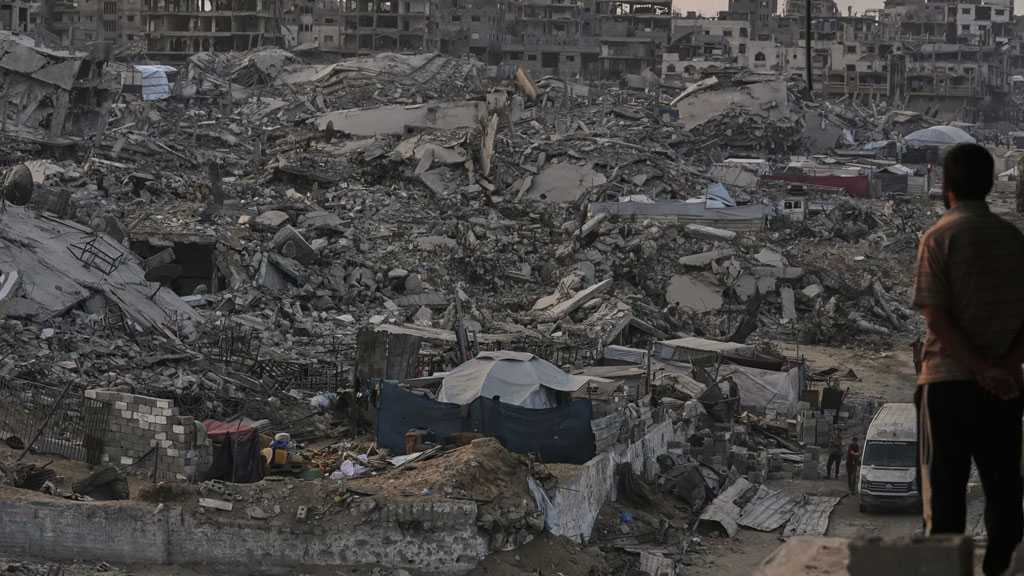
Fifty-five years after their forced exile, Palestinian refugees still living the daily humiliation, dispossession and oppression of "Israeli" occupation hold out hope of returning to their homes in historic Palestine.
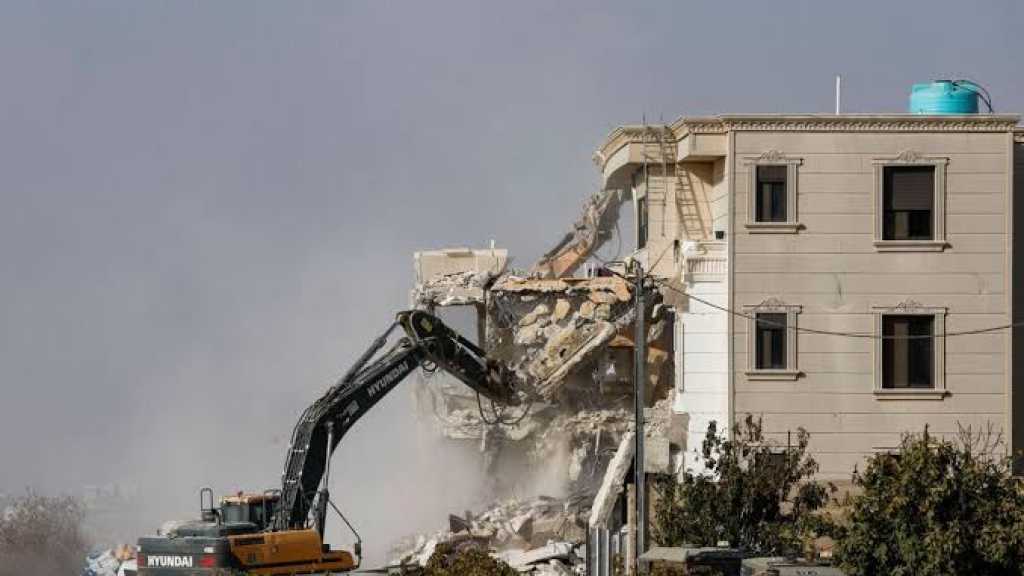
Near the Al-Jalazun refugee camp in the West Bank, an expanding Jewish settlement serves as a reminder to residents of the continued Zionist aggression that forced them out of their homes more than five decades ago.
Residents of the camp say they feel humiliated by the expansion of the nearby settlement but still hold out hope of returning to their former homes in Palestine.
Ahmed Mussa, who was administrator of this West Bank camp near Ramallah for 42 years, points with his walking stick across the road to the Jewish settlement of Beit El which towers above on a hill.
"This settlement is the clearest sign of the injustice that we are living as refugees," said the 70-year-old, who retired in the early 1990s.
Mussa, like a large number of the 10,000-strong residents of Al-Jalazun, is originally from the town of Beit Nabala in present-day "Israel" but said he was expelled in 1948 along with his family.
Thursday was the 55th anniversary of the nakba, meaning catastrophe in Arabic.
It marks the day when "Israel" declared its statehood on May 14 of that year, triggering a regional war which saw more than 700,000 Palestinians being driven out or fleeing their homes.
"It is true I feel anger and sorrow when I look at the settlement, but I am certain that it will come to an end," said Mussa.
One of the main problems in the camp is lack of space. Founded in 1951, residents are not allowed to expand the camp beyond the borders set by the authorities then, forcing them to build upward.
Abu Ismail Khorub, 72, said that since 1948 his family had grown to number 50 people, and were all living within 100 square meters in the camp.
"We are unable to build because we don't have land, that is why we had to build upward to house my eight children," he said.
Khorub's family is a microcosm of the greater Palestinian refugee community, which has swelled to over 4 million globally. Palestinians are the largest refugee population in the world and have been in exile longer than any other refugee group.
Residents of Al-Jalazun are angered by an "Israeli" decision to expand Beit El.
Students in Al-Jalazun middle school see the settlement every day, as it lies just across a main road. "Beit El serves as a lesson to all the students here, who cannot help but see it every day," said one teacher.
Settlements are illegal under international law.
The international peace "road map" handed to "Israelis" and Palestinians on April 30 calls in its first phase for a freeze on all Jewish settlement building as an initial confidence-building measure.
But even with a visit by US Secretary of State Colin Powell to the region last weekend to push for the its implementation, "Israel" rejected any freeze in settlement building.
The refugees' right to return to their homes is another issue that "Israel" has refused to settle. "Israel" claims that the return of all the estimated 4 million refugees would threaten the Jewish nature of the state, and disputes over the issue have long impeded peace efforts.
"Israeli" Prime Minister Ariel Sharon wants refugees to drop demands for the right of return.
The right is enshrined in UN General Assembly Resolution 194, which states: that "the refugees wishing to return to their homes and live at peace with their neighbors should be permitted to do so at the earliest practical date." "Israel's" later admission to the United Nations was conditional on acceptance of relevant UN resolutions, including 194.
Some at Al-Jalazun have less hope that the right of return will ever become a reality.
"If "Israel" doesn't allow us through checkpoints here in the West Bank, how will it allow us to go back to the villages we were expelled from?" asked one 30-year-old, who gave his name as Jihad.
Mussa however insisted that young people, who have no memory of their homes in historic Palestine, would not give up hope.
He recalled camp residents arrested during the first intifada, from 1987-1993, and the current uprising against occupation. "This is proof that the young people here believe in their right to fight for the return."
The hope of return is shared by young and old alike.
In Balata refugee camp in the West Bank, Jamileh Abu Ebayya holds on to the memories of her homeland in an old wooden box that is full of documents.
The papers, bearing stamps from the times of the Ottoman Empire, show that she owned a house in Sidna Ali, the village near Tel Aviv where she was born 76 years ago.
"All that remains of the good old days, if there were any good days, is this little box," Ebayya said in her new home in Balata refugee camp near the West Bank city of Nablus.
"When I miss our home, I just look at it (the box)."
"I still hope I can live there for one day before I die," she said, dressed in a long brown cloak and a white head scarf.
Ebayya and her relatives said the people of Sidna Ali fled the village after Jewish groups shot dead five villagers and threatened to kill more if the residents did not leave.
Ebayyah was then 19. Her brother and other relatives went to live in five villages in the West Bank before eventually resettling in Balata refugee camp in 1962.
"We slept under olive trees for some time without food and water," she said. "But people took pity on us and gave us some food."
Ebayya visited Sidna Ali in 1981. "I felt my heart was breaking. It was a very, very sad moment," she said, sobbing.