Syria Remains Occupied. Why Is Its Army Serving Saudi Arabia?
By Mohamad Hammoud
A Country in Ruins, Soldiers for Another War
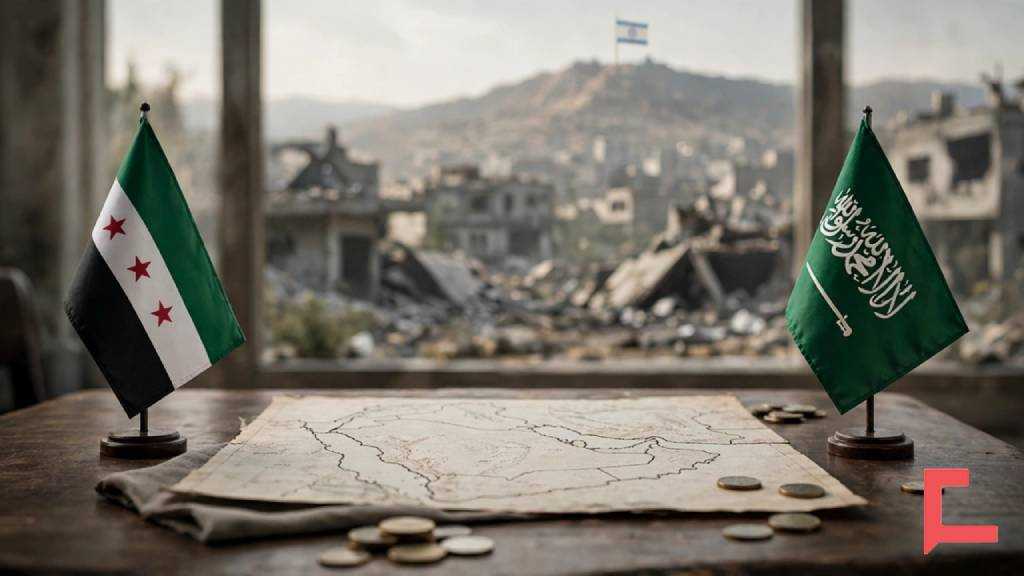
Syria has barely emerged from fourteen years of devastating conflict that left its cities in ruins, its economy shattered, and millions of its people displaced. Compounding this devastation, significant areas of Syrian territory remain under “Israeli” occupation, while “Israeli” forces continue conducting military operations inside the country without encountering military resistance from Damascus.
Yet rather than concentrating its limited military resources on restoring sovereignty and strengthening national defenses, the Syrian government is deploying military personnel to Saudi Arabia. In doing so, Damascus risks drawing its already war-ravaged nation into yet another conflict- this time on behalf of another country.
On November 6, Reuters confirmed that dozens of Syrian military advisers and trainers had arrived in Saudi Arabia. Two days later, the Associated Press reported preparations to deploy approximately 600 Syrian special forces personnel near the Yemeni border. Although Damascus denies plans to send combat troops into Yemen, its military involvement has already begun.
Occupation at Home, Military Assistance Abroad
Following Bashar al-Assad’s overthrow in December 2024, “Israeli” forces expanded their occupation beyond the Golan Heights, establishing military positions and conducting repeated incursions deeper into Syrian territory. Damascus has demanded withdrawal but offered no military resistance. Yet the same government is preparing to send hundreds more to support Saudi Arabia’s confrontation with Ansarullah.
The contradiction raises a fundamental question: If Syria cannot afford military confrontation to defend its own sovereignty, why would it become involved in another country’s war? Why does Damascus exercise restraint toward the forces occupying its own territory while committing military resources to a conflict beyond its borders?
Saudi Money and Syrian Dependency
Syria’s economic desperation may help explain its military cooperation with Saudi Arabia. After fourteen years of war, the country faces a reconstruction burden far beyond its financial capacity. The World Bank estimates rebuilding costs at $216 billion, leaving Damascus heavily dependent on foreign assistance to restore infrastructure, revive its economy, and rebuild essential services.
This dependence gives Saudi Arabia considerable influence over Syria’s recovery. On November 4, the two governments signed a military cooperation agreement alongside more than $403 million in Saudi development loans for housing, healthcare, and infrastructure.
The equation is simple: Riyadh provides the financial support Damascus desperately needs, while Syria supplies the experienced military personnel Saudi Arabia seeks.
For al-Sharaa, the partnership also offers diplomatic acceptance and closer regional integration, including discussions of a broader defense arrangement involving Saudi Arabia, Turkey, and Pakistan. But these benefits raise another question: Is Damascus rebuilding its independence, or becoming increasingly dependent on the strategic priorities of those financing its recovery?
Washington’s Strategy, Riyadh’s Manpower
The arrangement reflects a broader regional hierarchy of financial and military dependence. Washington supplies Saudi Arabia with advanced weapons, military technology, and strategic support, giving the United States considerable influence over Riyadh’s policies, including its alignment with American regional priorities and closer relations with “Israel.”
Saudi Arabia, in turn, appears to be applying a similar model to Syria, using financial assistance to secure Damascus’s cooperation with its own regional agenda.
This relationship takes on particular significance in Yemen. Despite years of military intervention and access to advanced American weaponry, Saudi Arabia has failed to defeat Ansarullah. Riyadh is therefore turning to Syrian military personnel, whose experience in prolonged warfare could provide capabilities that Saudi forces and their allies have struggled to deliver.
For Damascus, however, the potential financial and diplomatic benefits come with considerable risks. Supporting Saudi Arabia’s confrontation with Ansarullah could expose Syria to retaliation and further regional instability, particularly when its own security institutions remain fragile and armed factions have only recently been integrated into the national army.
Who Benefits, and Who Pays?
Saudi Arabia may justify defending its borders, while Damascus seeks financial and diplomatic support. But what does Syria gain from risking involvement in another war?
After fourteen years of conflict, Syrians still face poverty, displacement, and a devastated economy. Yet their government is committing military resources abroad while its own territory remains occupied and its people struggle to rebuild their lives.
The question is no longer what Saudi Arabia stands to gain, but why Syrian soldiers should risk their lives defending another country while their own remains occupied.