President Aoun: Return of Lebanese Detainees Tops National Agenda
By Staff,
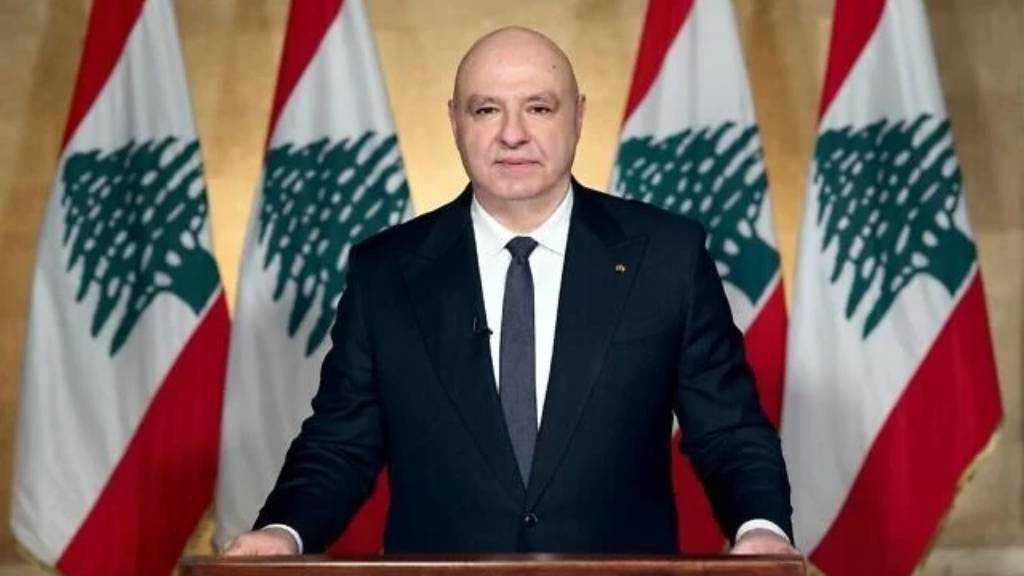
Lebanese President General Joseph Aoun, affirmed that the issue of Lebanese detainees held in “Israeli” prisons remains a top priority for him.
“This issue will remain a priority, and I am committed to all Lebanese. I hope we can reach a solution by any possible means to pressure ‘Israel’ to respond to our demands,” he noted.
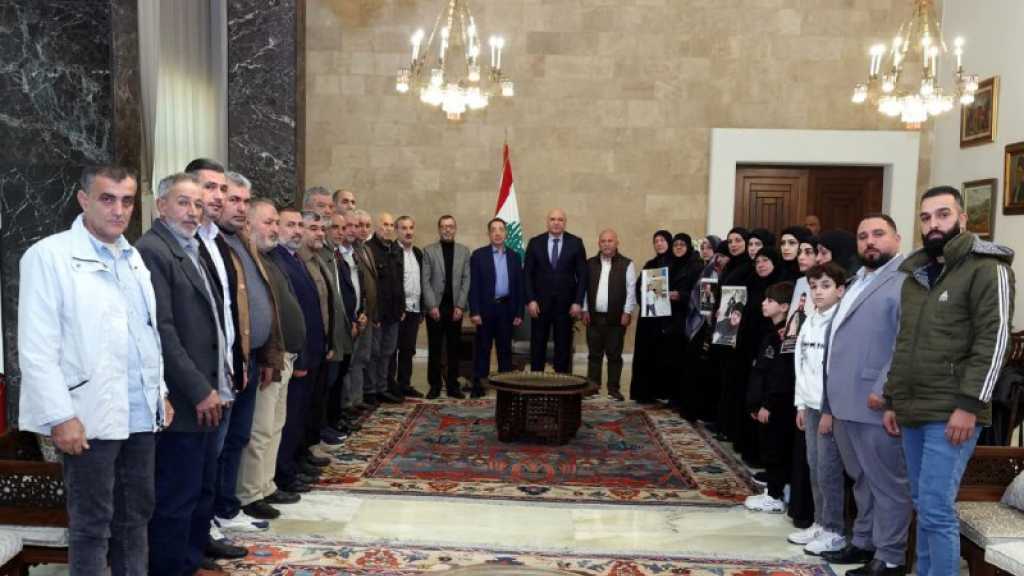
President Aoun made his remarks during his reception this morning at Baabda Palace for a delegation from the Lebanese Association for Captives and Liberated Detainees, headed by Ahmad Taleb, in the presence of MP Hussein Hajj Hassan. MP Hajj Hassan congratulated President Aoun on the upcoming festive holidays and addressed the situation of the 20 detainees, particularly those detained after the cessation of hostilities agreement.
He further praised President Aoun’s efforts to secure their release and the government’s cooperation with the International Committee of the Red Cross to visit and assess their situation, noting the continued lack of response from the “Israeli” side, in clear violation of international norms and agreements.
Furthermore, Hajj Hassan emphasized supporting President Aoun in this cause, which he has championed since his oath of office, keeping it a priority for Lebanon to employ all diplomatic and pressure tools to advance the file. He emphasized that the association draws inspiration from the President’s words on resilience, steadfastness, and refusal to submit.
President Aoun was also briefed on the actions the association intends to undertake regarding this issue.
Released Detainee Abbas Qabalan
During the meeting, released detainee Abbas Qabalan recounted his suffering during detention, highlighting the inhumane treatment faced by Lebanese detainees. He stressed the need for national mobilization and broad Lebanese solidarity, describing the issue as both humanitarian and patriotic.
He further called for the inclusion of detainees Skaf, Farran, and Alayan, who have been held in “Israeli” prisons for decades without acknowledgment by the occupiers, and urged efforts toward their release as well.
Qabalan also addressed the hardships faced by the families of the detainees amid the country’s severe economic conditions.
President Aoun’s Response
President Aoun welcomed the delegation, saying, “Your sons are our sons. As I have stated in my oath and all my meetings and interviews, this file is extremely important and a top priority for me. It is also raised within the ‘Mechanism’ Committee as a matter of high priority.”
Aoun went on saying, “I discussed it during my meeting with the President of the International Committee of the Red Cross in New York, requesting that he visit the detainees to check on their health and well-being, but the ‘Israelis’ did not respond. I also raised the issue with the US side in hopes of reaching a resolution.”
The President listened to the delegation’s account of the detainees’ suffering, especially those detained after the cessation of hostilities, and the daily tragedy faced by families in their absence.
They expressed support for President Aoun’s efforts and gratitude for his work in uncovering the detainees’ fate and advocating for their return.
The Delegation’s Memorandum
President Aoun received a memorandum from the delegation listing the names of the detainees, the dates and Lebanese locations of their detention.
Notably, 10 of the 20 detainees were detained after the cessation of hostilities while performing their daily activities in their towns and villages. They have since endured physical and psychological torture in “Israeli” prisons, according to testimonies from recently released Palestinian detainees.
On another front, President Aoun received the Egyptian ambassador to Lebanon, Alaa Moussa.
In a statement after the meeting, Moussa said, “The indicators show that we are moving in the right direction, and the next phase will witness breakthroughs. This is what Egypt is working toward through its contacts aimed at reducing tensions and sparing Lebanon the specter of war.”
He noted that there are opportunities for dialogue and attempts to find a common ground upon which future steps can be built. He added, “The Lebanese state has taken positive measures over the past period, particularly through the appointment of Ambassador Simon Karam to the ‘Mechanism’ Committee, which was met with a positive engagement from the concerned parties, and future steps will build on this.”
Moussa also highlighted that the upcoming visit of the Egyptian Prime Minister to Beirut next week aims to continue exchanging messages of support for Lebanon, expressing hope that these efforts will lead to tangible results.