Iran Says It Has Documented Neighboring Countries’ Role in Facilitating US-“Israeli” Aggression
By Staff, Agencies
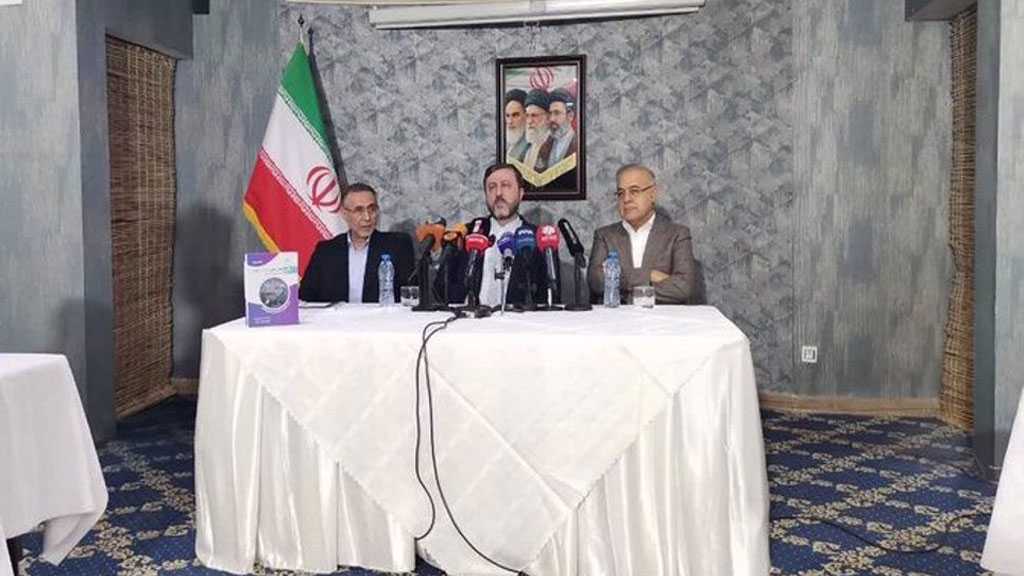
Iran’s Deputy Foreign Minister for Legal and International Affairs, Kazem Gharibabadi, has announced that Tehran has documented the involvement of certain neighboring countries in facilitating the recent US-“Israeli” war against Iran and submitted more than 100 diplomatic notes to the United Nations as part of efforts to pursue legal accountability.
Speaking at a press conference following his visit to Hormozgan province, Gharibabadi outlined Iran’s legal efforts to document the attacks and establish responsibility for the damage caused during the conflict.
He confirmed that more than 100 diplomatic notes detailing the aggression and regional complicity had been sent to the United Nations and the UN Security Council and formally registered as UN documents.
“These documents contain information on the origin of flights and missile launches, the timing of incidents, the targets and the locations of impacts, enabling legal proceedings to be pursued,” Gharibabadi said, emphasizing that the collected evidence would support efforts to hold those responsible accountable.
The Iranian official also outlined Tehran’s broader legal strategy to pursue the United States and the “Israeli” entoty over the consequences of the war.
He said more than 170 official correspondences had been prepared by heads of executive bodies, ministers and organizational leaders concerning damage sustained across various sectors.
“The diplomatic apparatus and legal sectors of the country are obligated to document the crimes and damages caused by the war and pursue them in international organizations, legal and judicial forums, and foreign courts,” he stated.
Specialized reports documenting US-“Israeli” attacks on the Shajareh Tayyebeh school in Minab, the Lamerd stadium, oil storage facilities, environmental damage and other infrastructure have also been registered as UN Security Council documents, according to Gharibabadi.
On the domestic front, he confirmed that several judicial cases had been opened in Iran in connection with the conflict.
The case concerning the attack on the Minab school has been completed in Hormozgan province and referred to court following the issuance of an indictment.
He added that, under an order from the head of Iran’s judiciary, all cases related to what Tehran describes as the 40-day imposed war had been centralized in the capital, Tehran, to facilitate criminal investigations and legal proceedings.
While reaffirming Iran’s commitment to maintaining constructive relations with neighboring countries, including Arab states along the southern coast of the Persian Gulf, Gharibabadi stressed that regional cooperation must respect Iran’s sovereignty and security.
“The security of Iran and the countries of the region are intertwined, and it is expected that no country will allow its territory to be used to create insecurity or violate Iran's national security,” he warned.
Turning to the strategic Strait of Hormuz, Gharibabadi described the waterway as an integral component of Iran’s national security and defensive capabilities.
“Iran has the right to make the necessary decisions to prevent violations of its national security,” he said.
He explained that the existing restrictions and maritime control arrangements were introduced in response to the conditions created by the war and would remain in effect until the United States recognized the futility of military solutions and fulfilled its commitments.
Gharibabadi also outlined Iran’s requirements for maritime traffic through the strait, stressing that vessels must coordinate their passage with Iranian authorities.
“The transit of ships in the current conditions must be coordinated with the Islamic Republic of Iran. The transit of commercial ships without coordination with Iran contradicts the announced arrangements, and the Armed Forces will act against violations of these arrangements. The transit of warships through the Strait of Hormuz is banned,” he stated.
Addressing maritime coordination with neighboring countries, Gharibabadi revealed that Iran and Oman had reached an understanding regarding entry and exit routes through the Strait of Hormuz.
He said the two countries were reviewing the necessary technical and administrative arrangements to register the relevant maritime maps with the International Maritime Organization (IMO).
However, he emphasized that the agreement on navigation routes did not mean the strait would immediately reopen, adding that any further steps would depend on the implementation of US commitments.
The remarks come amid the Islamabad Memorandum of Understanding (MoU), which was established through Pakistani mediation to provide a framework for ending the US-“Israeli” war against Iran.
Under the reported terms of the memorandum, Washington committed to lifting its naval blockade, releasing frozen Iranian assets and halting military operations in exchange for the gradual normalization of maritime traffic.
The agreement also stipulated that the resumption of commercial shipping through the Strait of Hormuz must be coordinated with and approved by the Islamic Republic of Iran, taking Tehran’s security concerns into account.
However, Iranian officials have accused Washington of undermining the framework by attempting to facilitate the passage of vessels through the strategic waterway without prior coordination with Iranian authorities.
Tehran has characterized these attempts as violations of the agreed arrangements and challenges to the conditions established under the memorandum.
Iranian Armed Forces have responded by intercepting vessels they describe as unauthorized, insisting that maritime restrictions will be enforced against any attempts to bypass the established procedures.
Tehran maintains that its control measures in the Strait of Hormuz are directly linked to national security and that their continuation will depend on Washington’s compliance with its commitments.
Iranian officials have repeatedly stressed that the future of maritime navigation through the strategic waterway cannot be separated from the broader negotiations over ending the conflict, lifting restrictions and addressing the consequences of the US-“Israeli” military campaign.
Comments