The Enduring Legacy of Sayyed Ali Khamenei as A Teacher
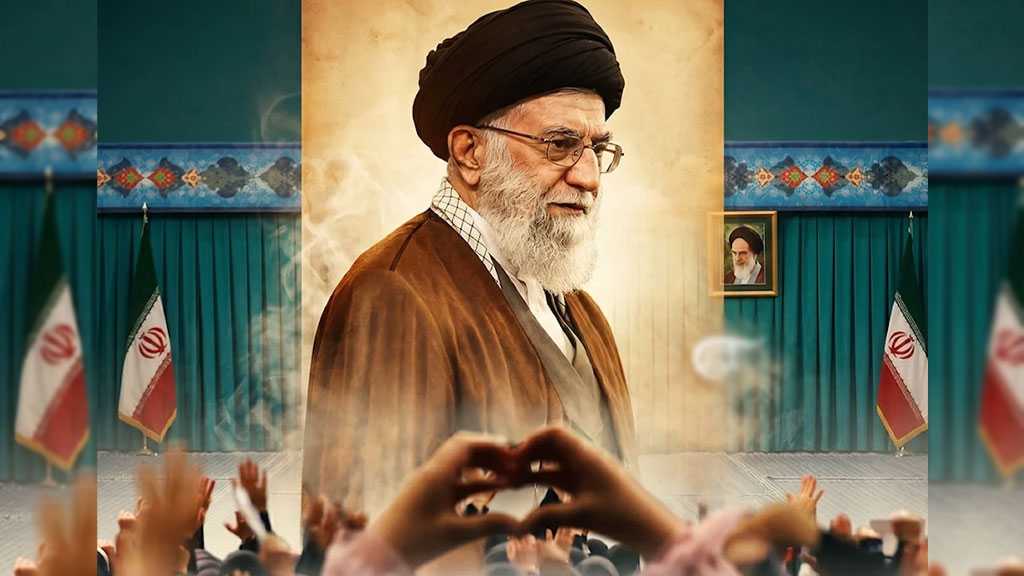
By Al-Mayadeen English
Maybe the greatest thing a scholar can hope for is that their teachings outlive them, to have students of religious seminaries and seekers of knowledge associate your name with the ideas they research, or have laypeople see you as a guide towards increasing the scope of their knowledge.
For many of his students, admirers, and followers, Sayyed Ali Khamenei was one such scholar. Born into humble circumstances, Sayyed Ali Khamenei eventually rose to hold the highest office in the Islamic Republic of Iran with the support and endorsement of Sayyed Ruhollah Khomeini. He remained in this position until his final moments, where he was martyred by an airstrike by the Zio-American forces who have terrorized West Asia for decades.
I remember seeing clips of him between news broadcasts during the coverage of the war on Syria; he always came off as a man of wisdom. Perhaps that is what first drew me to him: the wisdom that seemed to surround his presence.
As the years went by and my political understanding became more nuanced, Sayyed Khamenei was a figure I kept looking towards as a north star when it comes to the ever-changing situation in West Asia.
My religious understanding deepened, and Sayyed Khamenei came to be a figure I did not see as one defined solely by jurisprudence, telling the Muslims whether something is strictly a sin or permissible.
Sayyed Khamenei brought something I hadn’t found in my, albeit more limited at the time, research into the faith; he gave it color, allowed us to see more than a simple catalogue of jurisprudential rulings that many of us were raised with. In my eyes, he showed that a scholar can touch the hearts of his admirers across fields beyond faith, as in the poetry circles he’d often hold.
I spoke with a student of the Qom Seminary, Sheikh H. M., on the legacy of the martyred Iranian leader and his influence as a scholar and teacher.
“Shaheed Imam Khamenei taught us that our religion is not dead or historical but rather, that it lives on in the streets and alleyways of the world and in the hearts and limbs of those who are true to their claim of submitting only to Allah,” he told me.
He added that the martyred leader’s analysis of the unknowns left between the lines of history books brought forward depth and context to the lives of the Imams, allowing him to help shape “a clear worldview for us as we strive to live in this world in an uphill battle.”
“Through his speeches delivered before the success of the Islamic revolution, which were compiled in ‘Imām Husain’s Brothers in Arms’ and ‘Reclaiming the Narrative’, a new and clear lens has been presented to all of us in both the East and the West to navigate the challenges that we face in the form of anti-theistic governments and societies,” he said.
Sheikh M. noted that the martyred Iranian leader’s lessons put forward an intellectual means for Shia communities outside of West Asia towards establishing communities and hubs where they may be able to actively work in different ways towards fulfilling religious goals.
“His body will depart from Tehran forever, but his place in our hearts will only grow larger,” Sheikh M. concluded.
Admirers Share Thoughts on Sayyed Khamenei’s Legacy
I also turned to social media to see how the martyred scholar influenced others. Heartfelt replies came in from admirers whose words held pride and grief; each comment came with the weight of losing a loved one.
“I think one of Sayyed Ali Khamenei’s biggest impacts goes beyond his role as a religious authority,” Yasmina Jaber told me. “What always stood out to me was how he influenced people in their everyday lives. He didn’t only teach Islam through religious rulings, but also through the way he lived and the things he encouraged others to do.”
She highlighted the martyred scholar’s love for reading, literature, and poetry, and how he encouraged the youth to pursue such topics and activities so they may increase their knowledge.
“He showed that seeking knowledge is not only about studying religion, but also about understanding history, culture, and society so that we can become better Muslims and eventually improve our society,” she added.
Yasmina continued by saying that another thing about Sayyed Ali that stood out to her was his emphasis on family.
“He always reminded us that if we want to protect our society, we first have to protect the family,” she said. “He often spoke about strong marriages, raising children with good values, and creating homes where Islam is lived every day.”
She noted Sayyed Khamenei’s view on the role of women in society, saying that he “showed that women have an important role in raising future generations, educating society, and preserving Islamic values.”
“Through his advice, he inspires many people to become better Muslims and to protect Islam through their actions as much as their words,” she concluded.
Another admirer of his said that she welled up with tears while answering my call for testimonies, stating in a heartfelt message that Sayyed Khamenei’s teachings brought her peace alongside a desire to learn more.
"[Sayyed Khamenei’s] influence has reached some of the deepest parts of my heart,” Israa H. shared with me. “There were moments when I felt confused, or I was struggling to find clarity with some things, and his words would remind me where to turn, what truly matters, and how to keep moving forward.”
Israa said that his words shaped her views on life, “I learned that no matter how difficult the road becomes, a believer should never lose hope in Allah.”
She added that Sayyed Khamenei’s words “pushed me to reflect on my purpose, strengthen my faith in Allah, seek knowledge, and strive to become a better version of myself. He is one of the biggest reasons as to why I’m in Hawza, and I’m continuing my Hawza studies.”
“What affects me most is that he constantly calls people to rise above their fears, weaknesses, and attachments to this temporary world,” she said. "We should be proud. In a time when it is easy to become distracted or discouraged on, his guidance has helped me remain focused on what is eternal and meaningful. His words have often felt like a light during dark moments, bringing comfort and strength when I needed them most.”
Even those who don’t agree with Iran’s governmental system shared that Sayyed Khamenei influenced their desire to learn.
One person told me that despite their disagreements with the Islamic Republic’s governmental ideology, Sayyed Khamenei sparked a desire to learn about figures like the revolutionary thinker Ali Shariati.
They also noted that they respected “his knowledge, his approach to dealing with modern-day issues, his emphasis on the role of women in the family and in society.”
When searching social media, one can see his widespread influence on people from all backgrounds, with thousands of posts mourning the loss of this beloved martyred scholar.
The measure of a scholar is not just in their uniform, titles, or books they’ve written; the value of the scholar is something that can’t be materialized but felt. Be it through his religious teachings, political insights, or attention to literature, Sayyed Khamenei left a lasting positive mark on thousands.
Testimonies shared above, and the countless number that will continue to be shared online for years to come, indicate that he was not simply a jurist he was not simply a jurist or religious scholar whose job is to tell us whether an action is a sin or not, but that he was there to help us understand how to live a fuller life through faith, purpose, and responsibility.
If the greatest achievement of a scholar is that their teachings outlive them, then the martyred leader of the Islamic Republic of Iran, Sayyed Ali Khamenei, succeeded in that endeavor.
Comments