Report: “Israeli” Guards Shoot Palestinian Detainees with Rubber Bullets, Causing Severe Injuries
By Staff, Agencies
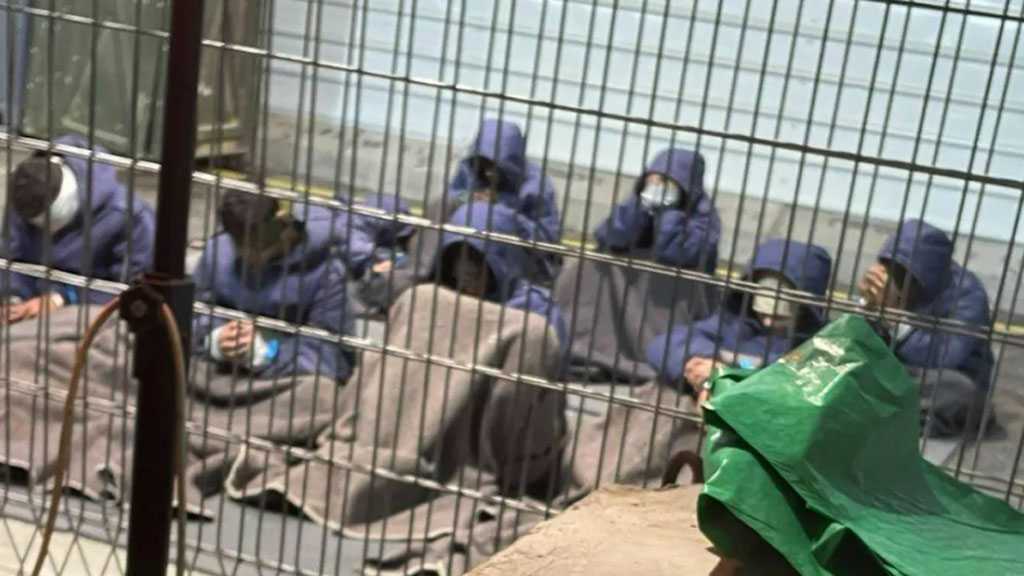
“Israeli” prison guards have shot Palestinian prisoners with rubber bullets, causing severe injuries that included the surgical removal of a testicle and an operation for a fractured shin, according to a report published by “Israeli” daily “Haaretz” on Wednesday, citing medical records and testimonies.
The newspaper reported that Physicians for Human Rights “Israel” and the Public Committee Against Torture in “Israel” had documented 21 shooting incidents across five “Israeli” prisons since October 2023.
According to testimonies collected by the organizations, most incidents occurred in late 2025 and the first half of 2026. The shootings frequently took place at close range and without any preceding unrest, while the ammunition was believed to consist of rubber or plastic projectiles.
The most severe case involved a Palestinian prisoner at Ketziot Prison in southern “Israel,” who was shot in the testicle in June. Medical records from Soroka Hospital showed that the organ had been completely destroyed, making surgical removal necessary.
In testimony provided to his lawyer, the prisoner said prison guards had kicked him in the testicles during a strip search a week before the shooting, leaving him in severe pain. He said he was not permitted to see a doctor until two days later.
According to his account, members of the “Israeli” Prison Service’s Masada unit fired rubber bullets into his cell a week after the beating, striking the previously injured testicle and the area behind his right knee.
The prisoner said guards then dragged him approximately 50 meters while he was bleeding heavily. He eventually received medical attention and was transferred to a hospital.
In another incident documented in July, a prisoner at Ketziot required surgery for a fractured left shin after being struck by a rubber bullet, according to prison medical records.
A former detainee also told “Haaretz” that he had been shot at close range in April and denied adequate medical treatment for 15 days. He said he underwent surgery only after his release from prison.
The rights organizations reported that the shootings had taken place in several areas within prison facilities, including cells, prison yards, and locations where detainees waited to meet their lawyers.
In August, the organizations called on “Israeli” authorities to immediately halt the use of such ammunition against prisoners, particularly at close range and in confined spaces, warning that the practice could result in potentially fatal injuries.
The “Israeli” Prison Service rejected demands for a blanket prohibition, maintaining that the use of weapons it described as less lethal was determined by operational requirements and assessments of potential threats.
Meirav Ben Zeev, a lawyer with the Public Committee Against Torture in Israel, told Haaretz that Palestinian prisoners were often reluctant to report abuse because they feared retaliation. She added that complaints submitted in recent years had not led to prosecutions.
Approximately 9,350 Palestinians, including 350 children and 90 women, are currently being held in “Israeli” prisons, according to the figures cited in the report.
Palestinian and “Israeli” human rights organizations have reported widespread torture, starvation and medical neglect in detention facilities, practices they say have contributed to dozens of deaths in custody.
The latest findings have renewed concerns over the treatment of Palestinian prisoners and the use of force inside “Israeli” detention facilities, particularly amid allegations of serious abuse, inadequate medical care, and limited accountability for those responsible.
Comments