Khatibzadeh: Lebanon Must Be Included in Any Regional Agreement with Iran
By Staff, Agencies
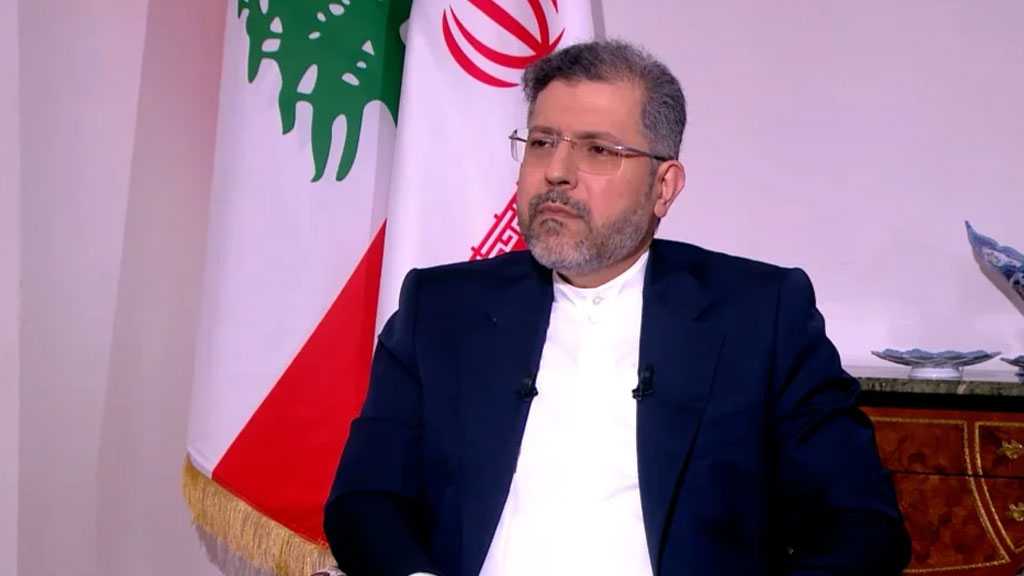
Iranian Deputy Foreign Minister Saeed Khatibzadeh reaffirmed on Friday that Tehran remains committed to securing an end to the “Israeli” war on Lebanon as part of any broader regional agreement, stressing that the conflicts across the region are interconnected and cannot be resolved in isolation.
In an interview with Al Mayadeen, Khatibzadeh said Iran continues to pursue a diplomatic solution despite what he described as repeated violations of existing agreements by Washington and “Israel.” He emphasized that negotiations founded on mutual respect and adherence to commitments remain the only viable path toward a lasting resolution.
The Iranian official made the remarks following a series of meetings in Beirut, including discussions at the Lebanese Foreign Ministry, with Parliament Speaker Nabih Berri, and with officials at the Prime Minister’s Office. He described the meetings as positive, reflecting continued coordination and close consultations between Lebanon and Iran.
Khatibzadeh said Tehran had sought during the visit to bring the parties’ positions closer together and ensure that Lebanon would be included in any final agreement. He stressed that Lebanon remains one of the most significant issues under discussion between Tehran and Washington, warning that continued hostilities on any front would mean the wider regional war remained unresolved.
He reiterated that ending the war on Lebanon and the wider Levant constitutes one of Iran’s fundamental conditions in mediation efforts, insisting that developments across the region cannot be separated from one another.
Khatibzadeh also accused Washington and “Israel” of undermining the Islamabad Memorandum of Understanding, claiming that attacks against Iran and Lebanon shortly after its signing amounted to violations of the agreement. He argued that subsequent developments represented a continuation of these violations, accusing “Israel” of attempting to derail the peace process by pursuing a separate negotiating track with Lebanon under US backing.
The Iranian deputy foreign minister further accused the “Israeli” occupation of evading its commitments, arguing that Washington bears responsibility for restraining its regional ally and ensuring compliance with agreements.
Addressing Iran’s relationship with Hezbollah, Khatibzadeh emphasized the Lebanese origins of the Resistance movement, describing its emergence as a response to “Israeli” aggression and the occupation of Lebanese territory. He explained that Hezbollah was established through the efforts of Lebanese youths from different religious and sectarian backgrounds who united around the objective of ending the occupation.
He stressed that Iran’s relations with its allies are rooted in shared principles, convictions, and values, reaffirming Tehran’s commitment to standing by its partners. He also called on the Lebanese people to support Hezbollah and strengthen the country’s deterrence capabilities in the face of further “Israeli” aggression.
Regarding the issue surrounding Iran’s ambassador in Beirut, Khatibzadeh confirmed that efforts to resolve the matter had been initiated, expressing confidence that it could be addressed through dialogue and diplomatic prudence.
On relations with Washington, the Iranian official dismissed the significance of US domestic political developments, including elections and statements by President Donald Trump, maintaining that Tehran’s positions would not be dictated by American political considerations. Instead, he insisted that Washington must be held accountable for failing to honor its commitments.
Khatibzadeh reiterated Iran’s readiness to engage in balanced negotiations and pursue reconciliation based on mutual respect, provided the United States demonstrates a genuine willingness to act responsibly.
Reflecting on the US-“Israeli” war against Iran, he described the military campaign as illegal and contrary to international law, accusing Washington of seeking to overthrow the Iranian government, undermine the country’s territorial integrity, and dismantle its deterrence capabilities. He maintained that these objectives had failed, portraying the confrontation as an existential war in which Iran had resisted attempts to undermine its sovereignty.
Despite the scale of the confrontation, Khatibzadeh stressed that diplomacy remains the only viable path toward a lasting resolution. He reaffirmed Tehran’s willingness to address concerns surrounding its nuclear program while safeguarding its right to the peaceful use of nuclear energy, maintaining that reports issued by the International Atomic Energy Agency [IAEA] had demonstrated Iran’s full compliance with its obligations.
On the Strait of Hormuz, Khatibzadeh recalled Tehran’s proposal to reopen the strategic waterway for a limited period of seven days, presenting the initiative as part of Iran’s efforts to address the ongoing crisis. He nevertheless warned that Iran remained prepared to defend itself against further military aggression and would not abandon the defense of its sovereignty.
Turning to the broader international landscape, the Iranian official argued that the world was undergoing a transition away from the existing international order toward a new global arrangement, with technological competition, particularly in artificial intelligence, emerging as a central arena of geopolitical rivalry.
He maintained that the war had exposed the limitations of US military power in the region and challenged perceptions of the strength of the “Israeli” occupation. Khatibzadeh further claimed that US military bases across the region had been destroyed during the confrontation, arguing that the conflict had exposed what he described as their primary purpose of protecting “Israel.”
Addressing relations with neighboring countries, Khatibzadeh accused Kuwait and Bahrain of allowing their territories to be used to launch attacks against Iran during the war. He argued that countries facilitating such operations could not subsequently portray themselves as victims of the conflict.
The Iranian diplomat called on neighboring states to refrain from participating in regional alignments directed against Iran and Iraq, stressing that their territories must not be used as platforms for hostile military operations against Iran.
Turning to Yemen, Khatibzadeh called for an immediate ceasefire and an end to the Saudi blockade, warning of the severe humanitarian consequences of continued hostilities. He highlighted the acute shortages of food and medicine facing the Yemeni population, stressing the urgent need to alleviate civilian suffering and allow Yemenis to resume their normal lives.
He emphasized that addressing Yemen’s humanitarian crisis requires an immediate halt to military operations and the lifting of restrictions obstructing access to essential supplies, reiterating Tehran’s position that regional stability depends on ending hostilities and addressing the interconnected crises affecting the region.
Comments