- Home
- ISLAMIC RESISTANCE
- SECRETARY-GENERAL
-
Full Speeches
- Speeches-2000
- Speeches-2006
- Speeches-2007
- Speeches-2008
- Speeches-2009
- Speeches-2010
- Speeches-2011
- Speeches-2012
- Speeches-2013
- Speeches-2014
- Speeches-2015
- Speeches-2016
- Speeches-2017
- Speeches-2018
- Speeches-2019
- Speeches-2020
- Speeches-2021
- Speeches-2022
- Speeches-2023
- Speeches-2024
- Speeches-2025
- Speeches-2026
- Speech-Reports
- SG
-
Full Speeches
- Voices
- Ten Day Dawn
- The Biggest Crime
- Martyr Leaders

Pezeshkian Says US Threats Undermine Negotiations
By Staff, Agencies
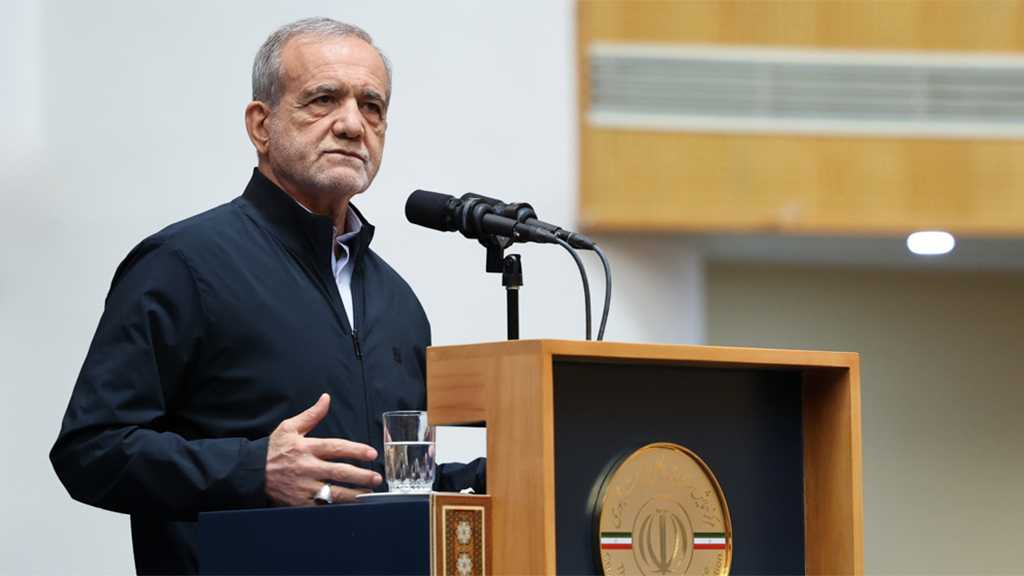
Iranian President Masoud Pezeshkian has said negotiations with the US cannot proceed meaningfully while Washington continues to threaten Iran and maintain sanctions and economic pressure against the Islamic Republic.
“Threats and sanctions must be removed in practice to create the conditions for dialogue,” Pezeshkian wrote on X on Wednesday. He added that Washington could not intensify sanctions and pressure, restrict avenues for engagement and simultaneously call for negotiations.
Earlier on Wednesday, Pezeshkian said the US must recognize Iran’s national rights and stop what he described as bullying and aggression before the two sides could engage in dialogue. Speaking at a ceremony, he reiterated that blocking diplomatic channels while issuing threats was unacceptable.
The Iranian president also criticized Washington for failing to honor agreements, arguing that commitments must be respected even when they become disadvantageous to one of the parties.
“I believe that one should not enter into a pact lightly, but once a pact is made, one must remain committed to it until the end, even if it proves disadvantageous,” he said.
His remarks come amid reports that the US military has developed plans for renewed strikes against Iran, potentially targeting energy infrastructure and peaceful nuclear facilities with the GBU-43/B Massive Ordnance Air Blast, known as the “Mother of All Bombs.”
In response to the reported threats, Iran’s Deputy Permanent Representative to the United Nations called on the UN Security Council to convene an emergency meeting and condemn US and “Israeli” threats against Iranian territory and critical infrastructure.
The tensions follow the 40-day war launched against Iran on February 28, 2026, while Tehran and Washington were engaged in negotiations over Iran’s peaceful nuclear program.
The attacks followed three rounds of indirect talks in Muscat and Geneva, with technical discussions scheduled to begin in Vienna.
Iran retaliated with missile and drone attacks targeting the occupied territories and US bases and interests across the region.
In June, the two sides signed a 14-point memorandum of understanding remotely under Pakistan’s mediation, committing to end military operations on all fronts.
The agreement also provided for easing restrictions on the Strait of Hormuz, lifting the US naval blockade and releasing frozen Iranian assets.
However, Tehran has accused Washington of repeatedly violating the memorandum through military strikes, revoking oil sale licenses and failing to halt continued “Israeli” attacks against Lebanon.
Pezeshkian’s latest statements underscore Tehran’s position that meaningful negotiations require an end to military threats and sanctions, alongside respect for existing agreements.