- Home
- ISLAMIC RESISTANCE
- SECRETARY-GENERAL
-
Full Speeches
- Speeches-2000
- Speeches-2006
- Speeches-2007
- Speeches-2008
- Speeches-2009
- Speeches-2010
- Speeches-2011
- Speeches-2012
- Speeches-2013
- Speeches-2014
- Speeches-2015
- Speeches-2016
- Speeches-2017
- Speeches-2018
- Speeches-2019
- Speeches-2020
- Speeches-2021
- Speeches-2022
- Speeches-2023
- Speeches-2024
- Speeches-2025
- Speeches-2026
- Speech-Reports
- SG
-
Full Speeches
- Voices
- Ten Day Dawn
- The Biggest Crime
- Martyr Leaders

France Brings Forward Minimum Wage Increase Amid Protests
By Staff, Agencies
French Prime Minister Sébastien Lecornu announced on Monday that the government would bring forward a planned minimum wage increase to December instead of January, seeking to ease mounting public anger over the cost of living amid weeks of protests and unrest.
The government will raise the minimum wage by 1.6%, increasing monthly net pay from €1,478 to €1,502, an increase of €24, Labor Minister Jean-Pierre Farandou said at a press conference, according to Reuters.
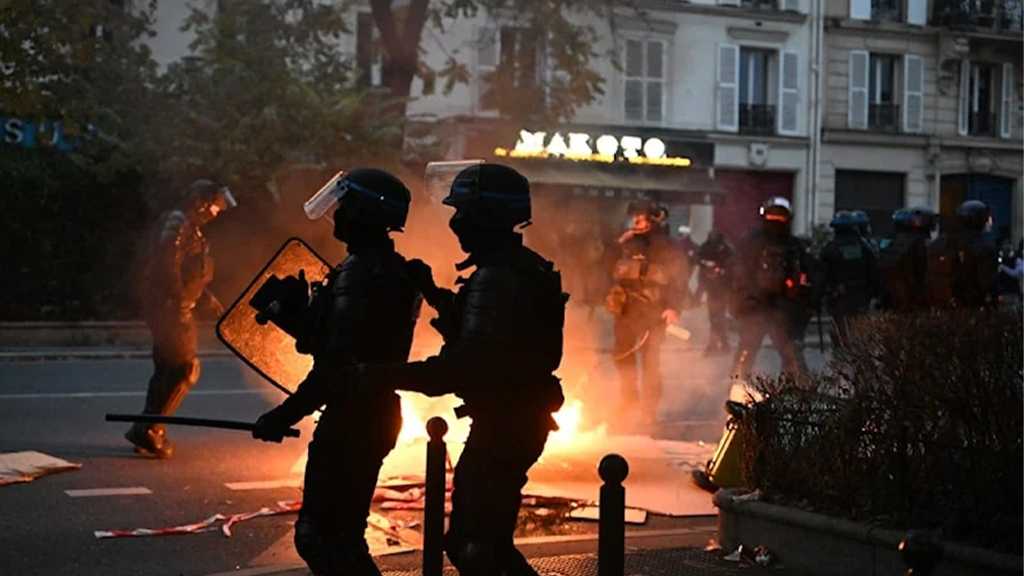
The increase was initially scheduled for January 1 in line with inflation. The decision comes as France faces a wave of demonstrations that began over underfunded schools before expanding into broader protests over living costs and public services.
Riots in major cities on October 17 caught security forces off guard, adding to pressure on the government to address growing social tensions.
Speaking after a meeting with trade unions and employers' federations, Lecornu defended the measure, describing it as the second-largest minimum wage increase in 20 years.
However, the announcement falls short of union demands. The CFDT, France’s largest trade union, had called for a €100 monthly increase, while the CGT demanded a 10% rise, equivalent to approximately €150 per month.
CFDT head Marylise Léon described the government's decision as “insufficient,” while CGT head Sophie Binet dismissed it as “crumbs,” declaring that workers had not come to beg for alms. Binet also called for renewed demonstrations on November 17.
The government faces mounting social tensions five months ahead of France’s presidential election, with far-right leader Marine Le Pen leading opinion polls.
President Emmanuel Macron, whose approval ratings have fallen to record lows, is approaching the end of his second term and is constitutionally barred from seeking another.
France has one of Europe's highest minimum wages and one of the largest proportions of workers earning at or near that level.
According to Eurostat figures cited by Reuters, the minimum wage represented 67% of average earnings in 2024, while 12.7% of employees received pay at or near that level, compared with 8% in Germany and 3.5% in the Netherlands.
The high proportion of minimum-wage workers makes adjustments particularly significant for labor costs and politically sensitive. The government is seeking to contain public discontent while facing limited financial room for maneuver amid its growing debt burden.
The protests, which began in high schools in September, have since developed into a broader expression of frustration over living costs, public services and political stagnation.
The unrest is unfolding as France approaches a presidential election in which opinion polls indicate that Le Pen could face hard-left candidate Jean-Luc Mélenchon in a runoff.
Comments
- Related News