French Police Violence Against Student Demonstrators Sparks Outrage
By Staff, Agencies
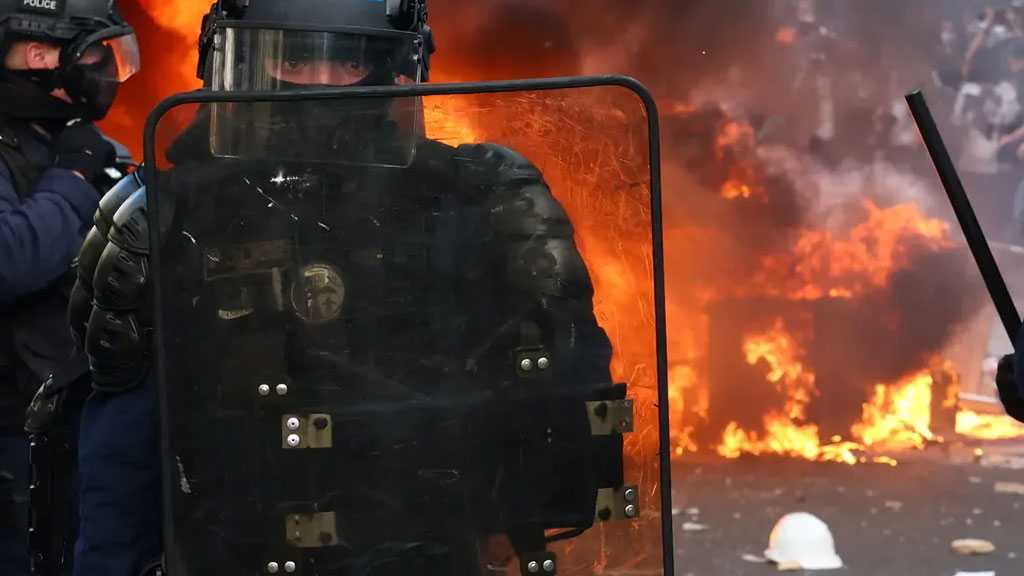
The use of force by French police against student demonstrators has once again come under intense scrutiny, with reports of tear gas, baton charges and serious injuries raising concerns over civil liberties, police accountability and the right to peaceful protest.
Images of riot police confronting crowds, teenagers fleeing police charges and demonstrators suffering life-altering injuries have reignited debate over France’s approach to controlling public demonstrations.
As protests over the rising cost of living, declining public services and worsening economic conditions spread across the country, police conduct has emerged as a major source of public anger. For many demonstrators, the issue is no longer limited to economic grievances or government policies but also concerns the state’s response to popular dissent.
One of the most controversial weapons used by French security forces is the LBD-40, a launcher that fires high-impact rubber projectiles. Human rights organizations have repeatedly raised concerns about the potential consequences of these weapons, particularly when projectiles strike the head, face or upper body.
Recent demonstrations have highlighted the severity of these risks. On October 5, a 15-year-old student in Lens lost his hand when a grenade exploded during a police intervention outside his school. In Tours, a 16-year-old student lost sight in one eye following an injury consistent with an LBD projectile. Another teenager, aged 14, sustained multiple jaw fractures and extensive dental injuries after being struck by a projectile fired by police.
These incidents are part of a wider pattern of reported injuries. An investigation published by French newspaper Le Monde in November documented dozens of serious injuries among demonstrators and bystanders during the latest protests. Its preliminary findings included three amputations and four cases of severe eye injuries, with weapons used by security forces implicated in the overwhelming majority of cases.
Further confrontations occurred during demonstrations on October 17, as mobilization expanded beyond student groups to include broader opposition to the rising cost of living and police violence. Video footage and eyewitness accounts documented additional injuries involving explosive grenades and police operations.
However, concerns over French policing practices predate the current demonstrations. During the Yellow Vest movement, which began in 2018 amid anger over fuel prices and broader economic grievances, police use of rubber projectiles and explosive grenades resulted in numerous serious injuries, including permanent eye damage and amputations.
The controversy also recalls the 2014 death of environmental activist Rémi Fraisse, who was killed by a police grenade during protests against a dam project.
In 2023, the fatal shooting of 17-year-old Nahel Merzouk by a police officer during a traffic stop in Nanterre triggered nationwide unrest and renewed scrutiny of police practices, racial discrimination and accountability.
International human rights organizations, including Human Rights Watch and Amnesty International, have repeatedly expressed concern over the use of excessive force against demonstrators in France. They have warned that indiscriminate crowd-control weapons, mass arrests, and aggressive containment tactics can threaten the fundamental right to peaceful assembly.
French Interior Minister Laurent Nuñez, meanwhile, has defended the use of so-called less-lethal weapons, arguing that they are necessary when officers face serious violence.
Nevertheless, the controversy extends beyond the legality of specific weapons. At its core, it raises broader questions about the relationship between the French state and its citizens, particularly when people exercising their right to protest face the possibility of permanent physical injuries.
As economic frustration deepens and demonstrations continue, the methods employed by security forces are becoming an additional source of public discontent.
The central question facing France is no longer simply how authorities can restore public order, but whether they can do so without undermining the democratic freedoms and civil liberties they are expected to protect.