- Home
- ISLAMIC RESISTANCE
- SECRETARY-GENERAL
-
Full Speeches
- Speeches-2000
- Speeches-2006
- Speeches-2007
- Speeches-2008
- Speeches-2009
- Speeches-2010
- Speeches-2011
- Speeches-2012
- Speeches-2013
- Speeches-2014
- Speeches-2015
- Speeches-2016
- Speeches-2017
- Speeches-2018
- Speeches-2019
- Speeches-2020
- Speeches-2021
- Speeches-2022
- Speeches-2023
- Speeches-2024
- Speeches-2025
- Speeches-2026
- Speech-Reports
- SG
-
Full Speeches
- Voices
- Ten Day Dawn
- The Biggest Crime
- Martyr Leaders

France: Up to 300000 Expected As France’s Pay Dispute Deepens
By Staff, Agencies
Up to 300,000 people are expected on the streets of France on Tuesday as public sector unions stage another nationwide strike over pay.
In further detail, a police source told AFP that between 220,000 and 300,000 demonstrators are anticipated across the country, including 40,000 to 80,000 in the capital, where the main march is due to set off at 2:00 pm [1300 GMT]. Dozens of other events are planned elsewhere.
The walkout involves France's 5.8 million state employees. It follows a Friday meeting with Prime Minister Sebastien Lecornu, which union representatives left unconvinced that the measures on offer matched how pressing the pay problem has become. Several additional unions signed on to the strike after that meeting.
Labor groups had been seeking raises for all public workers ever since the minimum wage for private-sector employees was increased last week.
Staff want the government to unfreeze the index point that sets the base pay scale for public servants. The draft budget excludes a general raise for a fourth year running. Unions say public employees have lost 16 percent of their purchasing power since 2017, and that inflation is pushing growing numbers of them down to, or close to, the minimum wage.
The unrest lands as the government rushes to pass a 2027 budget while under pressure to shrink the deficit. The eurozone's second-biggest economy has endured over a month of school blockades and protests about living costs. Next year's presidential vote is approaching, and the far right is hoping to take power.
Youth organizations and Yellow Vest activists are expected to swell Tuesday's ranks. Their involvement follows weekend demonstrations over a range of complaints, from inflation to a proposed police law.
Meanwhile, authorities have restricted unannounced gatherings around several schools and universities in the capital and have temporarily outlawed firecracker sales, citing fears of unrest.
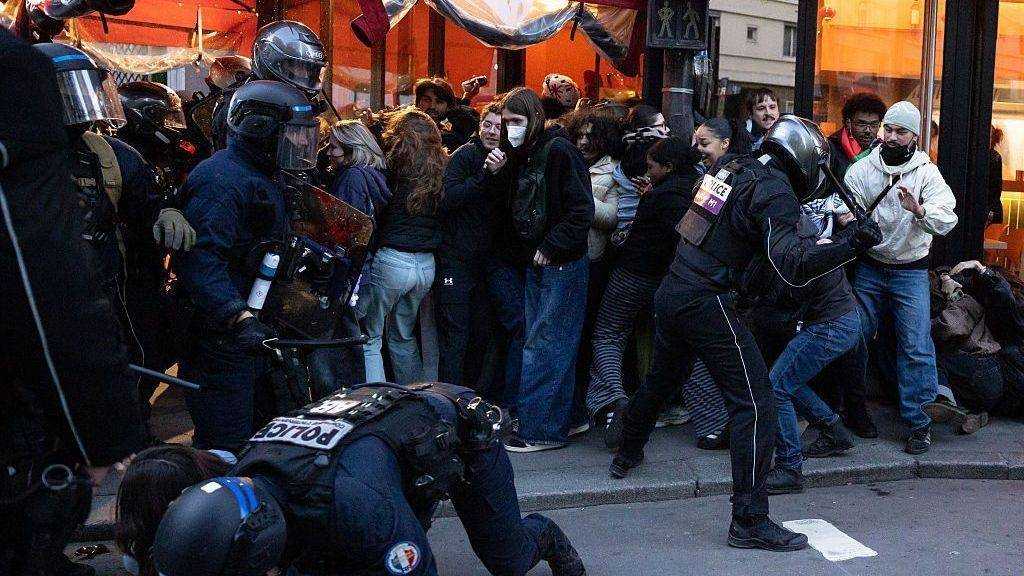
This is the third time since September that unions have joined forces for a day of action. Hundreds of thousands marched, and in some cities, clashes broke out and police used tear gas.
Human rights activists have accused French law enforcement officers of using disproportionate force against demonstrators during the wider protests.
France's protests began in mid-September, when high school students in the Paris suburbs took to the streets to demand improvements to their schools. They were later joined by demonstrators protesting rising prices, with the movement spreading to other parts of France.
The protests come as France faces skyrocketing energy prices and inflation that continues to grow, adding economic pressure on citizens and driving a wave of protests across the country.