- Home
- ISLAMIC RESISTANCE
- SECRETARY-GENERAL
-
Full Speeches
- Speeches-2000
- Speeches-2006
- Speeches-2007
- Speeches-2008
- Speeches-2009
- Speeches-2010
- Speeches-2011
- Speeches-2012
- Speeches-2013
- Speeches-2014
- Speeches-2015
- Speeches-2016
- Speeches-2017
- Speeches-2018
- Speeches-2019
- Speeches-2020
- Speeches-2021
- Speeches-2022
- Speeches-2023
- Speeches-2024
- Speeches-2025
- Speeches-2026
- Speech-Reports
- SG
-
Full Speeches
- Voices
- Ten Day Dawn
- The Biggest Crime
- Martyr Leaders

China, Russia, US Issue Joint Declaration on Peace
By Staff, Agencies
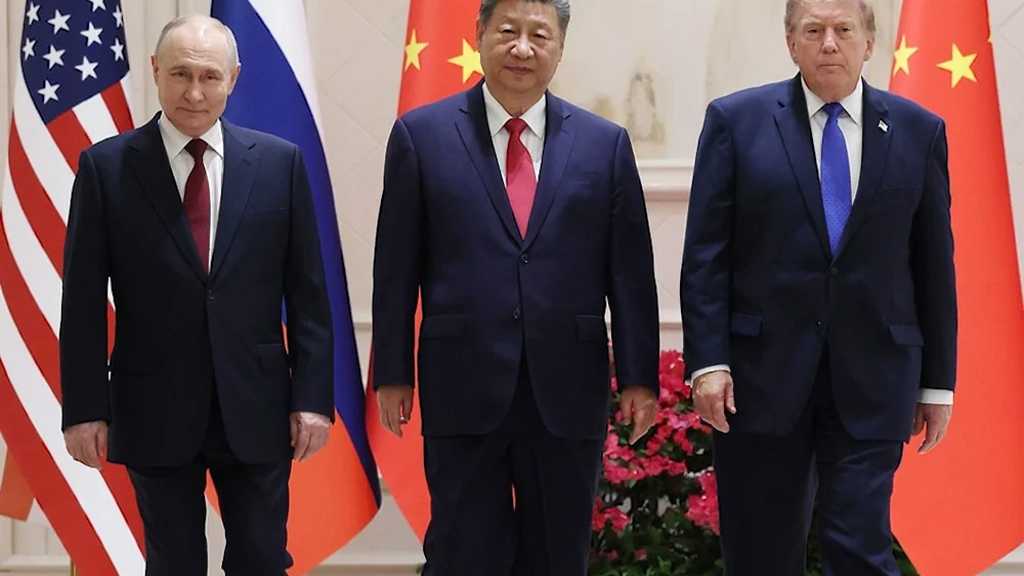
China, Russia, and the United States issued a joint Declaration on Peace on Thursday following an unprecedented trilateral summit in Shenzhen between Chinese President Xi Jinping, Russian President Vladimir Putin, and US President Donald Trump, outlining commitments to international security, United Nations reform, energy cooperation, and nuclear risk reduction.
The declaration identified several areas of cooperation among the three permanent members of the UN Security Council, including strengthening global energy supplies, pursuing institutional reforms at the United Nations, and establishing dialogue on nuclear risks. However, it provided few details on how these commitments would be implemented.
According to the joint statement, Putin and Trump thanked China for hosting what the declaration described as a “historic” meeting. The three leaders also exchanged views on international developments and reaffirmed their commitment to strategic stability and international security.
The three countries pledged to work toward reforming the United Nations to strengthen its ability to respond to international challenges and fulfill its responsibility for maintaining global peace and security.
They emphasized the importance of improving the organization's effectiveness but did not identify specific institutional changes or establish a timetable for the proposed reforms.
On energy cooperation, the three governments agreed to work toward expanding the production and supply of refined petroleum products, emphasizing the importance of maintaining stable energy flows to international markets.
The commitment comes amid disruptions to global energy markets linked to the war involving Iran and concerns over maritime traffic through the Strait of Hormuz.
However, the declaration provided no production targets or specific arrangements for coordinating energy supplies among the three countries.
The document also addressed international jurisdiction, with the leaders emphasizing the principle of state consent and the need to respect the immunity of government officials.
They maintained that the International Criminal Court (ICC) and similar institutions should not exceed or abuse their jurisdiction.
The position is particularly relevant to Russia, as Putin is subject to an ICC arrest warrant over alleged war crimes in Ukraine. However, the declaration made no reference to specific individuals or cases and proposed no changes to the court's legal framework.
On nuclear security, the three leaders reaffirmed that a nuclear war cannot be won and must never be fought. They also committed to dialogue aimed at reducing nuclear risks and preventing the proliferation of nuclear weapons.
The announcement follows the expiration of the New START treaty in February 2026, ending the last treaty-based restrictions on the strategic nuclear arsenals of the United States and Russia.
Although the declaration establishes a framework for further discussions, it contains no binding arms-control commitments, numerical limits on nuclear stockpiles, or timetable for negotiations.
Comments
- Related News