- Home
- ISLAMIC RESISTANCE
- SECRETARY-GENERAL
-
Full Speeches
- Speeches-2000
- Speeches-2006
- Speeches-2007
- Speeches-2008
- Speeches-2009
- Speeches-2010
- Speeches-2011
- Speeches-2012
- Speeches-2013
- Speeches-2014
- Speeches-2015
- Speeches-2016
- Speeches-2017
- Speeches-2018
- Speeches-2019
- Speeches-2020
- Speeches-2021
- Speeches-2022
- Speeches-2023
- Speeches-2024
- Speeches-2025
- Speeches-2026
- Speech-Reports
- SG
-
Full Speeches
- Voices
- Ten Day Dawn
- The Biggest Crime
- Martyr Leaders

Germany Hit by Major Industrial Strikes as 150,000 Workers Walk Out
By Staff, Agencies
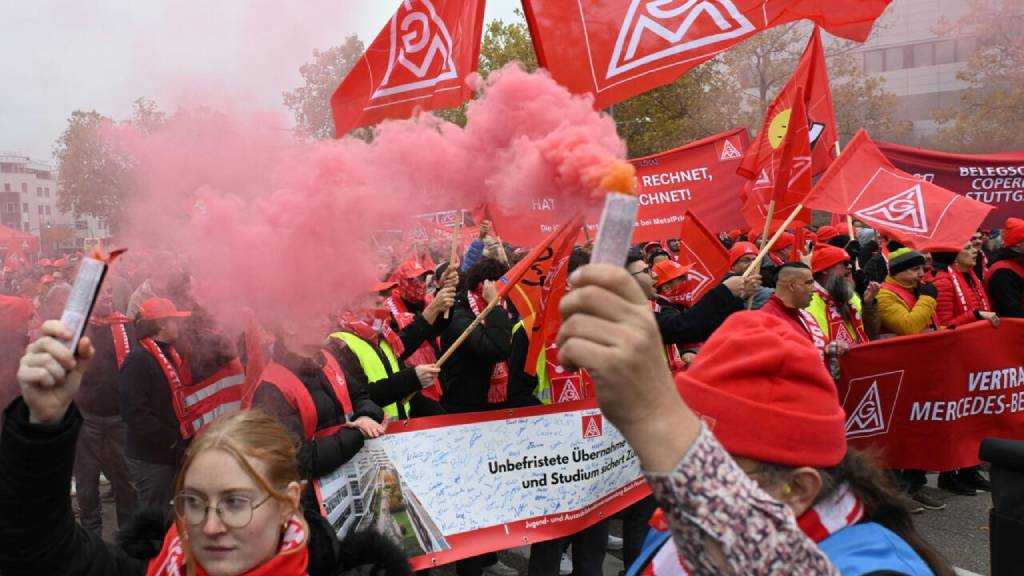
More than 150,000 workers across nearly 100 industrial companies in Germany launched 24-hour warning strikes on Friday amid an ongoing dispute over wages and job security, German news agency DPA reported, citing trade union IG Metall.
The strikes affected several industrial sectors, particularly automotive manufacturers. Numerous employees at BMW and Audi facilities in Bavaria joined the walkouts, while North Rhine-Westphalia recorded the highest number of participating businesses. According to Tagesschau, this marks IG Metall's first 24-hour strikes in eight years.
The union proceeded with the action despite employers offering to resume negotiations over collective labor agreements. The dispute affects approximately 3.7 million industrial workers. On November 19, IG Metall demanded a 5% wage increase over 12 months, alongside guarantees protecting jobs and production sites. Employers countered with a 1.3% increase starting no earlier than July 2028, under a 26-month agreement.
The escalation follows three unsuccessful rounds of negotiations held between November 5 and 9. Previous warning strikes involving approximately 464,000 workers since November 1 also failed to bring the two sides closer to an agreement, according to the German Trade Union Confederation [DGB].
Beyond wage increases, IG Metall is seeking profit-sharing arrangements at financially successful companies, improved benefits for lower-paid employees and apprentices, and safeguards for employment and vocational training.
It has also proposed allowing struggling companies temporary flexibility in implementing wage agreements in exchange for binding investment and job commitments.
Employers have proposed a one-time payment equivalent to 1% of workers' average annual gross wages in July 2027, which could be reduced or withheld at financially struggling companies.
They are also seeking greater flexibility in collective agreements, including allowing certain working conditions to be negotiated directly with company works councils.
Comments
- Related News