The Arab boycott of “Israel”: “camouflaged trade “
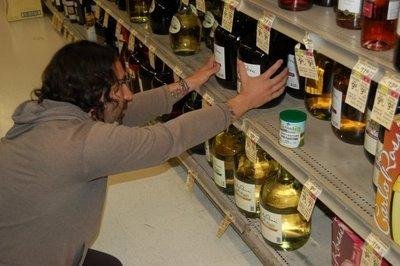
The Arab League boycott of "Israel" aims to isolate "Israel" economically in support of the Palestinians who have been suffering from "Israeli" occupation since 1948.
An official organized boycott was adopted by the Arab League after the 1948 Arab-"Israeli" War. The Arab League boycott of "Israel" began in 1951 by prohibiting trade and economic relations with the Zionist state, and to penalize countries and companies that deal with "Israel".
Although the boycott was forced for several decades, it has worn in recent years due in part to the normalization of relations between "Israel", Jordan and Egypt, and the establishment of trade offices in Morocco and Qatar.
The normalization of relations (between "Israel" and Egypt) went into effect in January 1980. Ambassadors were exchanged in February. The boycott laws were repealed by Egypt\'s National Assembly the same month, and some trade began to develop. In March 1980 regular airline flights were inaugurated. Egypt also began supplying "Israel" with crude oil.
Besides, the dominance of globalization and international trade, and the incapability of Arab countries to manufacture some products like military equipment have also crippled the Arabs only economic weapon against "Israel".
As a result, Arab markets are penetrated daily by "Israeli" products and investments in a variety of illegal ways.
Experts say the camouflaged trade, with just a small portion receiving publicity, has been going on for years between "Israel" and its Arab neighbours.
The hidden trade is worth about $400 million a year - about two and a half times what "Israel" sold to its official Arab trading partners, Egypt and Jordan, in 2004 - said Gil Feiler, the director of Info-Prod Research, a Tel Aviv consultancy specializing in Arab markets, and an economic professor at Bar Ilan University.
The true amount of Arab imports from "Israel" is unattainable because neither side makes it public, with "Israeli"-made goods moving to Arab customers through third countries - Cyprus or the Netherlands, for example, which list the shipments as local exports.
Thus, the estimated amount of direct illegal trade in products between "Israel" and its Arab neighbours is uncertain and varies. In 2004, the manufacturers Association of "Israel" estimated "Israeli" exports Arab nations and entities amounted to around 192$ million.
A year later, Infoprod, an "Israeli" research firm that specializes in regional trade, estimated that the figure amounted to $400 million.
Doron Peskin, head of research at Infoprod, estimated that total Arab-"Israeli" trade averaged $780 million per year in 2007 and 2008, including trade with Jordan and Egypt.
This type of trade does exist and is channelled to the Arab world through several means, regardless of the amount of prohibited trade in addition to investments from "Israel" to the Arab world.
The major passage way for "Israeli" products to enter Arab markets is through front companies founded in countries that have bilateral ties with both Arab nations and "Israel" or through Jordan and Egypt which have signed peace deals with "Israel".
"Israeli" products are shipped to third parties in these countries, who then eliminate any markings which would recognize the products as being made in "Israel" and forward the products onto Arab markets.
The main doers of this type of practice are companies which are located in Jordan, Egypt, Cyprus, Netherlands and even China.
In agricultural produce, for instance, "Israel" exports to Jordan and there the data change and the products are transported to the Gulf markets as Jordanian produce, it is worth noting that "Israeli" exports to Arab countries are mostly from three categories: agricultural equipment, such as for irrigation; animal vaccines and technological knowledge and components.
Another method engage "Israeli" investors who use Palestinian agents in the Dafa (occupied West Bank ) to repackage "Israeli" potatoes with sham certificates of origin in order to sell them as Palestinian produce to Qatar via Jordan.
Even with the mounting costs of using third parties, the attraction of penetrating Arab markets seems natural given the types of products excels at manufacturing.
Furthermore, The original text of the Arab league boycott specifies that member states hold to a primary boycott (products that originate in "Israel"), secondary boycott (businesses that operate and manufacture in "Israel") and tertiary boycott (a boycott of business that have relationships with other businesses trading in "Israel").
Nowadays, the tertiary boycott is no more in function that\'s why Pepsi, Coke, Starbucks and other international brands can function in both "Israel" and the Arab world. And only Lebanon and Syria uphold some of the principles of the second boycott.
Many "Israeli" companies also sell their goods through distributors in the Middle East and simply re-route their wares through another office setup in a third country.
The "Israeli" origin of products is hidden by methods other than third-country exports. Arabs of Lebanese origin in "Israel" sell counterfeit Lebanese certificates of origin complete with forged government stamps. Some "Israeli" factories have departments of so-called quality control - where any Hebrew writing or ‘Made in Israel\' marks are removed from product components.
Some ships even sail from the northern "Israeli" port of Haifa to Beirut, Lebanon. The Beirut Port Authority denies that the practice exists.
For now, "Israeli" wares choke daily Arab markets and looks set to escalate, especially since the products of Israel\'s advanced Hi-Tech industry targets the Gulf markets.
The boycott has significantly weakened over the years, which paved the way for "Israel" to sell its products in the Arab markets, abolishing any "Israeli" need to covertly trade with its Arab neighbours because in many instances "Israel" can already do business with Arabs.
Comments