Iran’s Army Chief: Strait of Hormuz Will Remain Closed Until Tehran’s Rights Are Respected
By Staff, Agencies
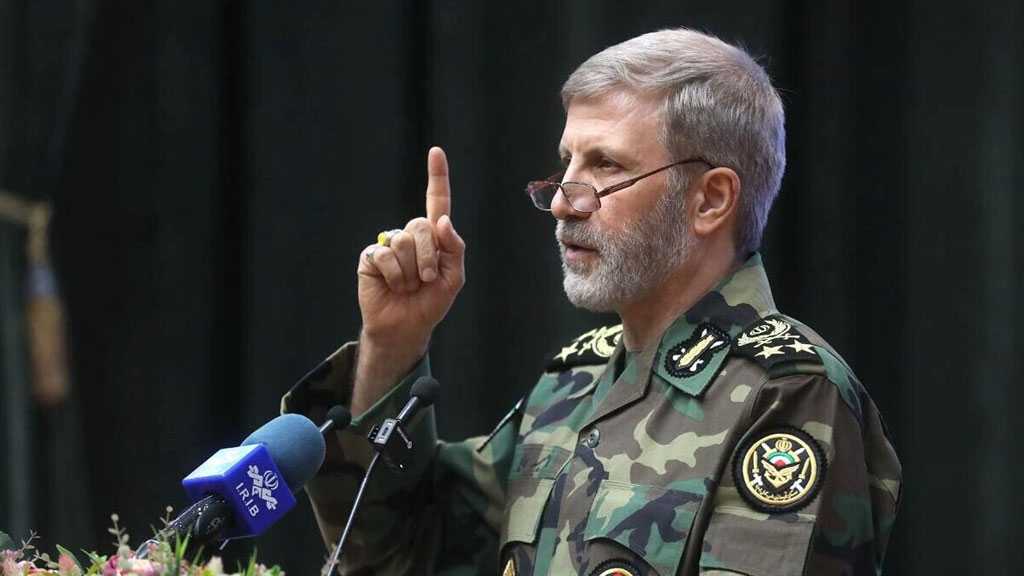
Commander of the Islamic Republic of Iran Army, Major General Amir Hatami, has declared that the Strait of Hormuz will remain closed until what he described as the legitimate rights of the Iranian nation are fully respected by its adversaries.
Speaking on Thursday evening at the closing ceremony of the 11th National I’tikaf Festival, held at Imam Ali Officer University, Hatami described the strategic waterway as a fundamental source of the Islamic Republic’s geopolitical power.
“The Strait of Hormuz was closed immediately at the start of the war, remains closed today, and will remain closed until the enemy respects the rights of the Iranian nation,” he said.
Hatami emphasized that Iran’s armed forces maintain full operational oversight of the strait. According to the Army chief, the western section falls under the responsibility of the Islamic Revolution Guards [IRG] Navy, while the eastern section and the Sea of Oman are controlled by the Army Navy. He rejected claims that the waterway is open, asserting that maritime traffic has been severely restricted and that hostile vessels have been prevented from entering Iranian maritime zones, apart from a limited number of cases involving engagements with repeated gunfire.
The Army chief also addressed what he described as the strategic miscalculations of Iran’s adversaries during the imposed war of aggression. He said the opposing side had wrongly assumed that Iran was weakened, underestimated the Iranian people’s continued support for their country despite years of pressure and failed to recognize the resilience of the Islamic Republic’s institutions.
Hatami noted that Iranian forces continued their operations even following the martyrdom of senior commanders, while government institutions maintained their functions. He argued that these factors prevented the adversary from achieving its military and strategic objectives.
Warning against any attacks on Iran’s infrastructure, the senior commander said Tehran would respond with force several times greater than the scale of any such aggression. He added that retaliatory operations could target the infrastructure and interests of the opposing side, the Israeli regime, and any country cooperating with it. He further stressed that Iranian armed forces remain fully prepared along the country’s borders to confront any potential threat.
Iranian forces assumed operational control of the Strait of Hormuz following the beginning of what Tehran describes as US-Israeli aggression on February 28. Iranian officials have repeatedly maintained that passage through the waterway can be coordinated for non-hostile vessels, provided they obtain authorization from the relevant Iranian authorities. Shipping associated with the opposing forces, meanwhile, remains prohibited, while routes deemed unauthorized have also faced efforts to restrict their use.
Tehran has linked the full reopening of the strait to the restoration of Iran’s national rights, including an end to military aggression, the lifting of what it describes as illegal sanctions and blockades, and compliance with commitments made under previous understandings.
Iranian officials have repeatedly underscored that the country’s sovereignty over its maritime territory is non-negotiable, maintaining that control of the Strait of Hormuz will remain a strategic instrument until Tehran’s stated demands are met.