US Rocket Failure Destroys 40 Amazon Satellites, Exposing Space Industry Woes
By Staff, Agencies
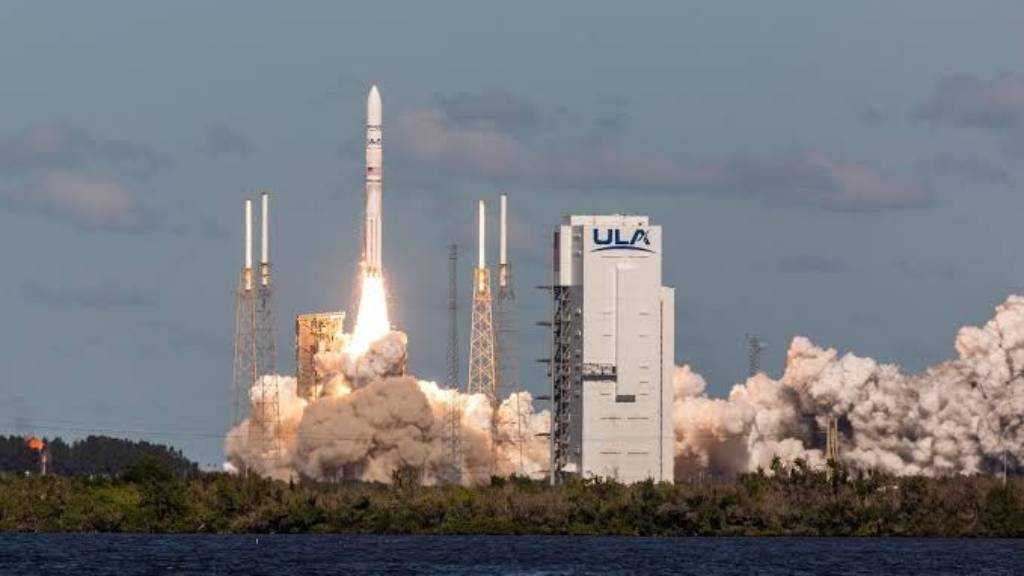
A failed launch by United Launch Alliance [ULA] destroyed 40 satellites intended for Amazon's Leo internet network, marking the first unsuccessful mission in the company's history and raising fresh questions about the reliability of the US commercial space industry.
The Vulcan rocket suffered an anomaly approximately 10 minutes after lifting off from Cape Canaveral Space Force Station in Florida on Sunday, failing to deliver its payload into orbit.
ULA, a joint venture between Boeing and Lockheed Martin, confirmed the failure but said the cause remained unknown, with investigators still assessing flight data.
The incident marks a major setback for the company, which had maintained a 100% mission success record since its establishment in 2006.
The failure could keep Vulcan grounded for months pending a technical investigation, further tightening an already constrained US launch market.
Sunday's incident marked Vulcan's fifth flight since its debut in 2024 and its first launch in nine months. The extended gap followed separate investigations into problems involving its solid rocket boosters and BE-4 core engines, manufactured by Jeff Bezos' Blue Origin.
The boosters had previously encountered technical problems during two missions, including a February launch for the US Space Force.
Although both missions successfully delivered their payloads, the Pentagon had withheld approval for Vulcan to resume national security launches pending further performance assessments.
Blue Origin is also participating in the latest investigation. However, initial indications suggested that Sunday's anomaly occurred after the separation of the second stage from the first-stage booster, leaving the precise cause unclear.
Questions surrounding the BE-4 engines have also intensified following a May explosion involving Blue Origin's New Glenn rocket, which investigators attributed to an engine problem.
The destruction of the 40 satellites represents another obstacle for Amazon's Leo network, which aims to challenge SpaceX's Starlink in the global satellite internet market.
Amazon has deployed 398 satellites through 14 launches since 2025, representing approximately 12% of the 3,236 satellites required for its planned global service coverage.
The company had hoped to begin providing initial internet services in 2026, but its dependence on external launch providers has exposed its expansion plans to technical failures and operational delays.
Blue Origin's New Glenn explosion in May had already disrupted Amazon's deployment schedule, occurring just days before a planned satellite launch.
By contrast, SpaceX benefits from manufacturing and operating its own rockets, allowing it to deploy Starlink satellites without relying on third-party launch providers. Its network already operates more than 11,000 satellites and serves millions of customers worldwide.
The latest Vulcan failure underscores the challenges facing Amazon as it attempts to compete with Starlink, particularly amid mounting technical setbacks and limited launch capacity across the US space industry.
Amazon had hoped to begin initial internet services during 2026. The latest failure introduces another complication into those plans, potentially delaying the expansion of its network.