Iran Sets the Rules in Its Own Backyard Despite American Military Might
By Mohamad Hammoud
American Firepower, Iranian Initiative
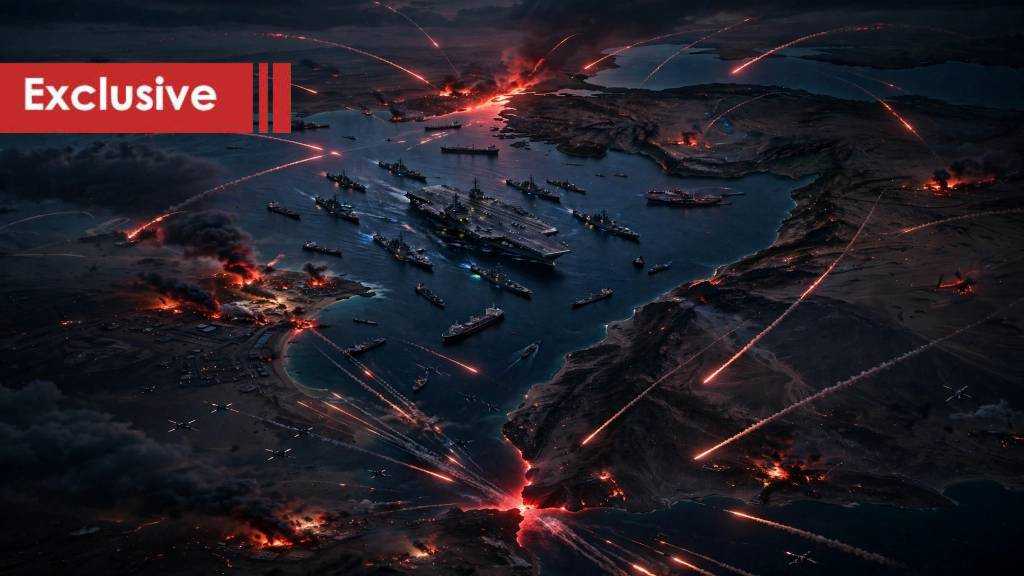
Three American aircraft carriers, dozens of warships, and extensive military installations have not prevented Iran and its allies from gaining the strategic initiative across the Middle East. Developments in Bahrain, the Strait of Hormuz, and Yemen reveal a widening contradiction between Washington’s overwhelming military superiority and its ability to dictate regional outcomes.
As the United States reinforces its presence, Tehran is demonstrating how American bases, commercial shipping, and regional partners can face pressure simultaneously. Geography and established alliances give Iran options that additional American firepower cannot erase.
Bahrain: American Bases Within Iranian Reach
Iran's latest drone operation in Bahrain illustrates that challenge. According to Reuters, the Islamic Revolutionary Guard Corps [IRGC] announced that six drones targeted an American radar installation at Al-Riffa on November 15, following another operation two days earlier. The
Guards said they struck their targets and released footage.
The attack carries particular strategic significance because Bahrain hosts the headquarters of the US Fifth Fleet, a cornerstone of Washington's naval presence in the Gulf. By targeting infrastructure supporting that presence, Iran has demonstrated that the very installations designed to project American military power across the region are themselves within its striking range.
For Gulf governments hosting American forces, the implications are equally significant. Rather than guaranteeing protection from regional confrontation, the American military presence can expose their territories to retaliation during Washington's escalating war with Tehran. Moreover, Iran's ability to impose such costs extends beyond military installations to the strategic waterways on which Gulf economies and international trade depend.
Hormuz: Iran Challenges American Maritime Control
In the Strait of Hormuz, the IRGC reported that two oil tankers struck naval mines and caught fire while navigating without Iranian authorization. Iranian authorities also reported that a supertanker carrying more than two million barrels of crude oil sank after a mine explosion.
The implications extend beyond the vessels. Roughly one-fifth of global petroleum consumption passes through Hormuz, making interruptions costly for energy markets and countries dependent on shipping. American warships possess enormous offensive power, but protecting commercial traffic throughout this narrow passage presents a different challenge.
Iran’s geographical position therefore gives it a means of applying economic pressure alongside military pressure. Further south, its allies in Yemen present Washington with another maritime challenge.
Yemen: Another Strategic Waterway Under Pressure
Reuters reported on November 15 that Saudi-backed Yemeni forces withdrew from positions overlooking Bab al-Mandeb after a six-week counteroffensive against advancing Ansarullah fighters. Their retreat toward Aden strengthened the Ansarullah’s position near the passage linking the Red Sea and Gulf of Aden.
That territorial advantage is reinforced by the Ansarullah’s ability to strike beyond Yemen, including Saudi energy infrastructure and military facilities. Iranian assistance has contributed to their missile and drone capabilities, enabling them to exert pressure across the Arabian Peninsula and threaten shipping near Bab al-Mandeb.
Together, the developments in Yemen and Hormuz place pressure near two vital maritime chokepoints. Washington and its partners must therefore address threats across widely separated fronts, complicating their efforts to secure regional trade.
Three Aircraft Carriers, No Strategic Solution
Washington has responded by reinforcing its military presence, with the USS Theodore Roosevelt joining the USS George Washington and USS George H.W. Bush in the region. Yet three carrier strike groups have not eliminated threats from Iranian drones, maritime disruption,
or Ansarullah advances.
Rather than retreating, Tehran has warned that further American attacks will provoke stronger retaliation. Washington consequently faces the risk that protecting its bases and shipping routes through additional military action could expand the confrontation. That dilemma carries directly into diplomacy.
Tehran's Growing Negotiating Leverage
As Iranian Foreign Minister Abbas Araqchi prepares for talks in Oman, the military confrontation is shaping the diplomatic calculations of both sides. Tehran can point to the costs it and its allies can impose, while Washington must weigh the security of its installations, regional partners, and maritime trade against the dangers of further escalation.
This is the contradiction at the heart of the confrontation: America's greater arsenal has not guaranteed control over regional outcomes. From Bahrain to Hormuz and Yemen, Iran and its allies are increasingly setting the challenges to which Washington must respond, giving Tehran the strategic initiative in its own backyard.
Comments