Bahrain’s Day of Catastrophe: Life Sentences Against Ayatollah Isa Qassim and 68 Shiite Scholars and Activists
By Sondoss Al-Asaad
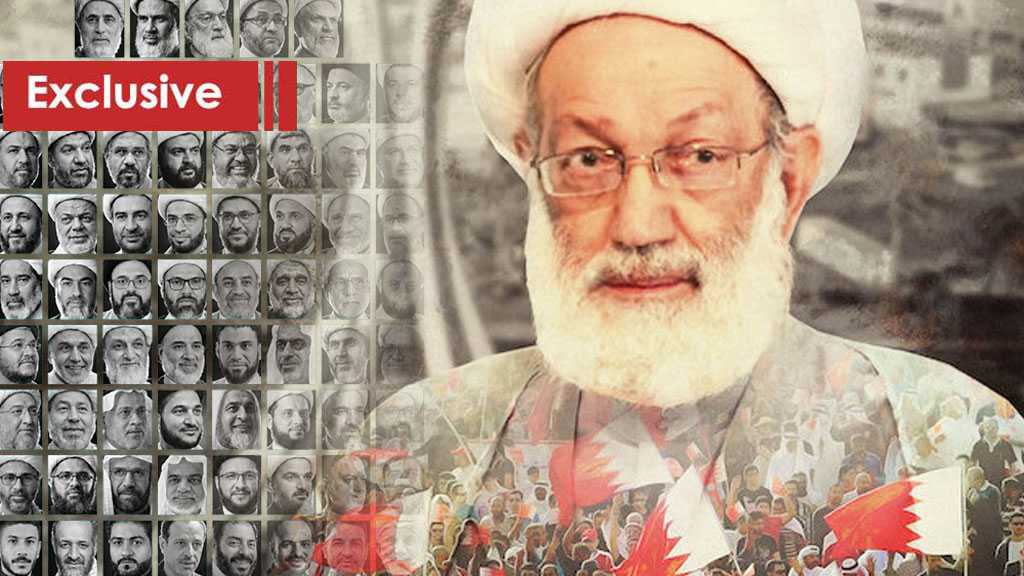
The Bahraini regime has escalated their crackdown on the country’s Shiite community by issuing life sentences against Ayatollah Sheikh Isa Qassim, Bahrain’s foremost Shiite religious authority, alongside 68 Islamic scholars and activists, in what Al-Wefaq has described as an unprecedented mass prosecution targeting the country’s religious establishment.
Al-Wefaq National Islamic Society was Bahrain’s largest political opposition party before a Bahraini court ordered its dissolution and asset liquidation on July 17, 2016.
The verdicts, announced on November 16, mark a dramatic escalation in the authorities’ campaign against Shiite religious figures, including senior scholars, Friday prayer leaders, religious seminary instructors, representatives of religious authorities in Najaf and Qom, and religious activists.
The case has drawn widespread condemnation from Bahraini opposition figures and religious personalities, who stressed that the proceedings extend far beyond ordinary criminal litigation and constitute an attack on religious identity, communal institutions, and the political rights of Bahrain’s Shiite population.
Al-Daihi: A Catastrophe for Bahrain
Sheikh Hussein Al-Daihi, Deputy Secretary General of Al-Wefaq National Islamic Society, condemned the verdicts during a press conference in Qom, Iran.
Sheikh Al-Daihi, who was himself tried in absentia by the Bahraini authorities, described the developments as a catastrophe for the country.
He asserted that prosecuting religious scholars amounted to the authorities repudiating the social contract with the Bahraini people.
He called for a new constitution drafted with the participation of the population, maintaining that the current constitutional framework had lost its legitimacy.
Al-Daihi also accused the authorities of targeting the authentic Islamic identity of Bahrain’s Shiite community, contrasting the severe treatment of religious scholars with the government’s openness toward normalization with Israel.
He further maintained that the crackdown was taking place with American political backing and Israeli involvement, portraying it as part of a wider effort to undermine the community’s resistance-oriented identity.
Calling on religious authorities, Islamic scholars, human-rights organizations, and people of conscience worldwide to oppose the sentences, he warned that silence in the face of injustice amounted to complicity.
Al-Akraf: Victory Means Standing with the Truth
Bahraini religious eulogist and forcibly exiled political activist Sheikh Hussein Al-Akraf invoked the words attributed to Ammar ibn Yasir during the Battle of Siffin, emphasizing that victory is defined by adherence to truth rather than physical or political outcomes.
“True victory means being with the truth, while defeat means being with falsehood, whether above the earth or beneath its soil,” he stated.
Al-Akraf described the verdicts as vindictive rulings rooted in blatant sectarian targeting. He argued that they reflected a psychological crisis within the authorities, undermining their wisdom, balance, and commitment to justice.
Al-Ashour: A Mother Loses Her Third Son to Life Imprisonment
In a deeply personal account, on X, Sheikh Ali Ashour highlighted the human consequences of the verdicts through the experience of a mother whose three sons have all received life sentences.
Following the sentencing of Sheikh Jaafar Ashour, he said he contacted their mother, who has been waiting for another son, Sheikh Zuhair Ashour, imprisoned under a life sentence for more than 14 years. A third son had also received a life sentence while in exile.
The latest ruling against her third son, he said, completed a devastating family ordeal, describing it as an example of a country whose ruler had chosen hostility as a governing policy.
Testimonies of Systematic Religious Persecution
The opposition’s campaign has also highlighted firsthand accounts of serious abuses against detained scholars, including physical and sexual humiliation, coerced confessions, insults directed at Jaafari beliefs and Shiite religious symbols, restrictions on movement and deprivation of medical care and sleep.
It further warns that the targeting extends beyond individuals to religious seminaries, Hussainiyas, Jaafari endowments, charitable institutions, religious education, Friday sermons and the Hussaini pulpit.
The opposition stresses that these measures form part of a broader effort to reshape Bahrain’s sectarian and political landscape in alignment with regional normalization policies.
The verdicts have, therefore, become a defining confrontation over religious freedom, political legitimacy and the future of Bahrain’s Shiite community.
As Sheikh Al-Daihi declared, the Bahraini people would remain committed to their scholars and religious identity, refusing to abandon their demands for justice.