’Israel’s’ Secret 90-Warhead Nuclear Arsenal Revealed
By Staff, Agencies
The Federation of American Scientists [FAS] estimated that the "Israeli" occupation entity possessed approximately 90 nuclear warheads and continued to modernize its nuclear infrastructure and suspected delivery systems, according to an assessment published in the Bulletin of the Atomic Scientists on November 10, 2026.
The report, authored by Hans M. Kristensen and Mackenzie Knight-Boyle, found that the estimated arsenal remained largely unchanged since 2021.
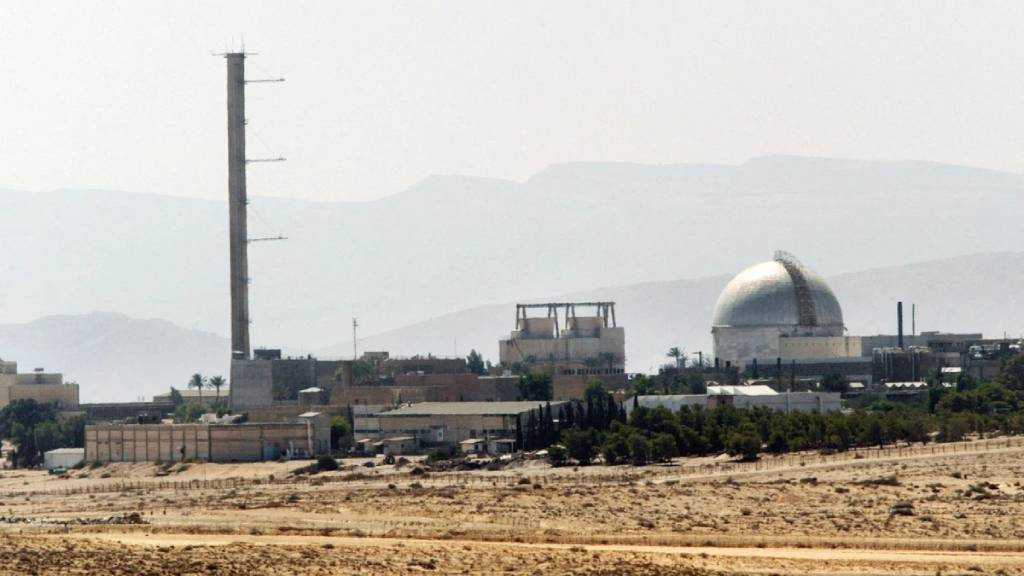
However, satellite imagery revealed significant construction at strategic facilities, particularly the Negev Nuclear Research Center near Dimona, alongside upgrades to aircraft, ballistic missiles, and submarines.
The assessment highlighted the occupation entity's longstanding policy of nuclear ambiguity, known as "Amimut," under which successive governments neither confirmed nor denied possessing nuclear weapons. Since the late 1960s, officials had maintained that the occupation entity would not be the first to "introduce" nuclear weapons into the Middle East.
Despite this policy, several former officials made statements suggesting an established nuclear capability. In 2006, former Prime Minister Ehud Olmert appeared to acknowledge the arsenal when he listed "Israel" alongside the United States, France, and Russia as nuclear-armed countries.
The report also detailed Washington's role in enabling the program. The United States reportedly remained unaware of Dimona's true purpose for nearly a decade after construction began in 1958, following an "Israeli" deception campaign that presented the facility as a civilian research center.
A 1969 understanding between US President Richard Nixon and former "Israeli" Prime Minister Golda Meir subsequently allowed the program to remain largely unchallenged, provided the occupation entity refrained from nuclear testing and publicly acknowledging its arsenal.
The arrangement enabled it to maintain its nuclear capabilities outside the Nuclear Non-Proliferation Treaty [NPT], highlighting a longstanding double standard in US non-proliferation policy.
Regarding its arsenal, FAS estimated that the occupation entity possessed approximately 90 warheads, most likely consisting of single-stage, boosted fission weapons. The report cautioned that higher estimates based solely on plutonium production did not necessarily reflect the number of operational warheads.
Three potential delivery platforms were identified: F-16, F-15I, and F-35I aircraft; the Jericho ballistic missile family, including the suspected Jericho III variant with a potential range exceeding 4,000 kilometers; and six German-built Dolphin-class submarines suspected of having nuclear delivery capabilities. Three next-generation Dakar-class submarines were also expected to begin replacing older vessels in the early 2030s.
Satellite imagery showed extensive construction at Dimona, including underground facilities, access tunnels, and a new circular structure near the existing reactor.
The authors linked the work to a possible extension of the facility's operational life, with plans reportedly aimed at keeping it operational until 2040. Upgrades were also identified at the Sdot Micha missile facility and the submarine base in Haifa.
Meanwhile, Washington's longstanding silence faced growing scrutiny. In May 2026, 30 Democratic lawmakers, led by Representative Joaquin Castro, demanded greater transparency over the occupation entity's nuclear capabilities.
During a June 3 congressional hearing, Secretary of State Marco Rubio acknowledged that most of the world believed the occupation entity possessed nuclear weapons, while noting that successive US administrations had avoided publicly discussing the issue.
Comments
’Israel’s’ Secret 90-Warhead Nuclear Arsenal Revealed
29 minutes ago