Bahrain’s Persecuted Majority: How Western Powers Protect a Monarchy Built on Discrimination
By Mohamad Hammoud
A Mass Trial Exposes Decades of Persecution
Bahrain, a strategically located Gulf kingdom between Saudi Arabia and Iran, has long been known for discrimination against its Shia-majority citizen population under the Sunni Al Khalifa monarchy.
Behind its image as a modern financial center and Western military partner lies a decades-long struggle over political representation, religious freedom and fundamental rights.
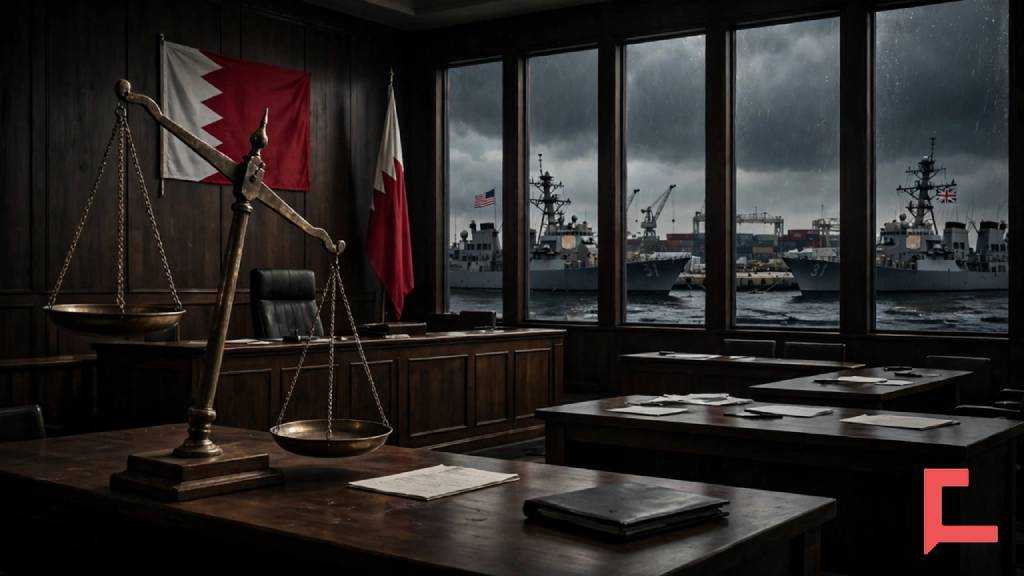
Now 60 Shia clerics, among 69 defendants, await a November 22 verdict on so-called “terrorism”-related charges, including allegations of plotting to overthrow the monarchy and promoting Iranian political ideology.
Human Rights Watch, Amnesty International and other organizations have raised concerns about alleged torture, coerced confessions, secret proceedings and restrictions on legal representation. Activists regard the trial as another chapter in decades of persecution and political exclusion.
According to the 2026 Bertelsmann Transformation Index, Shia Bahrainis face systematic discrimination in government employment, judicial representation, security institutions, and religious affairs. Constitutional guarantees of equality have not prevented barriers to senior positions and political influence, reinforcing the ruling family’s dominance of state institutions.
Citizenship Revocation and Demographic Manipulation
In April 2026, authorities revoked the nationality of 69 Bahrainis of Iranian heritage, including 33 children, leaving many stateless. Human Rights Watch and the Bahrain Institute for Rights and Democracy condemned the measure, while activists accused the monarchy of deliberately weakening longstanding Shia communities.
Meanwhile, rights organizations have criticized naturalization policies allegedly favoring foreign Sunnis, particularly recruits into the security forces. Activists describe the combination of selective naturalization and citizenship revocation as deliberate demographic engineering aimed at altering Bahrain’s sectarian balance.
Torture, Executions, and Suppressed Opposition
The current persecution follows the monarchy’s violent suppression of Bahrain’s 2011 Arab Spring uprising, when demonstrators demanded democratic reforms, equal rights and greater political representation. With military assistance from Saudi Arabia and the United Arab Emirates, the monarchy suppressed the protests. An independent commission appointed by the king subsequently documented systematic torture and mistreatment, while Human Rights Watch reported abuses against medical personnel treating injured demonstrators.
The monarchy subsequently narrowed political participation, dissolving Al-Wefaq, Bahrain’s largest opposition movement, in 2016 and further restricting opposition figures from elections. In 2019, Bahrain executed Ali al-Arab and Ahmed al-Malali despite Amnesty International’s warnings about torture allegations and unfair trials.
The crackdown intensified amid the regional war involving Iran. In October 2026, human rights organizations reported more than 700 arrests, including children. Sayyed Mohamed Al-Mousawi, 32, reportedly died in custody bearing signs of torture, while 19 detainees reportedly faced death sentences.
Sheikh Mohammed Saeed Al-Taitoon alleged that interrogators blindfolded and restrained him, denied him medical treatment, and threatened to revoke his family’s citizenship. Rights organizations also reported that religious teaching, charitable donations, and khums, a Shia religious obligation, appeared among evidence against defendants, raising concerns that ordinary religious practices are being criminalized under the pretext of national security.
Britain’s Historical Role and Western Protection
Bahrain’s monarchy has long benefited from foreign protection. The Al Khalifa dynasty seized power in 1783, and Britain later shaped Bahrain’s foreign relations and security through treaties and direct intervention, including the installation of Isa bin Ali Al Khalifa in 1869. British protection ended with independence in 1971, but the monarchy remained intact. That same year, the United States took over part of the former British naval base, marking a transition toward growing American military influence.
Today, Bahrain hosts the US Fifth Fleet and a permanent British naval facility. Washington signed a security agreement with Manama in 2023, Britain joined in 2025, and London announced a £2 billion investment partnership that year.
Despite mounting information of repression, Western governments defend their security cooperation with Bahrain as essential to regional stability. Activists argue that military and economic interests outweigh accountability for human rights violations. As the November twenty-two verdict approaches, the question remains: will Washington and London confront the alleged persecution of Bahrain's Shia majority, or will strategic interests once again prevail over the democratic principles they claim to defend, as critics argue has happened with Saudi Arabia and "Israel"?