Why Do We Embrace Martyrdom?
By Latifa Al-Husseini
Why do men, or Resistance fighters, embrace martyrdom? It is an old question, yet one that remains as relevant as ever, perhaps especially today in Lebanon. The issue is repeatedly raised, and raised again, as part of political arguments, provocations, and attempts to undermine the spirit of sacrifice among a key segment of society: those who see themselves as responsible for defending their land, based on the natural and inherent right to expel anyone who usurps or occupies it- especially when that occupier is “Israel.”
From Jean-Jacques Rousseau to Karbala
The renowned French philosopher Jean-Jacques Rousseau speaks of sacrifice as a voluntary and moral act through which an individual transcends personal interests and places their life and capabilities at the service of the common good. This stems from a sense of belonging and responsibility toward the national community, as well as a willingness to bear risks in defence of its freedom and existence.
In the religious tradition, Imam Hussein ibn Ali [peace be upon him], the third Imam of the Twelver Shiites, established the clearest understanding of martyrdom through his movement, uprising, and ultimate sacrifice, particularly when he declared:
“I see death as nothing but happiness, and life with the oppressors as nothing but misery.”
Imam al-Sadiq [peace be upon him], the founder of the Ja’fari school of Shiite jurisprudence, is also quoted in reliable historical sources as saying:
“Jihad is an obligation alongside a just Imam, and whoever is killed defending his property is a martyr.”
Among contemporary Islamic thinkers of the twentieth century, whose revolutionary legacy continues to be passed down and taught from one generation to the next, stands Ruhollah Khomeini [may God sanctify his soul]. He points out that:
“Martyrdom in the path of God cannot be measured by victory or defeat on the battlefield. The station of martyrdom marks the culmination of servitude and the spiritual journey… Martyrdom is eternal glory.”
In southern Lebanon during the 1970s, with the emergence of the Movement of the Deprived led by Imam Musa al-Sadr, the issue of the south ceased to be merely that of a marginalized region suffering from deprivation and neglect. In his discourse and vision, it became a national and humanitarian cause, bound up with human dignity, the right to life and security, and the responsibility of society and the state to protect the land and safeguard sovereignty.
Here, Imam al-Sadr’s words on martyrdom acquire their deeper meaning when he says:
“All the equations studied through the balance of military power and calculations of gain and loss are overturned when the element of martyrdom enters the battlefield. Martyrdom transforms an individual into an invincible weapon and turns the martyr into an inexhaustible fountain that shakes everyone, stirring humanity, its conscience, and its energies everywhere.”
A War to Strip Sacrifice of Its Meaning
Today, a fierce war is being waged in Lebanon against the very value of sacrifice and the defense of what is right, as well as against all the traditions and collective memories that have instilled in the Lebanese people a rejection of humiliation and surrender in the face of aggression and occupation.
It is as though the objective is not merely to debate the choices, methods, and performance of the Resistance- a legitimate discussion within national life- but to go further and strip sacrifice itself of its meaning, portraying anyone who believes that defending the land is a national and moral duty as a burden on society rather than someone who bears a responsibility toward it.
Can Nations Survive Without Sacrifice?
This brings us to the issue’s deeper philosophical and human dimension: Can nations endure without their people being willing to make sacrifices? Can freedom remain freedom, sovereignty remain sovereignty, and dignity remain dignity if no one is prepared to defend them when they are threatened?
Sacrifice is not the opposite of life. At exceptional moments in history, it may be one of the conditions necessary for life’s continuation. Human beings did not build their nations and societies on individual interests alone. Nor were the rights, freedoms, and dignities they enjoy today handed to them as free gifts. They were the fruits of accumulated struggles and sacrifices, through which many people gave up their interests, security, and even their lives so that others could live in nations that were freer, safer, and more just.
From this perspective, martyrdom in defense of one’s homeland should not be understood as glorifying death or treating life as expendable. Rather, it should be seen as a human and moral stance rooted in the defense of a community’s right to exist, a person’s right to their land, and a dignity that cannot coexist with occupation and humiliation.
There is a fundamental difference between viewing life as something precious that deserves protection and turning the preservation of life into a pretext for surrendering everything that makes life worth living.
The Essence of Sacrifice
Societies that lose their capacity to sacrifice for their highest values become more vulnerable to losingthose very values. A homeland is not merely a geographical area or borders drawn on a map. It is memory, belonging, rights, sovereignty, and a shared destiny.
When these elements come under threat, defending them becomes a test of the meaning of citizenship, the nature of the relationship between the individual and the community, and society’s ability to safeguard its existence and independence in decision-making.
At the same time, sacrifice must not become a value detached from its purpose. Its moral essence lies in giving one’s life to protect life, and in making the defense of the land a defense of the people who inhabit it and their right to security, freedom, and dignity.
For this reason, the justice of a cause undertaken to defend one’s homeland must not be reduced to any particular political position. Nor can the justice of that cause be used to justify every means or practice. Sacrifice that derives its meaning from what is right cannot be separated from respect for the lives of citizens and the preservation of human dignity.
Martyrdom and the Survival of the Nation
Perhaps this is one of the most important meanings that Imam Sayyed Musa al-Sadr sought to instill in the Lebanese collective consciousness when he linked martyrdom to the life of the homeland and the survival of the nation, emphasizing that a citizen’s life is a precious trust, not something to be squandered cheaply, but rather something offered for the sake of the homeland’s continued existence.
It is a profoundly meaningful moral equation: the value of the martyr does not lie in the fact that life has ended for him, but in the fact that what he defended is connected to the continuation of others’ lives, the survival of his homeland, and the preservation of his society’s dignity.
Therefore, the real question today is not why men or Resistance fighters embrace martyrdom, but why some of us have lost the ability to understand the human and national motivations that make a person willing to sacrifice for their land.
How can a nation be built on the expectation that its people will defend its sovereignty, only for it to deny them the right to believe that defending their land is a national and moral duty? And how can we ask people to remain committed to their homeland without understanding that, under exceptional circumstances, such commitment may demand immense sacrifices and profound acts of selflessness?
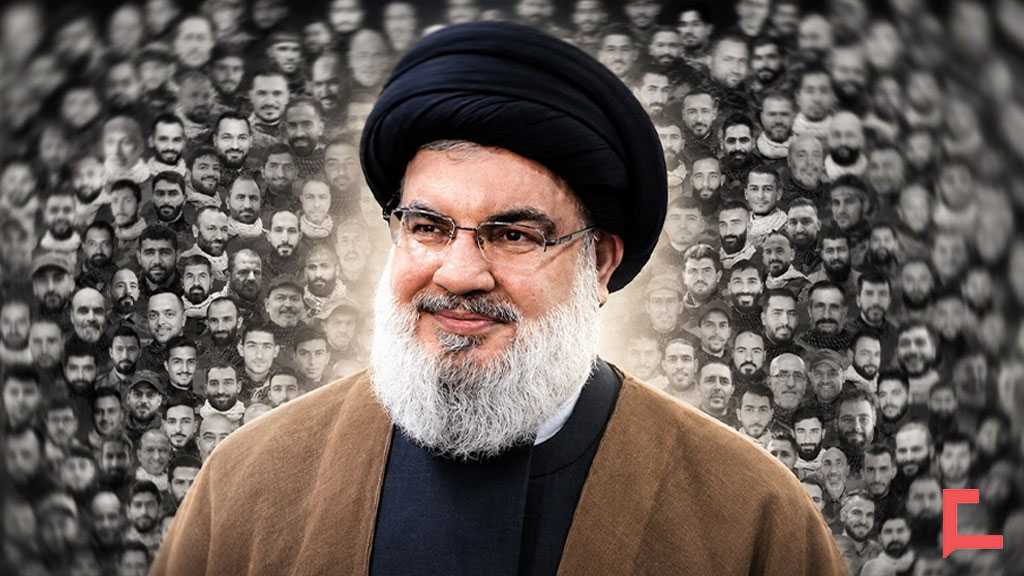
Perhaps these meanings found their continuation in the experience of the Sayyed of the Nation’s Martyrs, Sayyed Hassan Nasrallah [may God be pleased with him], and in his discourse over several decades. Martyrdom occupied a central place in his understanding of the meaning of Resistance and in his interpretation of the relationship between faith, sacrifice, and loyalty to the land.
He consistently invoked the memory of Karbala as a moral reference point for remaining steadfast in the pursuit of truth, linking martyrdom to devotion to the cause and loyalty to those who gave their lives in defense of Lebanon and Palestine.
Thus, invoking the Sayyed of the Nation’s Martyrs [may God be pleased with him] in this discussion cannot be separated from invoking Imam al-Sadr. And between these two experiences, in their foundational understanding of Resistance, selflessness, and sacrifice, a fundamental issue becomes clear: in the consciousness of the Resistance, the cause of southern Lebanon was never merely a matter of geographical borders, but a cause of humanity, rights, memory, and belonging.
We return to the original question: Why do men and Resistance fighters embrace martyrdom?
Perhaps because, at certain moments in history, a person discovers that there are things greater than individual interests; that land is more than mere soil, a homeland is more than borders, and dignity is more than a slogan.
Martyrdom is not a victory of death over life. Rather, in its deepest human and moral meaning, it is a sacrifice made so that life and dignity may prevail, so that a homeland may remain a homeland, the land may remain in the hands of its people, dignity may remain an inalienable right, and sovereignty may remain a responsibility shared by all its citizens.