Trump Praises Ties with Putin and Xi, Says Trilateral Talks Could Ease Global Tensions
By Staff, Agencies
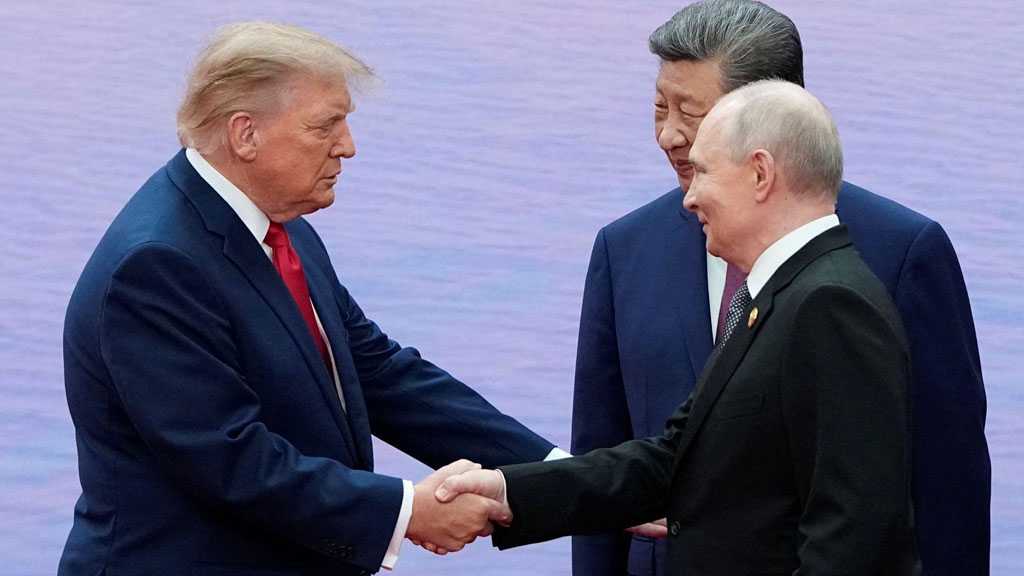
US President Donald Trump has praised his relations with Russian President Vladimir Putin and Chinese President Xi Jinping, describing their historic trilateral meeting as a significant diplomatic achievement that could help reduce international tensions.
Speaking at a White House press conference on Friday after returning from a four-day tour of Asia, Trump called the visit one of the most successful presidential trips to the region in US history.
Trump said he had met with more than 20 world leaders during the trip but acknowledged that the Asia-Pacific Economic Cooperation [APEC] summit in Shenzhen had largely focused on the United States, Russia, and China. He noted that other participating countries felt somewhat sidelined as attention shifted toward the three major powers.
Describing the trilateral gathering as one of the most important international summits in recent years, Trump said relations among the three leaders were excellent.
He revealed that discussions covered several major international issues, including preventing nuclear war, energy cooperation, Iran, the Korean Peninsula and the ongoing conflict in Ukraine.
According to Trump, the meeting also produced a landmark trilateral peace declaration aimed at reducing nuclear risks and strengthening communication among the world’s leading nuclear powers.
Regarding Ukraine, Trump said his separate meeting with Putin focused primarily on finding a diplomatic solution to the conflict. He claimed the Russian president remained interested in reaching a settlement and suggested that the war might never have happened had he been president at the time.
Trump also attributed the continuation of the fighting partly to personal tensions between Putin and Ukrainian President Vladimir Zelensky.
On the possibility of providing Ukraine with security guarantees similar to NATO’s Article 5, Trump declined to offer details, insisting that reaching a peace agreement must come first.
The US president defended his efforts to maintain strong ties with Moscow, emphasizing Russia’s position as one of the world’s largest nuclear powers. He argued that maintaining direct communication with Putin was essential for American security and international stability.
Trump also described his meeting with Xi as highly productive, highlighting discussions on trade, advanced technology, and managing economic competition between Washington and Beijing.
He praised China’s economic and technological development, particularly Shenzhen’s transformation into a major global technology center, while criticizing the condition of infrastructure in some American cities.
Trump further disclosed that Washington and Beijing had discussed developing joint safeguards for advanced artificial intelligence, which he referred to as “superintelligence.” However, he made clear that the United States would not provide China with its most sophisticated semiconductor technology, suggesting that only older-generation chips could potentially be exported.
He added that both countries were continuing negotiations toward a broader trade agreement that he believes could benefit their respective economies.
Defending his diplomatic approach against domestic criticism, Trump rejected suggestions that maintaining friendly relations with Russia and China was a mistake.
He argued that good personal relationships with Putin and Xi strengthened US national security and helped prevent unnecessary confrontations between major global powers.
Secretary of State Marco Rubio supported the president’s position, stressing that regular engagement among the three nuclear-armed countries was essential to maintaining international stability.
Rubio described the idea of preventing the three leaders from communicating as both dangerous and unreasonable, adding that the summit had created an important foundation for future cooperation on security, diplomacy and trade.
Comments