“Israel’s” Interrogation System Expose Torture, Coerced Confessions
By Staff, Agencies
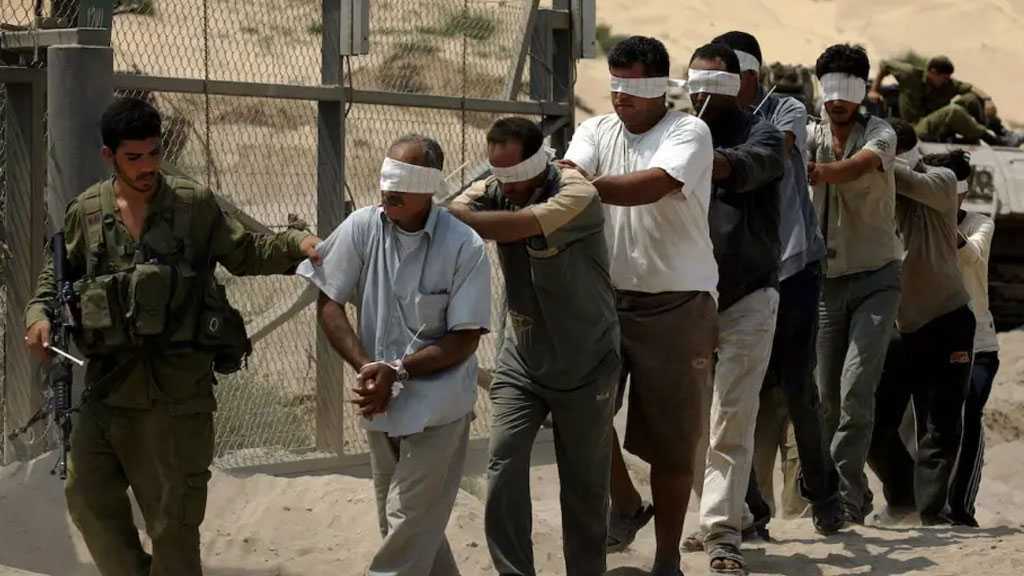
“Israel” has made torture a routine part of obtaining confessions from Palestinian detainees, The Guardian reported, citing a report by the ‘Israeli” Public Committee Against Torture [PCATI].
In some cases, torture is recorded in official files, and in others “special measures”, it is approved ahead of an interrogation.
The group warned that the practice could produce “irreversible wrongful convictions” at a time when “Israel” is advancing an execution law targeting Palestinians detainees.
PCATI reviewed 42 complaints filed over the past decade by Palestinians who said Shin Bet interrogators tortured them.
More than three-quarters of the complainants said they confessed to allegations after “torture or other illegal methods,” and one in 10 said they implicated other people while being tortured.
“When it comes to Palestinian detainees, the ‘Israeli’ legal system officially sanctions torture as a tool for extracting confessions, regardless of whether the content of those confessions is true,” said Sari Bashi, the executive director of PCATI, adding, “Torture as a tool of interrogation is particularly egregious given initiatives to impose the death penalty in ‘Israel’ for the first time since 1962.”
In hundreds of testimonies collected over the years, Palestinian detainees have repeatedly described the same interrogation methods: extreme sleep deprivation, slapping and kicking, threats, sexual violence and prolonged stress positions.
Shin Bet’s own records document some of this abuse. PCATI points to a Palestinian lawyer detained in February 2019 who endured extreme sleep deprivation.
His interrogation period lasted 27.5 days, or 660 hours, and he was questioned for more than 552 of them, averaging 20 hours a day. One session ran nearly 48 hours. Part of the remaining 108 hours went to travel and detention hearings.
The so-called “Israeli” Supreme Court expressly banned sleep deprivation as a deliberate interrogation tactic in a 1999 ruling.
The “Israeli” government inspector for complaints on Shin Bet interrogations, known as “Mavtan”, claimed that the questioning followed proper procedures, PCATI said. “Mavtan” received more than 1,680 torture complaints between 2001 and 2024. Not one resulted in an indictment.
Torture complaints also surface indirectly in “Israeli” court records, PCATI said, though judges seldom credit testimony from Palestinians about being tortured.
In one case, prosecutors relied on a detainee’s forced confession, given under torture. He was freed after his lawyer produced evidence that he had not been at the scene of the alleged crime, according to the committee.
Sleep deprivation was the most common form of torture in the complaints PCATI reviewed, but more than half also involved stress positions and other physical violence.
Although “Israel” has signed the UN convention against torture, PCATI said its legal system has in effect codified violence and abuse whenever it is considered “necessary” to obtain what they dub as “life-saving information.”
In what is known as a “necessity” or “military” interrogation, “Shin Bet” officials torture detainees only after consulting superiors and following an internal documentation procedure, according to the report.
“[A] supposedly narrow exception ballooned and developed into a sprawling system of legal and administrative exceptions that swallowed the so-called rule, enabling the use of violence while maintaining the appearance of prohibition,” it explained.
PCATI said no public information exists on how often Shin Bet uses “military interrogations”.
The group called the findings an urgent concern as “Israel” moves to end its de facto moratorium on capital punishment, which has been in place since the 1962 execution of Nazi war criminal Adolf Eichmann.
“The death penalty is always wrong, because it’s cruel, irreversible and negates the right to life,” Bashi said, stressing, “No one should be executed, particularly not in a system tainted by systematic violence.”
In March, the Knesset passed a law permitting the execution of Palestinians allegedly “convicted on terror charges in deadly attacks,” but not “Israelis” who face similar allegations
In the occupied West Bank, where Palestinians are tried in military courts, execution is now the default punishment for anyone convicted of an alleged “deadly terror attack.”
The law drew sharp criticism, including from Volker Türk, the United Nations high commissioner for human rights, who cautioned that carrying it out would amount to a war crime.
In April, UN spokesperson Stephane Dujarric told reporters that the UN and Secretary-General Antonio Guterres have a “very clear” stance on “Israel’s” legislation imposing the death penalty on Palestinian detainees.
“We stand against the death penalty in all its forms,” he said, adding that “the nature of this particular law makes it particularly cruel and discriminatory.”
A separate law authorizes a special tribunal to hand down executions relating to Palestinian Resistance fighters who were detained from the Gaza Strip.
Comments