Qalibaf: US Must Face Consequences and Accept Iran’s Legitimate Demands
By Staff, Agencies
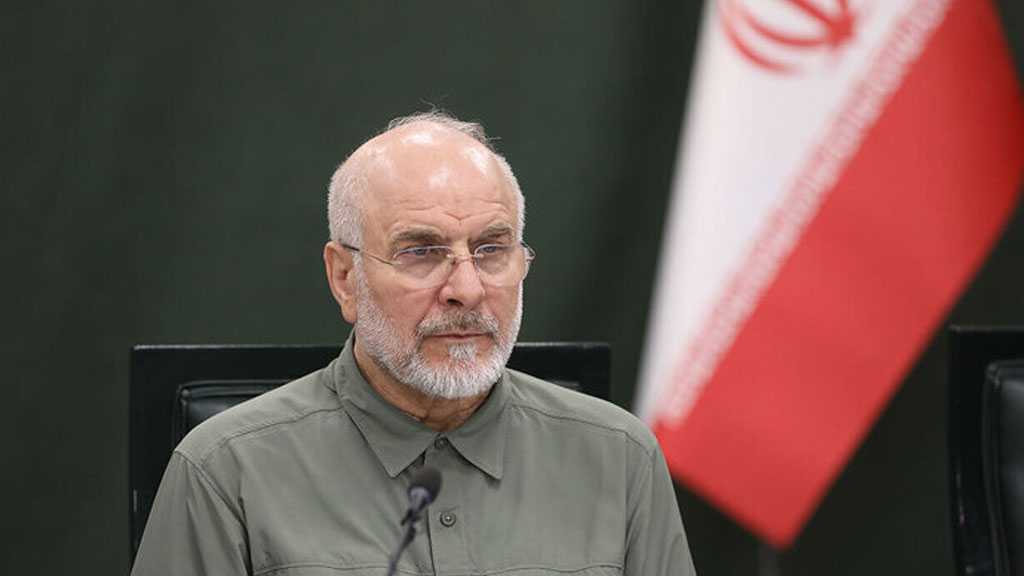
Iranian Parliament Speaker Mohammad Baqer Qalibaf has stressed that the United States must be held accountable for its actions against the Islamic Republic, emphasizing that Tehran’s ultimate objective is to establish “lasting deterrence” against future aggression.
“The United States must be punished, change its behavior, and be made to understand unequivocally that it must accept the legitimate demands of the Iranian nation,” Qalibaf said on Wednesday.
The senior legislator explained that Iran’s strategy was based neither on an endless state of war nor on continuous negotiations. Instead, he said, Tehran intended to combine its military capabilities with diplomatic engagement to compel its adversary to meet its demands.
Qalibaf emphasized that Iran must be prepared to fight with its full strength whenever necessary, while continuing to enhance its military readiness and convert battlefield achievements into political gains.
“To achieve this, we will both fight and negotiate,” he said, stressing the need to seize every opportunity to strengthen preparedness, consolidate military victories, and translate them into political outcomes that demonstrate the adversary’s defeat.
He added that Iran must confront what he described as an enemy pursuing coercive policies, while simultaneously pursuing negotiations aimed at establishing lasting deterrence.
According to Qalibaf, the Islamic Republic seeks to move beyond the conventional cycle of war, negotiations, and peace, replacing it with a new framework centered on war, negotiations, and deterrence.
The parliament speaker also questioned whether a signed agreement containing American commitments could guarantee that Washington would refrain from launching another attack against Iran.
“Undoubtedly no,” he said.
Qalibaf argued that American hostility toward Iran was deeply rooted, attributing Washington’s approach to what he described as its hegemonic ambitions and coercive nature. Referring to the late Leader of the Islamic Revolution His Eminence Imam Sayyed Ali Khamenei, he said, “Undoubtedly, as the martyred Leader said, ‘they have come to devour Iran.’”
Recalling the memorandum of understanding signed between Iran and the United States in June, Qalibaf said Tehran had structured the arrangement in two stages because it did not trust Washington to honor its commitments.
He maintained that Iran’s military position and what he described as its strategic superiority on the battlefield had compelled the United States to accept the understanding.
Qalibaf further stated that the agreement had created opportunities and provided resources for strengthening Iran’s Armed Forces and Lebanon’s Hezbollah resistance movement.
The Iranian official also highlighted improvements in the country’s firepower, offensive capabilities, and air defense systems during the period between the latest rounds of aggression by the United States and the “Israeli” regime against the Islamic Republic.
Referring to the losses Iran claims to have inflicted on American military assets, Qalibaf cited damage involving drones and F-35 aircraft as examples of the impact of Iran’s enhanced military capabilities.
He pointed to the second round of aggression, which he said took place between February 28 and April 7, as evidence of the effects of Iran’s improved preparedness and military performance.
Beyond military strength, Qalibaf identified several other elements essential to Iran’s deterrence strategy, including its control over the Strait of Hormuz, national unity, economic and social resilience, a clear vision for the country’s future, and the capabilities of regional forces aligned with the Axis of Resistance.
He also invoked Iran’s eight-year war with Iraq under former dictator Saddam Hussein as a historical example of the importance of resilience and deterrence in confronting external threats.
“That is what deterrence means: No one should dare attack us,” Qalibaf said. He argued that anyone considering an attack on Iran should examine the country’s historical experience and recognize the difficulties of confronting the Islamic Republic.