Hatami: The Enemy Understands Only the Language of Force and Strength
By Al-Ahed News
Iran’s military leadership has reaffirmed the country’s readiness to confront potential threats, emphasizing advances in unmanned systems, expanded naval preparedness, and the need to maintain a high level of combat readiness amid continued regional tensions.
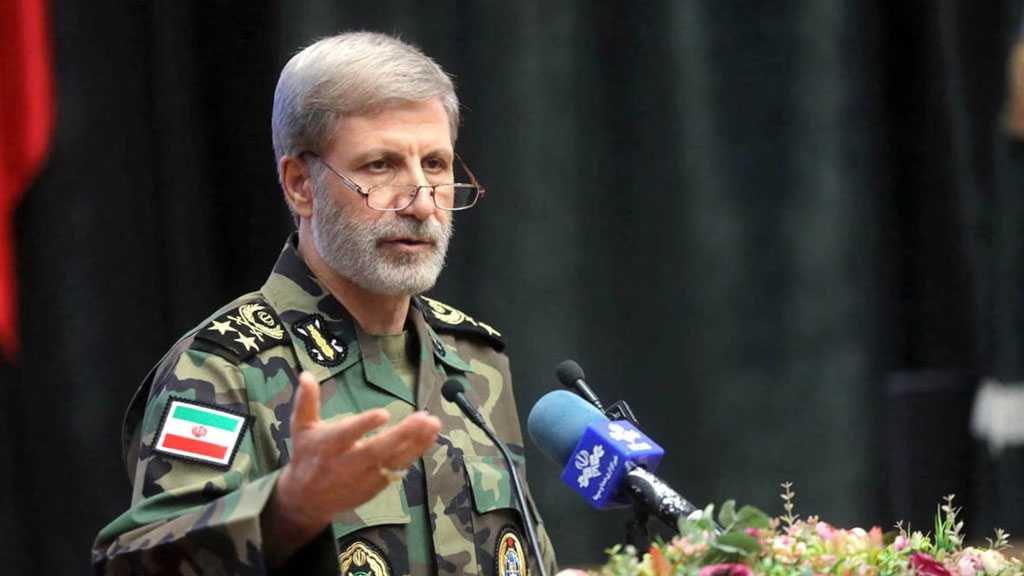
Major General Amir Hatami, commander-in-chief of the Iranian Army, said Iran had reached a significant level of maturity in drone technology and unmanned systems, highlighting the progress made in strengthening the country’s military capabilities.
“We have reached a good level of maturity in the field of drones and unmanned systems,” Hatami said.
He stressed that Iran’s approach to national defense was shaped by the conviction that military strength remains essential in dealing with its adversaries.
“The enemy understands only the language of force and strength,” he said, underscoring Tehran’s emphasis on preparedness and deterrence.
Hatami also highlighted the Iranian Army’s naval presence east of the Strait of Hormuz, saying its forces maintained a strong position at sea and along the coastline as part of their assigned maritime missions.
“We have a strong presence at sea and along the coast as part of the Iranian Army’s naval missions east of the Strait of Hormuz,” he said.
His remarks highlight the strategic importance Tehran attaches to its maritime position near one of the world’s most critical energy corridors, where security developments carry implications for regional stability and international shipping.
Reflecting on previous confrontations, Hatami said Iran had employed military equipment that caught its adversary off guard during an earlier asymmetric conflict, inflicting what he described as heavy blows. He added that the country had gained valuable experience during the two most recent wars imposed on Iran.
“We fought the enemy using equipment that took it by surprise during the previous asymmetric war, when it suffered extremely heavy blows,” Hatami said.
“Iran has gained important experience during the last two imposed wars,” he added.
According to Hatami, these experiences have reinforced the importance of continuous military development, strategic planning, and maintaining readiness for a range of possible scenarios. He warned that Iran could not afford to lower its guard or place its security in the hands of an adversary’s assurances.
“The enemy must never be trusted, and efforts to raise our level of readiness must continue,” he said.
Hatami further stressed that Iranian forces had studied their adversaries’ likely actions and prepared to respond along the same operational axes they might use in a confrontation.
“We know how the enemy will act, and we have prepared ourselves to respond along the very same axes it uses,” he said.
He explained that Iran’s military planning takes even low-probability threats seriously, treating the possibility of an attack as a matter requiring full preparation rather than a risk that can be dismissed.
“We treat a threat with a one-percent probability as if it were a hundred-percent threat, and we prepare ourselves to confront it,” Hatami said.
The statement reflects Tehran’s emphasis on anticipating potential threats before they materialize, with military readiness extending beyond immediate battlefield conditions to include a broad range of possible security scenarios.
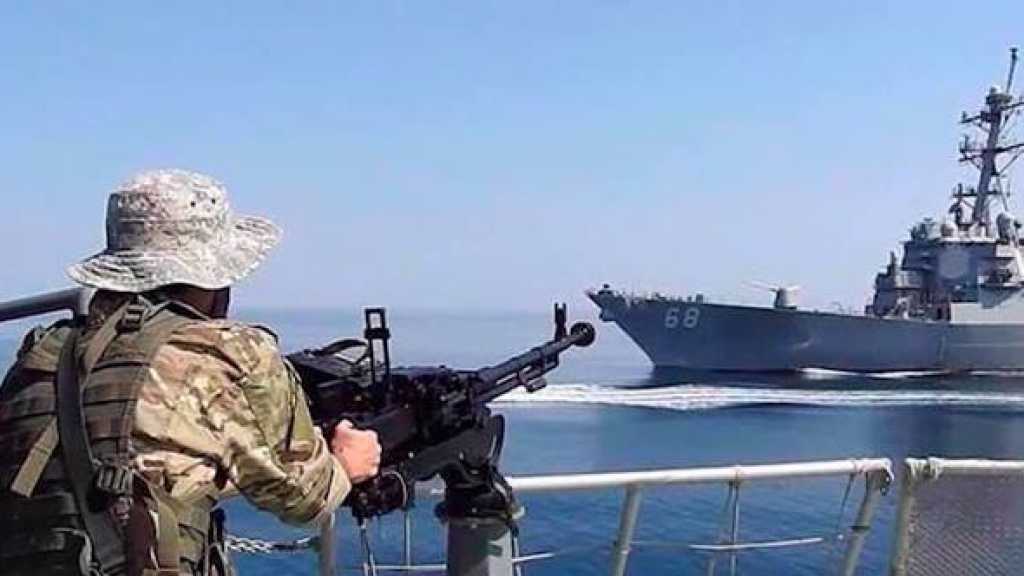
Turning to maritime security, Hatami reiterated the Iranian Army’s position that hostile forces had not dared to enter the Sea of Oman. He said Iranian forces were closely monitoring developments and issued a direct warning regarding any hostile naval presence in the area.
“The Iranian Army has consistently emphasized that the enemy has not dared to enter the Sea of Oman,” he said.
“We are monitoring developments, and if any hostile naval vessel enters, it will certainly be targeted,” Hatami added.
His remarks reinforce Iran’s declared readiness to respond to perceived threats at sea, particularly as maritime security remains closely tied to the wider confrontation and the strategic importance of the surrounding waterways.
Hatami also addressed the issue of a naval blockade against Iran, making clear that Tehran considers such measures an extension of the conflict rather than a separate or neutral maritime action.
“We consider a naval blockade part of the war against Iran, and we regard the party imposing it as an enemy,” he said.
He added that Iran was implementing its own regulations governing maritime traffic in the Strait of Hormuz, the Gulf and the Sea of Oman through the use of various military and operational capabilities.
“Iranian rules governing navigation in the Strait of Hormuz, the Persian Gulf and the Sea of Oman are being enforced using a range of capabilities,” Hatami said.
The remarks underline Tehran’s determination to assert its position over maritime security and navigation in waters it regards as central to its national interests. They also signal that Iran views restrictions on its maritime access as a direct security challenge with potential consequences for its response.
Hatami concluded by calling on other countries to take into account the circumstances created by US actions and to coordinate fully with the Iranian armed forces to avoid harm.
“Iran stresses the need for countries to understand the circumstances imposed by the United States and to coordinate fully with the Iranian armed forces to avoid damage,” he said.
Taken together, Hatami’s statements present a clear message from Iran’s military leadership: the country is continuing to develop its unmanned capabilities, drawing on the lessons of previous conflicts and maintaining a high state of readiness across its land, air and maritime operations.
His warnings over hostile naval movements and the treatment of a blockade as an act of war further underline Tehran’s position that any escalation at sea will be met with a direct response. For Iran, military preparedness, control over its strategic maritime approaches and the ability to deter adversaries remain central to its defense posture.
Comments