Trump’s War, Europe’s Bill: When Presidential Recklessness Becomes a Global Crisis
By Mohamad Hammoud
How Washington’s attack on Iran pushed Europe’s grievances into the streets and raised questions about the "Israeli" entity’s Prime Minister Benjamin Netanyahu’s influence over the American president.
Wars do not confine their consequences to the battlefield. They travel through disrupted trade, volatile energy markets, public budgets, and household bills. That is why the war against Iran is more than a military confrontation: it is a test of presidential judgment, and of who pays when Washington acts without bearing the full cost.
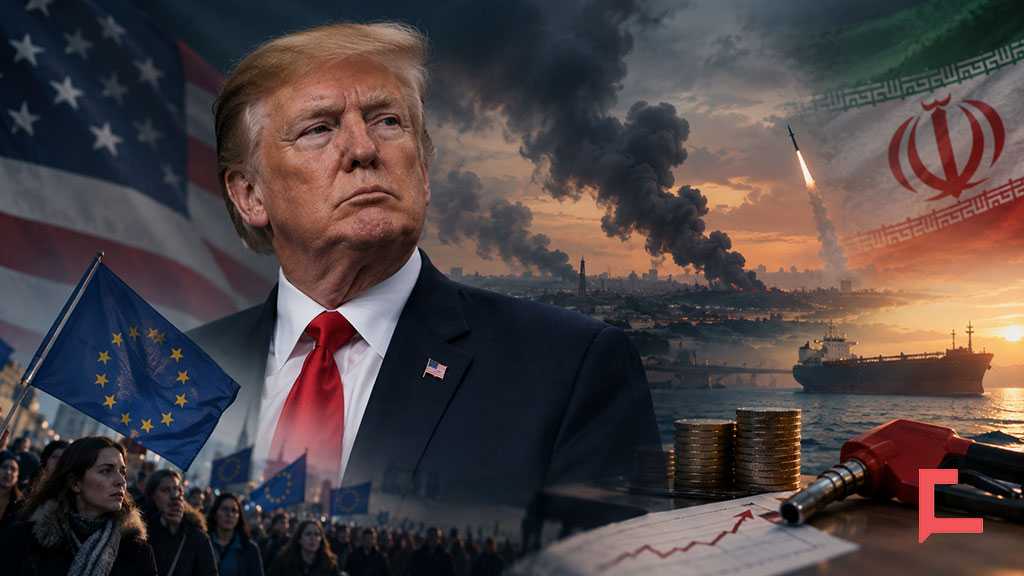
Across Europe, rising living costs have helped drive people into the streets. The conflict has intensified economic pressures that were already squeezing families and businesses; as European Commission President Ursula von der Leyen reported, European gas prices have risen about 140%, diesel prices have doubled, and Europe’s imported fossil fuels have cost an additional €100 billion since the war began. Those figures are not abstractions to the students, truck drivers, and working families who must make their budgets stretch further. They did not choose this war, yet its economic shock has reached their daily lives.
Europe Pays, Washington Decides
That imbalance – Washington decides while others pay – is at the heart of Europe’s anger. European leaders warned that a war with Iran could disrupt energy supplies and send consequences far beyond the Middle East. Their warnings went unheeded, and now those same leaders must answer to citizens for costs tied to a conflict they opposed but could not prevent. The people absorbing the shock had no meaningful say in the decision that helped cause it.
Rather than acknowledge that burden, Trump has blamed Europe’s unrest on immigration and domestic policy failures. Those issues may contribute to public dissatisfaction, but they do not make the energy shock disappear. By pointing to Europe’s internal problems, Trump deflects attention from the consequences of his own decision: families, workers and businesses are paying more as the conflict strains markets.
A Risk Presidents Recognized
The chain of consequences began on February 28, when American and “Israeli” forces attacked Iran, assassinating Leader of the Islamic Revolution His Eminence Imam Sayyed Ali Khamenei. Iran retaliated, disrupting shipping through the Strait of Hormuz, a waterway that ordinarily carries roughly one-fifth of global oil consumption. What began as a military decision quickly became an economic burden for people with no role in the fighting.
That risk was foreseeable. Former Secretary of State John Kerry said George W. Bush, Barack Obama and Joe Biden each rejected Netanyahu’s push for war because peaceful alternatives had not been exhausted. Obama pursued the 2015 nuclear agreement, which Trump abandoned in 2018. Despite their different approaches to Iran, those administrations recognized the dangers of military escalation.
Trump once claimed to recognize those dangers, too. He criticized earlier interventions, promised to put America first, and condemned prolonged foreign wars. Yet he chose a confrontation his predecessors had avoided, leaving Americans facing higher fuel and transportation costs while taxpayers shoulder the military expense. Voters who trusted his promises have every right to ask why he led them into another war.
That contradiction becomes more troubling in Trump’s relationship with Netanyahu. Despite criticizing some “Israeli” military decisions, Trump repeatedly cooperated with a prime minister who had urged earlier presidents to attack Iran. Trump’s decision to embrace a war he once warned against raises a more troubling question: whose arguments shaped American policy, and whose interests did that decision ultimately serve?
Influence and Accountability
Trump’s reversal on foreign wars has raised questions about Netanyahu’s influence over the American president and whether that influence extends beyond political persuasion. Those questions have gained another dimension through Trump’s documented association with Jeffrey Epstein, a convicted sex offender whose connections to powerful figures have fueled speculation about compromising information. Tucker Carlson has also questioned Netanyahu’s hold over Trump, while other commentators have suggested that Epstein-related leverage may help explain the president’s dramatic reversal. The question is no longer simply why Trump abandoned his promises, but what- or who- persuaded him to do so.
Whatever influence Netanyahu exercised, the responsibility for Washington’s decision rests with Trump. Trump chose the war. Netanyahu pursued his ambitions. Europe got the bill. Now Americans are left with the question Trump’s promises once seemed to answer: Why did a president who vowed to avoid another foreign war abandon restraint and launch one whose consequences the world would be forced to bear?