- Home
- ISLAMIC RESISTANCE
- SECRETARY-GENERAL
-
Full Speeches
- Speeches-2000
- Speeches-2006
- Speeches-2007
- Speeches-2008
- Speeches-2009
- Speeches-2010
- Speeches-2011
- Speeches-2012
- Speeches-2013
- Speeches-2014
- Speeches-2015
- Speeches-2016
- Speeches-2017
- Speeches-2018
- Speeches-2019
- Speeches-2020
- Speeches-2021
- Speeches-2022
- Speeches-2023
- Speeches-2024
- Speeches-2025
- Speeches-2026
- Speech-Reports
- SG
-
Full Speeches
- Voices
- Ten Day Dawn
- The Biggest Crime
- Martyr Leaders

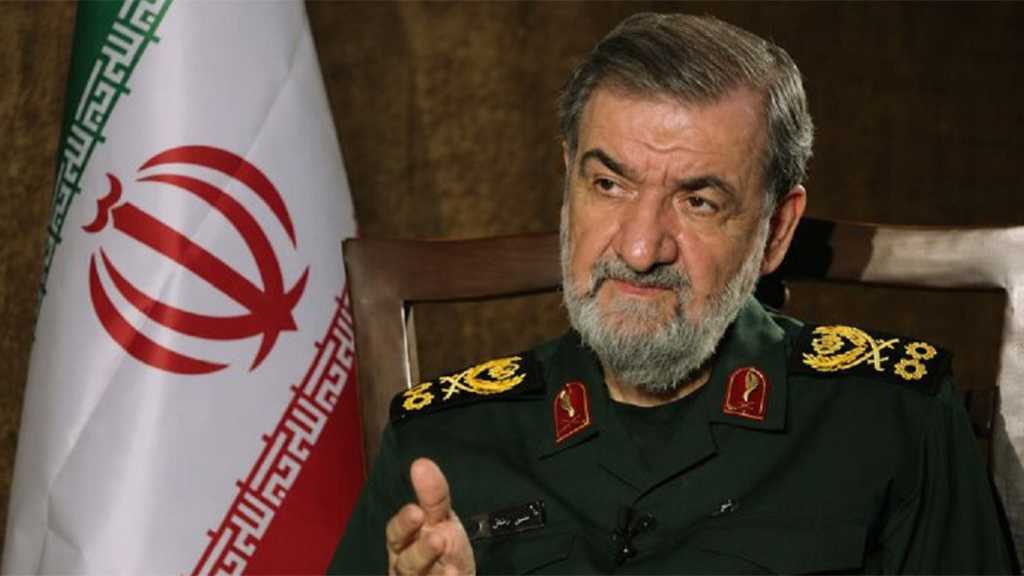
Rezaei Says Iran Has Withheld Military Capabilities
By Staff, Agencies
Iran’s top security official, Major General Mohsen Rezaei, has said the country did not deploy all its military capabilities during previous wars and possesses additional means to respond to any renewed aggression.
In an interview with US-based investigative outlet Drop Site News, published on Thursday, the Secretary of Iran’s Supreme National Security Council (SNSC) said Tehran had spent decades preparing for a broader conflict with the US.
He cited dispersed production facilities, underground infrastructure, multiple launch systems and the ability to repair damage and replace military losses as key elements of Iran’s preparations.
Rezaei stressed that Iran’s military strength should not be measured solely by the number of missiles remaining in storage, arguing that the ability to sustain production and operations is equally important.
“In a prolonged war, the central question is whether a country can sustain a continuous cycle of production, deployment and response. We have shown that, even months after the war began, we can still impose costs on the other side,” he said.
“Our goal is not to make it to 2029. Our goal is to end the war on terms that reduce the likelihood of another war,” Rezaei added, emphasizing that any settlement must prevent another act of aggression.
The SNSC chief also warned that governments should not assume they can participate in economic warfare against Iran without exposing themselves to consequences.
Iran has faced two major rounds of conflict involving the US and “Israel,” according to the report. The first lasted 12 days in June 2025, while the second began on February 28, 2026, and ended in early April after 40 days of fighting.
Rezaei said the subsequent war-termination agreement failed because its commitments were implemented in the wrong order.
Iran reopened the Strait of Hormuz and maritime traffic resumed, he explained, but the other side’s political and economic commitments were not implemented in a way that could sustain the agreement.
The dispute intensified after Washington conducted further airstrikes against Iran and imposed a naval blockade in violation of the Islamabad Memorandum of Understanding, signed on June 17, according to the Iranian account.
Tehran responded with strikes against American targets across West Asia and declared the Strait of Hormuz closed, contributing to a surge in global energy prices.
Rezaei said Iran would continue managing the strategic waterway in the name of regional peace and security. He added that Tehran would neither reopen the strait nor return to negotiations until seven new conditions conveyed to Washington through intermediaries were fulfilled.
Despite maintaining that position, the Iranian official said Tehran would not return to its previous approach to diplomacy but would not abandon the diplomatic path altogether.