Ayatollah Khamenei Calls for Scientific Breakthroughs to Establish Iran as a Global Knowledge Hub
By Staff, Agencies
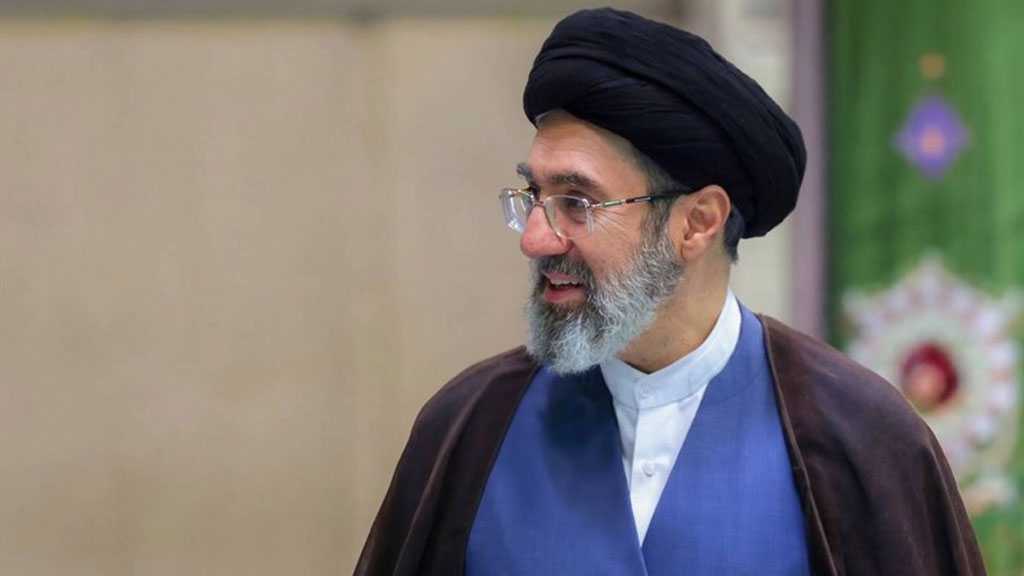
Leader of the Islamic Revolution His Eminence Ayatollah Sayyed Mojtaba Khamenei has presented a comprehensive vision for building an “ever-stronger Iran,” urging the country’s scientific and intellectual elites to push beyond existing boundaries and help shift the global center of knowledge toward Iran.
In a message issued on Monday, coinciding with the martyrdom anniversary of Sayyeda Fatima Zahraa [AS], the Leader addressed Iranian scientific and sports medalists, congratulating the nation on its recent achievements in international scientific Olympiads and sporting competitions.
He praised Iranian students for their successes in astronomy, mathematics, physics, chemistry, biology, computer science, artificial intelligence and the humanities, while commending the country’s athletes for their accomplishments on the international stage.
“The motivation and hope of our elites to bring about changes in the country is a bright flame I have witnessed, both from near and afar, over the course of many years and decades,” the Leader stated.
His Eminence also highlighted the contribution of Iranian athletes in demonstrating the country’s vitality and strength to the world, particularly praising female athletes who, he said, present an honorable image of Iranian women through their attire and sporting achievements.
Defining the role of the elite, Ayatollah Khamenei stressed that true distinction lies not merely in intelligence or natural talent, but in a commitment to personal development and social responsibility. He described an elite individual as someone who seeks to strengthen their abilities, recognizes their role in society, and employs their potential to advance both themselves and the nation.
The Leader emphasized that Iranian scientists and researchers have already demonstrated the ability to transform knowledge and talent into practical solutions to the country’s challenges. He pointed to progress in stem cell research, nanotechnology, biotechnology, aerospace, industry, mining, medicine, agriculture, nuclear energy and infrastructure as examples of the practical application of scientific expertise.
His Eminence also cited electricity generation through domestically developed turbines, knowledge-based desalination plants, agricultural drones, technological achievements at the Royan Institute, radiopharmaceuticals, remote-sensing satellites and advances in the defense and military sectors as evidence of the country’s scientific progress.
According to the Leader, scientific and technological capabilities constitute a fundamental pillar of national strength and are essential to determining Iran’s position in emerging global developments and the evolving international order.
Ayatollah Khamenei also addressed what he described as efforts by Iran’s adversaries to obstruct the country’s progress. His Eminence referred to the assassinations of prominent Iranian scientists and intellectuals during the Second and Third Imposed Wars, as well as earlier attacks targeting members of the academic community.
His Eminence argued that these actions reflect the importance of the country’s scientific elite in strengthening Iran and accused its adversaries of using psychological and cultural pressure to undermine the confidence and determination of Iranian intellectuals.
The Leader warned that efforts to spread hopelessness, discourage scientific ambition and draw Iranian talent into what he described as Western neo-colonial structures were intended to weaken the country’s independent development.
However, His Eminence maintained that the sacrifices of Iran’s martyred scientists, professors, university students and schoolchildren had instead strengthened the nation’s determination to pursue scientific advancement.
Reflecting on Iran’s long civilizational history, Ayatollah Khamenei contrasted the country’s ancient scientific heritage with what he described as periods of stagnation during the Qajar and Pahlavi eras. His Eminence highlighted the rapid scientific development of the past three decades, attributing a significant part of that progress to the policies and guidance of the country’s martyred Leader.
His Eminence added that the recently imposed wars had demonstrated the need for Iran’s scientific movement to enter a new phase characterized by greater depth, speed and effectiveness.
To achieve this objective, the Leader outlined a series of priorities for government officials, universities, researchers, and the wider academic community.
His Eminence called for a serious, practical and clearly defined strategy to advance fundamental sciences and the humanities, emphasizing that disciplines such as mathematics, physics, chemistry, and biology provide the foundation for national scientific and technological development.
The Leader also urged researchers to pursue undiscovered realities and tackle unresolved scientific questions, particularly in fields such as mathematics, while emphasizing that creativity and innovation must remain at the heart of genuine scientific progress.
Ayatollah Khamenei called for an environment that encourages constructive imagination, scientific courage, and innovative thinking, supported by meaningful incentives for individuals who develop practical and creative solutions.
His Eminence further stressed the importance of scientific self-reliance, arguing that the ability to overcome technological obstacles and solve domestic challenges strengthens Iran’s internal capabilities and creates greater opportunities for international engagement and influence.
Another key priority identified in the message was closer cooperation between universities and industry. The Leader called for stronger connections between education, research and production, urging officials to encourage collaboration from the earliest stages of students’ education and support the development of knowledge-based enterprises.
His Eminence emphasized that the work of university professors and students should move beyond laboratories and academic institutions into workshops, factories and other productive sectors, where scientific discoveries can be used to address the country’s practical needs.
The Leader also called for greater participation by scientific and intellectual elites in national planning and policymaking, urging officials to make full use of their individual capabilities, rational judgment, and collective expertise.
Concluding his message, Ayatollah Khamenei expressed confidence that sustained efforts along this path could gradually shift the center of global knowledge, particularly in certain fundamental sciences, from Western countries to Iran.
His Eminence stated that the Islamic Republic could emerge in the not-too-distant future as a leading authority in science and technology, while advancing the objective of establishing Persian as one of the world’s principal languages of scientific communication.
The Leader expressed hope that, through the blessings of the blood of the martyrs and the prayers of Imam Mahdi [may God hasten his noble reappearance], Iran’s scientific movement would help lay the foundations for a new Islamic-Iranian civilization.