Malaysia: “Israeli” Aggression Prevents Delivery of $24.5 Million Gaza Aid
By Staff, Agencies
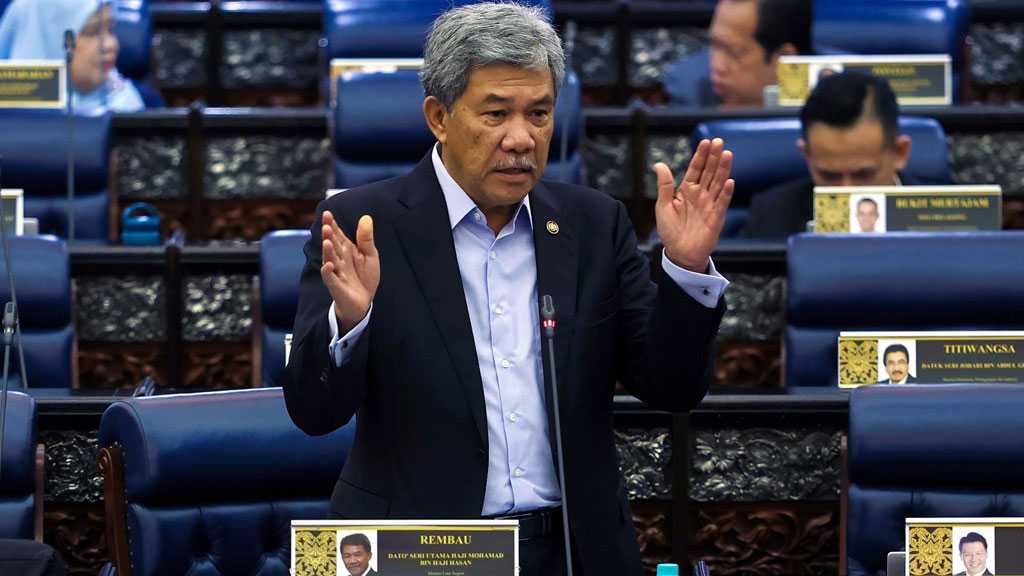
Malaysia remains committed to providing RM100 million [$24.5 million] in reconstruction assistance to Gaza, but continued “Israeli” aggression and the deteriorating situation in the besieged territory are preventing the aid from being delivered, Foreign Minister Mohamad Hasan said on Monday.
Speaking in the Dewan Rakyat, Malaysia’s lower house of parliament, while concluding the debate on his ministry’s 2027 budget, Mohamad said conditions in Gaza had shown no meaningful improvement.
“‘Israel’ is becoming more aggressive and is destroying Gaza,” he said, adding that the pledged assistance would be delivered once circumstances allowed it to reach its intended recipients effectively.
Prime Minister Anwar Ibrahim announced the RM100 million allocation last year during a Gaza solidarity rally in Kuala Lumpur, supplementing an earlier financial commitment. Communications Minister Fahmi Fadzil said at the time that the funding would focus on reconstruction, marking a shift from previous food assistance efforts, much of which had been unable to enter Gaza because of the siege.
Since 2023, Malaysia has provided RM89 million [$21.8 million] in assistance to Palestinians through the Humanitarian Trust Fund for the People of Palestine, known by its Malay acronym AAKRP. Mohamad said more than RM12 million [$2.9 million] of that amount had been disbursed this year.
Malaysia’s latest commitment is consistent with Kuala Lumpur’s longstanding position on the Palestinian issue since the start of the genocide in Gaza. In December 2023, the country prohibited “Israeli”-flagged vessels from entering its ports and revoked docking authorization for “Israeli” shipping company ZIM.
In October 2025, Anwar announced that Malaysia would be prepared to deploy peacekeeping forces to Gaza if requested by the United Nations, the Arab League, or the Organization of Islamic Cooperation [OIC].
The Malaysian prime minister also expressed reservations in January about supporting a US-proposed Gaza Board of Peace without firm guarantees, including an end to “Israeli” attacks, recognition of Palestinian rights and the restoration of humanitarian assistance.
In July, Washington summoned Malaysia’s ambassador over Kuala Lumpur’s refusal to recognize “Israel.”
On Wednesday, Anwar reiterated Malaysia’s unequivocal condemnation of the genocide in Gaza and opposed the bombing of southern Lebanon. He also disclosed that he had been in contact with Gulf leaders in an effort to prevent the conflict from expanding across the region.
Four days later, Anwar said the government was considering restricting civil servants’ use of the Waze navigation application because its parent company is based in “Israel.” However, he emphasized that the proposed measure would not amount to a blanket ban.
Malaysia’s position on the Palestinian issue is also strongly influenced by public sentiment. A Pew Research Center survey found that 89 percent of Malaysians held an unfavorable view of “Israel,” significantly higher than the average of 67 percent recorded across the 36 countries surveyed between February 8 and May 13. Most of the interviews took place shortly after the United States and “Israel” launched their war on Iran on February 28.
Meanwhile, an online survey conducted in March 2025 by Ampersand Advisory and InsightzClub found that 52 percent of Malaysian respondents had boycotted brands they believed conducted business with “Israel.” More than 60 percent of those who participated in the boycotts said they had switched to local alternatives.
Pro-Palestine demonstrations have also continued to attract large crowds across Malaysia throughout the war, reflecting widespread public support for Palestinians and opposition to the ongoing destruction in Gaza.