Trump’s and Netanyahu’s Setback in Brazil: Lula’s Victory Reshapes the Geopolitical Balance
By Mohamad Hammoud
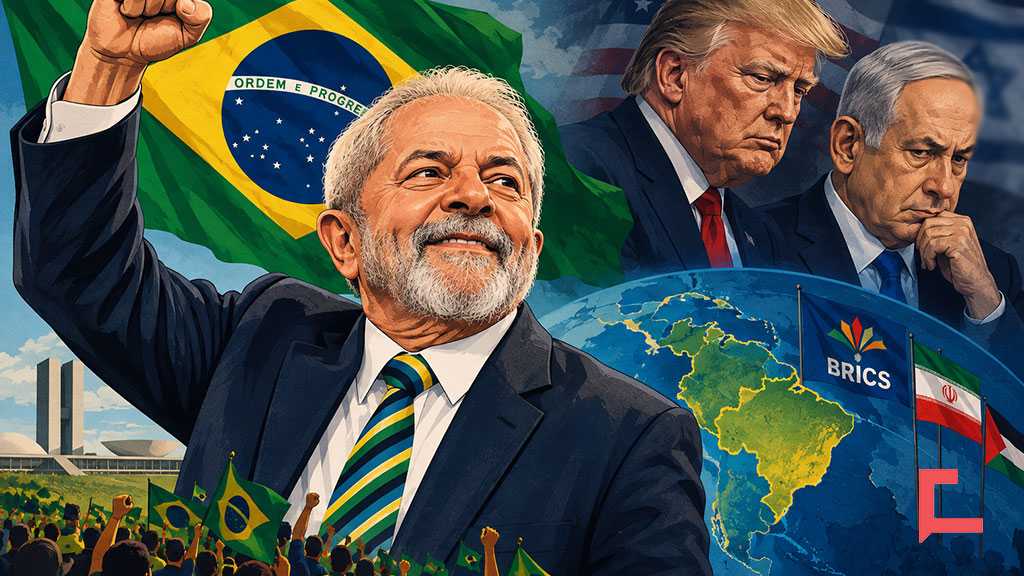
Brazilian voters have reelected President Luiz Inácio Lula da Silva over Flávio Bolsonaro, son of former President Jair Bolsonaro, delivering a political setback with consequences beyond Brazil. The outcome frustrates the ambitions of two foreign leaders who stood to benefit from a Bolsonaro victory: Donald Trump, who sought another political ally in Latin America, and Benjamin Netanyahu, who hoped to restore closer relations between Brazil and “Israel”.
A Setback for Washington
A Bolsonaro victory would have brought Latin America’s largest economy closer to Washington’s regional agenda. Bolsonaro supported closer cooperation with the United States and proposed joining Trump’s Shield of the Americas initiative, which Lula rejected in favor of maintaining Brazil’s independent foreign policy.
Trump’s efforts to influence Brazil’s political direction, however, extended beyond cultivating alliances. His administration imposed steep tariffs on Brazilian goods, citing, among other grievances, the prosecution of former President Jair Bolsonaro. Rather than yielding to Washington’s economic pressure, Lula turned the confrontation into a defense of national sovereignty, declaring that Brazil was nobody’s backyard.
Even after Lula’s victory, Trump questioned the election’s legitimacy. According to Spain’s La Sexta, he suggested, without presenting evidence, that Brazil’s election had followed the same playbook he accused Joe Biden of using in the 2020 American presidential election. Flávio Bolsonaro also refused to concede and demanded that the results be annulled, Reuters reported.
Netanyahu’s Disappointment
The election result was equally unwelcome to Netanyahu. Hebrew-language newspaper “Ynet” described Lula’s victory as a blow to Trump and disappointing news for “Israel”, while “Haaretz” identified Bolsonaro as Netanyahu’s ally, highlighting the diplomatic stakes for his government.
Netanyahu had openly expressed hopes of restoring relations with Brazil, while Bolsonaro promised to relocate the Brazilian embassy to Jerusalem. Expectations of victory were so strong that Bolsonaro’s personal pastor told “Ynet” of plans to celebrate in Occupied Al-Quds [“Jerusalem”], potentially alongside Bolsonaro and his prospective economy minister.
Those celebrations never materialized. Instead, Netanyahu faces another presidential term under Lula, whose criticism of “Israel’s” conduct in Gaza has contributed to strained diplomatic relations.
The disappointment also reached Netanyahu’s cabinet. According to Haaretz, “Israeli” Minister Amichai Chikli questioned the election results, alleging without presenting evidence that Lula had not won fairly. His reaction reflected the political importance some members of Netanyahu’s government attached to Bolsonaro’s candidacy.
Two Competing Foreign-Policy Visions
Behind the presidential campaigns stood fundamentally different visions of Brazil’s international role. Lula favors diplomatic autonomy, stronger cooperation among emerging economies, and reform of international institutions historically dominated by Western powers. Bolsonaro emphasized closer relations with Washington and “Israel,” while criticizing Lula’s engagement with governments opposed to American foreign policy.
That difference extends to BRICS, which Brazil helped establish and which now includes Iran. Lula’s victory preserves Brazil’s commitment to the bloc, strengthens cooperation with emerging economies, and maintains diplomatic ties with Tehran. It also limits Washington’s ability to draw Brasília into closer alignment with US and “Israeli” foreign-policy objectives.
Iran, Palestine and Strategic Independence
Lula’s independent approach extends to the Middle East. His government condemned American and “Israeli” military attacks on Iran, warning that military action threatens regional stability and undermines diplomacy. Bolsonaro, by contrast, favored closer cooperation with Washington and a more confrontational approach toward Tehran.
The divide is even clearer over Palestine. Lula has accused “Israel” of committing genocide in Gaza, supported Palestinian statehood, and backed international legal efforts to hold its government accountable. Bolsonaro, meanwhile, defended “Israel’s” military campaign and advocated closer diplomatic relations with Netanyahu’s government.
A Defeat Beyond Brazil
Lula’s reelection preserves Brazil’s independent position at a time when Washington is seeking stronger political alignment across Latin America. It also ensures that BRICS retains an influential member committed to economic cooperation outside Western-dominated institutions, while Iran maintains a diplomatic partner and Palestine retains a prominent international supporter.
Trump and Netanyahu had different interests in Bolsonaro’s candidacy, but both saw an opportunity to advance their foreign-policy objectives. Brazilian voters chose otherwise, leaving Latin America’s largest economy under a president determined to maintain diplomatic independence rather than align exclusively with Washington.
Comments