- Home
- ISLAMIC RESISTANCE
- SECRETARY-GENERAL
-
Full Speeches
- Speeches-2000
- Speeches-2006
- Speeches-2007
- Speeches-2008
- Speeches-2009
- Speeches-2010
- Speeches-2011
- Speeches-2012
- Speeches-2013
- Speeches-2014
- Speeches-2015
- Speeches-2016
- Speeches-2017
- Speeches-2018
- Speeches-2019
- Speeches-2020
- Speeches-2021
- Speeches-2022
- Speeches-2023
- Speeches-2024
- Speeches-2025
- Speeches-2026
- Speech-Reports
- SG
-
Full Speeches
- Voices
- Ten Day Dawn
- The Biggest Crime
- Martyr Leaders

Sanaa, Palestinian Factions Demand Action as Gaza Faces Mounting Crisis
By Staff, Agencies
Yemen's Foreign Ministry in Sanaa has called on mediators to fulfill their obligations and ensure the full implementation of the ceasefire agreement in Gaza.
The ministry condemned the international community's silence over the crimes committed by the "Israeli" occupation, describing it as complicity, and urged solidarity to pressure the occupation into ending its attacks.
Meanwhile, Palestinian Resistance factions and Gaza's Government Media Office called for worldwide demonstrations on Friday, Saturday, and Sunday to demand an end to the blockade and the worsening humanitarian catastrophe.
They urged sustained international solidarity and pressure on governments to protect civilians and ensure the delivery of essential supplies.
The factions also demanded the dissolution of the so-called "Board of Peace," accusing it of failing to address Palestinian suffering.
They called on the United Nations and Security Council to take effective action to protect civilians, lift the blockade, and secure humanitarian aid and shelter.
They held the occupation responsible for the ongoing crisis, while accusing the United States and other supporting actors of enabling it.
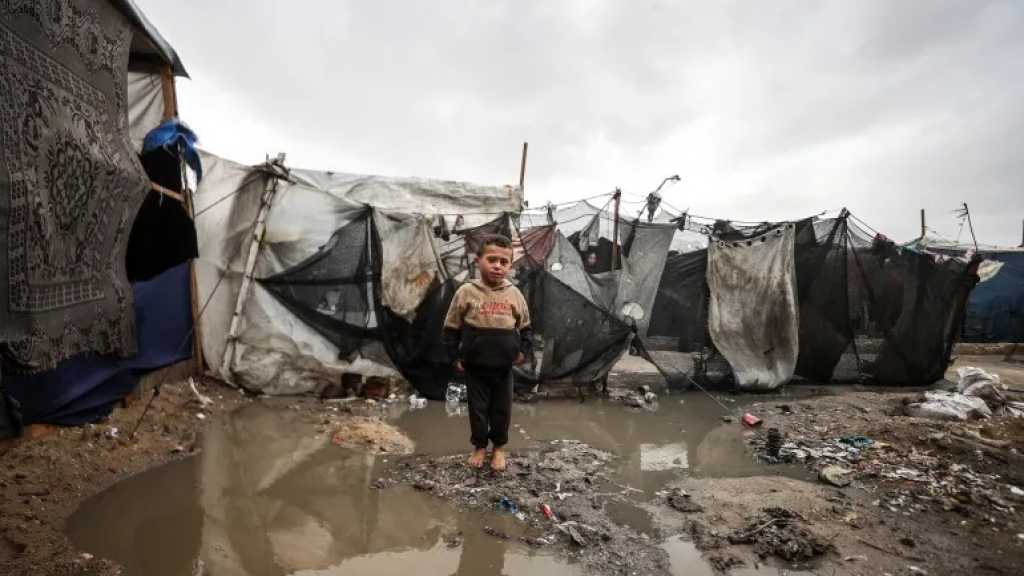
Meanwhile, severe weather has further worsened conditions across Gaza. On November 9, five Palestinians, including three children, were martyred after a sand embankment collapsed onto displacement tents in Deir al-Balah. Two others remain missing, while several were injured.
Hundreds of displacement tents were flooded as the first low-pressure weather system struck the Strip, with floodwater reaching up to half a meter inside some shelters.
Gaza's Civil Defense warned of further deterioration, citing shortages of medicine, the collapse of the healthcare system, and the growing vulnerability of displaced families, particularly women, children, patients, and people with disabilities.
Comments
- Related News