- Home
- ISLAMIC RESISTANCE
- SECRETARY-GENERAL
-
Full Speeches
- Speeches-2000
- Speeches-2006
- Speeches-2007
- Speeches-2008
- Speeches-2009
- Speeches-2010
- Speeches-2011
- Speeches-2012
- Speeches-2013
- Speeches-2014
- Speeches-2015
- Speeches-2016
- Speeches-2017
- Speeches-2018
- Speeches-2019
- Speeches-2020
- Speeches-2021
- Speeches-2022
- Speeches-2023
- Speeches-2024
- Speeches-2025
- Speeches-2026
- Speech-Reports
- SG
-
Full Speeches
- Voices
- Ten Day Dawn
- The Biggest Crime
- Martyr Leaders

Netanyahu Briefs Eisenkot amid Dispute over Security Powers
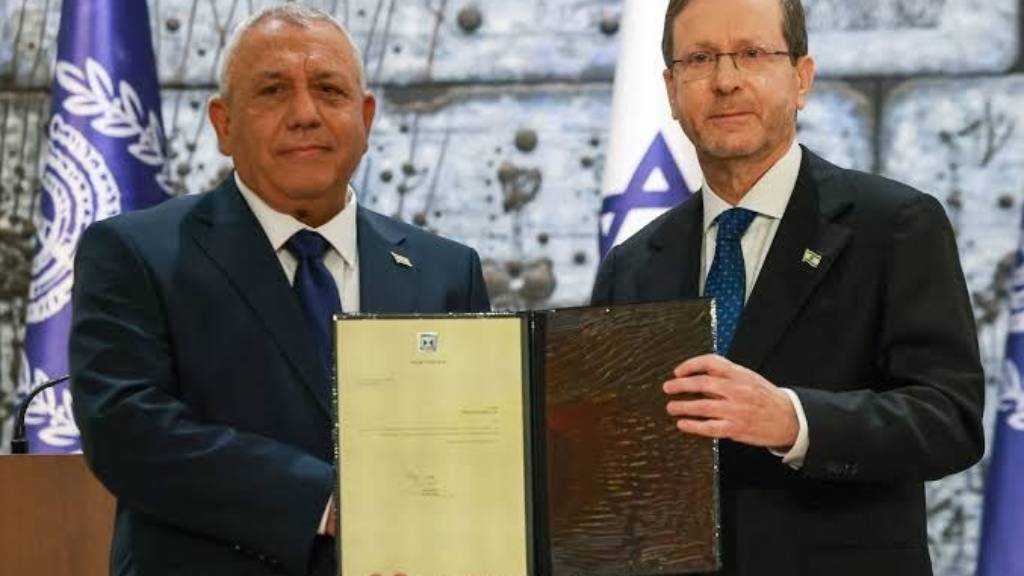
By Staff, Agencies
Outgoing “Israeli” Prime Minister Benjamin Netanyahu met with Gadi Eisenkot, leader of the “Yashar” party, and briefed him on the principal security and diplomatic challenges facing "Israel".
In a joint statement issued on Thursday, the two sides said Eisenkot had received an update on the current challenges and that they had "agreed to continue exchanging information and briefings whenever necessary", according to “Israeli” media.
The meeting followed a letter Eisenkot sent to Netanyahu on Wednesday, urging him to exercise restraint in making consequential security and domestic decisions before the incoming government assumes office. The letter drew criticism from “Israeli” War Minister Yisrael Katz.
In his letter, Eisenkot called on Netanyahu to "exercise the utmost caution and responsibility when making security and domestic decisions", warning of the repercussions of measures taken during the current political transition.
He urged Netanyahu to exercise restraint and "postpone serious security decisions that the next government, having secured the confidence of the Knesset, can make after taking the oath of office".
Eisenkot also cautioned that deploying occupation forces in the absence of a direct and imminent threat could have serious consequences for so-called "Israeli” “democracy" and public confidence in entity’s institutions.
He further warned against placing the security establishment at the center of constitutional disputes or leaving it in uncertainty over the decisions it is expected to implement. He stressed that political and external considerations must be kept separate from matters concerning "Israel's" security.
Responding to Eisenkot's position, Katz said that "the government does not need the approval of the opposition or any legal body to carry out military and security operations", pointing to ongoing aggression against Gaza, Lebanon, Syria, and the occupied West Bank.
“‘Israel’ dealt with the Iranian file with determination and wisdom, in full coordination with the army", Katz claimed, adding that "Israel's security is not in a transitional phase, nor is it hostage to the ongoing political processes".
He said that the prime minister, the security minister, and the government were responsible for directing the “Israeli” military and making decisions concerning "Israel's” security and the "protection of ‘Israelis’", within the framework of existing oversight mechanisms.
Meanwhile, “Yisrael Beiteinu” party leader Avigdor Lieberman warned that the outgoing government lacked the authority to make decisions that could draw "Israel" into a war without Knesset oversight and the full approval of all security establishment bodies.
Lieberman stressed the need to involve all relevant institutions in decisions of such magnitude, cautioning against bypassing established oversight mechanisms and institutional safeguards.
Comments
- Related News