- Home
- ISLAMIC RESISTANCE
- SECRETARY-GENERAL
-
Full Speeches
- Speeches-2000
- Speeches-2006
- Speeches-2007
- Speeches-2008
- Speeches-2009
- Speeches-2010
- Speeches-2011
- Speeches-2012
- Speeches-2013
- Speeches-2014
- Speeches-2015
- Speeches-2016
- Speeches-2017
- Speeches-2018
- Speeches-2019
- Speeches-2020
- Speeches-2021
- Speeches-2022
- Speeches-2023
- Speeches-2024
- Speeches-2025
- Speeches-2026
- Speech-Reports
- SG
-
Full Speeches
- Voices
- Ten Day Dawn
- The Biggest Crime
- Martyr Leaders

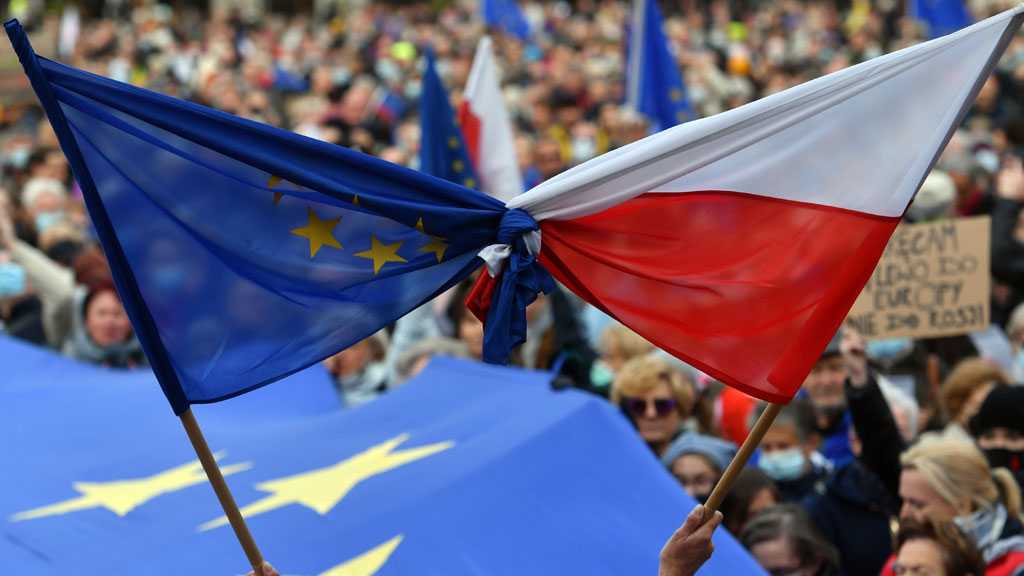
Poland’s President Vetoes EU Online Safety Legislation for Second Time
By Staff, Agencies
Polish President Karol Nawrocki has once again vetoed legislation aimed at implementing key provisions of the European Union’s Digital Services Act [DSA], deepening tensions with Prime Minister Donald Tusk’s government.
The decision, announced on Friday, marks the second time Nawrocki has blocked the proposed legislation, which sought to strengthen the powers of regulatory authorities to order the removal or blocking of illegal online content, including criminal threats and incitement to violence.
Nawrocki, who is aligned with the nationalist opposition Law and Justice party, argued that the legislation would grant government officials excessive authority over freedom of expression and create opportunities for state interference in online speech.
In a video statement explaining his decision, the president insisted that determining whether online content constitutes a criminal offence should remain the responsibility of independent courts rather than government officials.
He also accused the Tusk administration of using recent knife attacks at Polish schools as justification for introducing stricter controls over online content.
Prime Minister Donald Tusk rejected the president’s arguments, maintaining that protecting children from online criminals should be a priority that rises above political disagreements.
In a post on X, Tusk criticized the veto, arguing that safeguarding children from online threats should be an issue capable of uniting political forces rather than becoming another source of confrontation.
The presidential veto presents another obstacle for Tusk’s governing coalition, which lacks the parliamentary support required to overturn the decision.
Under Article 122 of Poland’s Constitution, parliament can override a presidential veto with a three-fifths majority in the 460-member Sejm, provided at least half of all lawmakers are present. If all members participate, the government would need 276 votes to pass the legislation despite the president’s opposition.
With the governing coalition falling short of that threshold, Tusk would need support from opposition lawmakers to reverse Nawrocki’s decision.
Another option would be for the government to revise the legislation, address the president’s objections and submit a new version to parliament.
The latest veto follows Nawrocki’s rejection of the original legislation in January, highlighting the continuing political dispute between the presidency and the government over online regulation, freedom of expression and the implementation of EU digital rules in Poland.
Comments
- Related News