- Home
- ISLAMIC RESISTANCE
- SECRETARY-GENERAL
-
Full Speeches
- Speeches-2000
- Speeches-2006
- Speeches-2007
- Speeches-2008
- Speeches-2009
- Speeches-2010
- Speeches-2011
- Speeches-2012
- Speeches-2013
- Speeches-2014
- Speeches-2015
- Speeches-2016
- Speeches-2017
- Speeches-2018
- Speeches-2019
- Speeches-2020
- Speeches-2021
- Speeches-2022
- Speeches-2023
- Speeches-2024
- Speeches-2025
- Speeches-2026
- Speech-Reports
- SG
-
Full Speeches
- Voices
- Ten Day Dawn
- The Biggest Crime
- Martyr Leaders

Trump Calls on Nvidia to Give Jensen Huang a ’Second Chance’
By Staff, Agencies
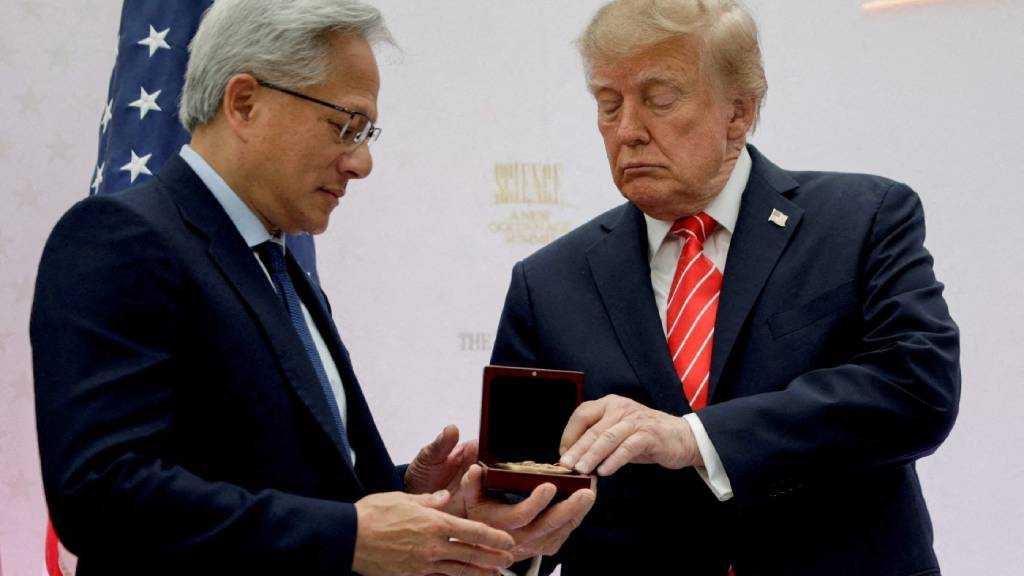
US President Donald Trump on Friday urged Nvidia to reinstate former CEO Jensen Huang, who resigned last week following allegations of multiple extramarital affairs, including one involving an alleged Chinese spy.
"I would love to see him be back. You have one of the truly most brilliant minds in the world," Trump told reporters, adding that Huang deserved "a second chance."
Huang stepped down from the helm of Nvidia, a leading company in the artificial intelligence industry, after reports alleged an affair with a Chinese spy who may have facilitated the transfer of restricted chips to China.
At least two additional alleged affairs subsequently emerged, while US intelligence was reportedly aware of potential Chinese espionage activities.
Defending Huang as "a good man" who "made some bad decisions," Trump said he hoped the former CEO would issue a public apology and return to the company, highlighting his role in developing Nvidia's advanced Blackwell chips.
Trump also claimed he had discussed Huang with Chinese President Xi Jinping during their recent summit in Shenzhen, contradicting Treasury Secretary Scott Bessent, who earlier said the matter was not raised.
Trump urged Nvidia to reinstate Huang, arguing that it would be the smart decision. However, Nvidia's board has unanimously rejected his return, with Chair Harvey Jones confirming that the board does not intend to reinstate him as CEO.
Separately, Bessent stressed that Washington must maintain its technological advantage over China in artificial intelligence, arguing that continued innovation, access to advanced chips, and effective policies are essential to US security.
He also said Trump and Xi had agreed that humans must remain involved in military decisions involving superintelligence, ruling out autonomous systems making major military decisions.
Addressing the threat of AI-powered cyberattacks, Bessent reiterated that maintaining US technological leadership remains central to defending against emerging threats.
Comments
- Related News