The Shenzhen Summit: Great-Power Diplomacy, but No Peace for the Middle East
By Mohamad Hammoud
A Historic Summit, a Revealing Silence
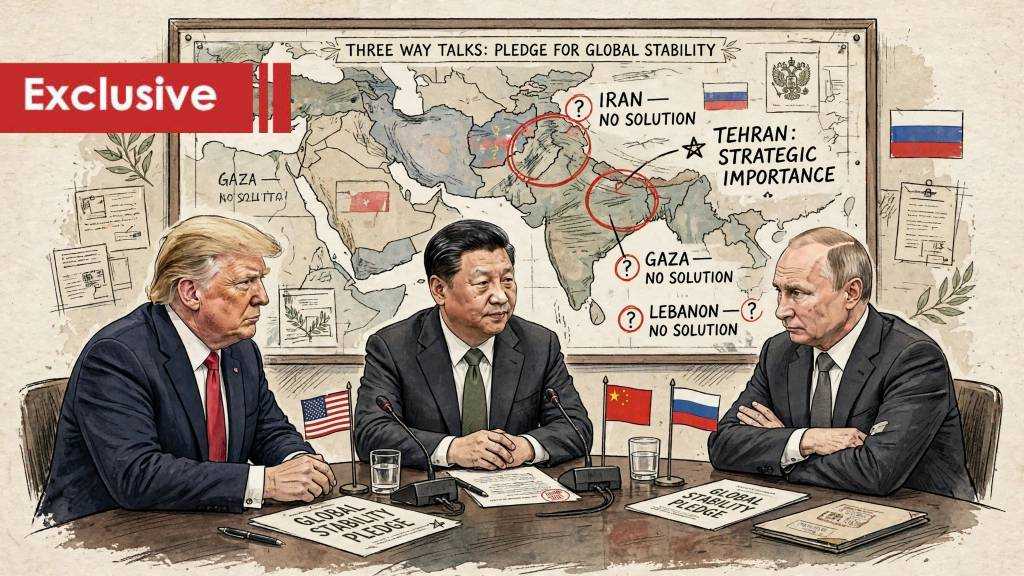
When US President Donald Trump, Chinese President Xi Jinping, and Russian President Vladimir Putin met in Shenzhen on November 19, their historic gathering raised expectations of progress on conflicts threatening international stability. According to Anadolu Agency, the approximately 80-minute summit produced a four-point declaration addressing United Nations reform, energy security, international judicial authority, and nuclear risks. Yet, as Reuters reported, the leaders announced no concrete agreements resolving major international conflicts. China demonstrated its ability to convene competing powers, but the meeting exposed the distance between diplomatic symbolism and meaningful solutions.
Iran: Absent from the Summit, Central to the Debate
According to the Associated Press, Trump acknowledged discussing Iran with Xi and Putin. Nevertheless, the summit produced no ceasefire initiative, security guarantees, or framework for resolving Washington's confrontation with Tehran. That absence of concrete commitments contrasted with a diplomatic development in Vienna, where China, Russia, and Iran had articulated a common position on nuclear inspections.
On November 18, Russia presented a joint statement on behalf of the three governments at the International Atomic Energy Agency. As Anadolu Agency reported, they argued that restoring normal nuclear verification required an end to military attacks, protection against renewed aggression, and credible security guarantees. Their objection concerned demands for unconditional inspections without addressing the consequences of attacks on Iranian nuclear facilities.
Meanwhile, IAEA Director General Rafael Grossi emphasized the agency's inability to verify much of Iran's declared nuclear material without renewed access. China and Russia, however, maintained their joint position with Tehran that military threats must also be addressed. Thus, while Xi and Putin engaged Trump in Shenzhen, their governments did not abandon their diplomatic alignment with Iran.
Hormuz: Iran's Strategic Leverage
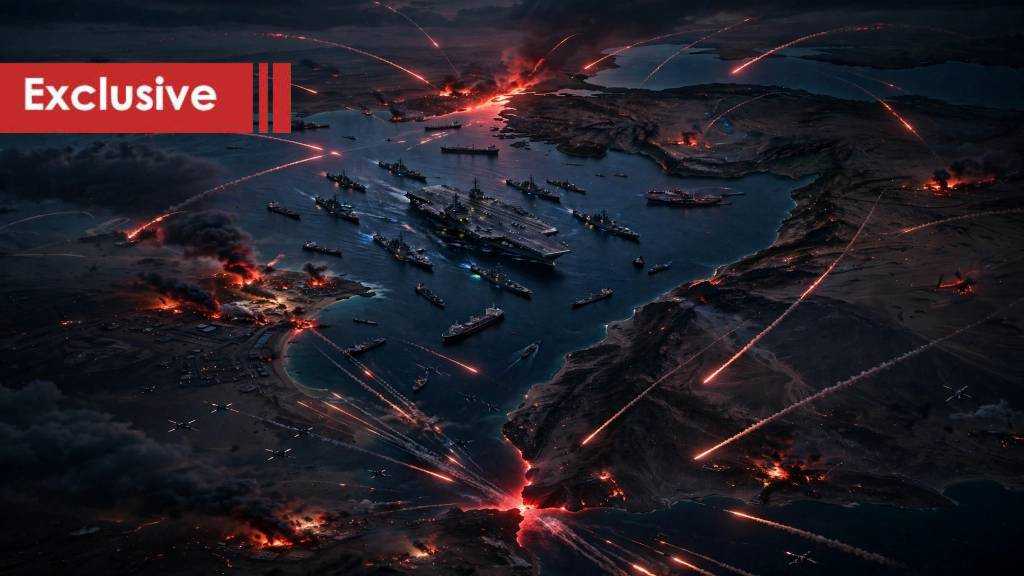
Energy security provided the summit's clearest connection to the Middle East. According to the declaration published by Chinese and Russian authorities, the three governments pledged to increase refined petroleum supplies and maintain stable energy flows. The Associated Press also reported Trump's insistence that Iran reopen the Strait of Hormuz, although the summit produced no agreement resolving the confrontation over the waterway.
Iran's strategic position overlooking Hormuz gives Tehran considerable leverage over a vital global energy corridor. Any prolonged disruption could affect international markets, particularly China, a major importer of Gulf petroleum. Although Washington, Beijing, and Moscow share an interest in stable energy supplies, their approaches to regional security remain different. Consequently, Iran's absence from the negotiating table did not diminish its strategic importance to the discussions.
Gaza, Lebanon, and International Accountability
The declaration's silence on Gaza and Lebanon was equally revealing. Despite continuing “Israeli” aggression, the leaders announced no measures addressing Palestinian rights, civilian protection, or Lebanese sovereignty. Instead, according to the declaration's published text, they emphasized state consent, official immunities, and objections to abuses of jurisdiction by the International Criminal Court.
Although the declaration did not specifically address Gaza-related proceedings, its language raises broader questions about international accountability. The contradiction remained evident: the leaders pledged international stability without announcing measures to confront regional aggression or protect its victims.
China: Influence Without a Breakthrough
China nevertheless emerged with greater diplomatic visibility. According to Beijing's official account, Xi presented the meeting as an opportunity for major powers to address international challenges through dialogue and cooperation. Reuters likewise highlighted the summit's symbolic significance despite its limited concrete achievements.
By hosting Trump and Putin while maintaining diplomatic cooperation with Tehran, Beijing demonstrated its ability to engage competing powers without abandoning established partnerships. However, the absence of agreements on Ukraine, Iran, or binding nuclear arms reductions illustrated the limitations of diplomatic declarations without enforceable commitments.
Peace Requires More Than Declarations
Ultimately, Shenzhen demonstrated that major powers can endorse broad principles while remaining divided over fundamental strategic interests. For Iran, nuclear diplomacy cannot be separated from security guarantees and protection against military aggression. For Gaza and Lebanon, declarations of stability offer little without measures addressing civilian protection, sovereignty, and accountability.
The summit's central lesson is clear: powerful governments may discuss the Middle East without its principal actors, but lasting stability cannot emerge from disregarding their interests, sovereignty, and security.
Comments