Head of ’Wa Ta’awanou’ to Al-Ahed: Being Targeted By US A Badge of Honor
By Iman Mustafa
The successive US measures reveal that the scope of targeting extends beyond Hezbollah’s weapons and military capabilities to encompass its social base, popular support network and the institutions that embrace its members and work alongside them. The aim is to besiege this community, exert pressure on it across different aspects of its daily life, undermine the foundations of its resilience and disrupt initiatives dedicated to supporting its people and meeting their needs.
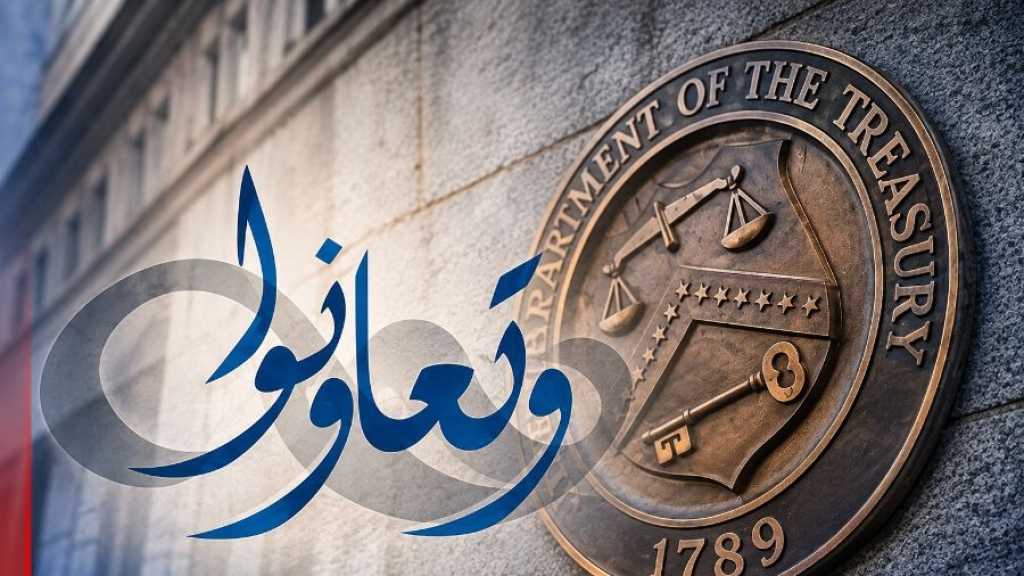
As part of this policy, the US Treasury Department’s Office of Foreign Assets Control [OFAC] announced the designation of three Lebanese nationals, a Lebanese association and two companies operating in the metals and jewelry trade on its sanctions list, alleging links to Hezbollah. According to the Treasury Department’s official website, those designated include Afif Shouman, Hassan Khishen and Ibrahim Khishen, as well as the Wa Ta’awanou Association and two companies, Gold Global and Sankari Gold.
The targeting of the Wa Ta’awanou Association, which has been registered in Lebanon since 2021, stands out as an example of Washington’s approach towards institutions that serve the resistance community and support its people.
In a position reflecting the association’s commitment to its mission and determination to continue its work, its president, Hajj Afif Shouman, told Al-Ahed that he and the association’s volunteers consider the decision a badge of honor to be worn on their chests. He stressed that US measures would not deter them from continuing their work and serving the people of the South, whom he described as the people of the resistance, its social base and the families of its fighters, adding that they are the most honorable people in this country.
Shouman explained that the association takes pride in serving this community and standing alongside its members. He said that the measures against it would neither change the nature of its mission nor force it to abandon its role in supporting people, as the initiative draws its strength from the very people it serves and its volunteers.
In this regard, he stressed that the sanctions would have no impact on the association’s work, given that it is a grassroots initiative established by the people and for the people, with no bank accounts, real estate, land or other assets that it stands to lose.
“The only thing we could lose is our dignity,” Shouman said, stressing that the association’s volunteers are prepared to sacrifice their lives in defense of dignity, values, principles and the resistance.
Addressing the impact of these measures on the association’s activities, Shouman confirmed that its work was continuing as normal, with volunteers carrying on their activities in southern Lebanon and at shelters, alongside its various programs and initiatives, without any disruption to the pace of operations.
He revealed that while the association had between 500 and 600 volunteers before the sanctions were imposed, it had since received around 2,500 new membership and volunteer applications. He said this overwhelming response reflected the public’s support for the association and commitment to its initiative, demonstrating people’s determination to continue working despite attempts to restrict its activities.
He further stressed that these measures would not force the association to retreat, suspend its work or give in to fear. He explained that the objectives behind targeting it went beyond financial restrictions, as they sought to turn the resistance community against the resistance itself, something he described as impossible, since this community is the resistance and the mujahideen are its own sons.
Another objective, he said, was to stop the association from working with this community, making its people feel deprived, besieging and starving them, and ultimately creating a rift between them and the resistance. The measures also seek to make the resistance and Hezbollah bear responsibility for what has happened in southern Lebanon.
Shouman affirmed that the association would not be drawn into this agenda and would continue directing its efforts towards confronting the enemy. He considered helping people and standing by them one form of jihad in confronting the enemy and its attempts to exert pressure on and target society.
In this context, Shouman emphasized that the association would continue its work in the face of attempts to target the population, distort the image of the resistance and demonize it. He stressed that those running the association would press ahead with their work and their efforts, and intended to do even more.
He added that the association’s efforts would double in the coming period, with its activities expanding and increasing in scope. He argued that the fact that this work was being targeted demonstrated just how much it troubled the American and “Israeli” enemy, making its continuation a duty from which they would not retreat.
Shouman also highlighted the importance of every individual, initiative and group understanding its position and the nature of the role it plays. He stressed that the association’s work is rooted in faith and moral conviction.
He considered the US decision to impose measures against the association, despite Washington’s support for Israel and its responsibility for the killing of children and women and the destruction of villages and homes, a badge of honor for those involved. In his view, it was proof that they were standing on the side they had consciously and firmly chosen.
He noted that the world was witnessing two opposing camps: the camp of good and the camp of evil. The association, he affirmed, had chosen to stand with the camp of good, expressing confidence that God would grant justice to those working along this path and keep them steadfast. He also stressed that placing their trust in God gave them the strength to withstand pressure and measures that would never succeed in halting their activities or restricting their movement and work.
Shouman concluded by affirming that the association entrusted all its affairs to God, citing the Quranic verse: {And whoever puts their trust in Allah, then He [alone] is sufficient for them (At-Talaq, 3) as well as the supplication: {Do with me what You deem worthy.}
He said that whatever God decrees will come to pass, adding that this conviction only strengthens their determination to continue their work, remain steadfast and never retreat.
Comments