Labor MPs Warn Burnham against Rosebank Plan
By Staff, Agencies
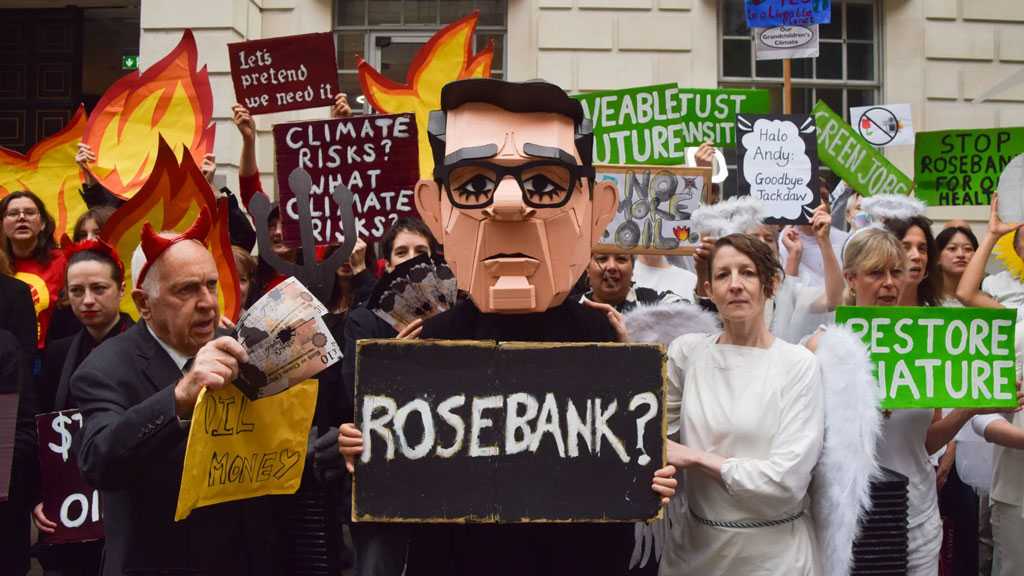
A group of 92 British Labor lawmakers has signed a letter urging Prime Minister Andy Burnham to refuse permission for drilling at the Rosebank oil field in the North Sea.
The letter represents the biggest revolt of his time in office, with roughly a quarter of the party’s parliamentary ranks involved.
Most signatories are backbenchers, though at least four frontbenchers also put their names to it. The lawmakers argue that giving the go-ahead would be an “irreversible point of no return” for Labor’s climate credibility.
“We urge you to show that labor is on the side of the people experiencing climate change’s impacts, not those fueling it,” Burnham was further told
The authors said they were “increasingly concerned that the approval of the Rosebank oil field would permanently damage our climate credentials as a party and as a country.” They also made an electoral argument, “Polling is clear – in order to stand a chance of winning parliamentary majorities, maintaining our ‘progressive electoral base’ is imperative.”
After the collapse of the COP31 climate talks in Turkey last week, the MPs added that the UK “must be wary about what signals we are sending our counterparts about our commitment to transition away from fossil fuels”.
Catherine Fookes, one of the letter’s organizers, told The Guardian that more colleagues share the worry.
“Concern about this project is widespread within the parliamentary labor Party. Some 92 people have signed our letter, and there are more who are worried about Rosebank who haven’t signed it,” Fookes stressed.
She also addressed the prime minister indirectly, “I know the Prime Minister is a good listener. I hope he will see these names and see the letter and take note and think carefully about oil drilling.”
According to the newspaper, at least four ministerial aides, the most junior tier of government, are among the signatories. One of them has reportedly threatened to leave the front bench if the license is approved.
Burnham has pledged a “pragmatic” approach to North Sea energy but maintains that the final call belongs to Energy Secretary Miatta Fahnbulleh, who is expected to rule within weeks. Some have accused her of encouraging the rebels, which sources close to her have dismissed as “categorically untrue”.
She has previously signaled she is inclined to reject the application on environmental grounds, even though Chancellor John Healey favors drilling. Last week she argued that approval would do little for household costs.
Speaking at the COP31 conference, Fahnbulleh said, “We’re in the middle of an energy crisis where the war in the Middle East means that gas and oil prices are at record levels.”
“That is the thing that’s impacting people’s bills. So if you care about how we’re going to drive down bills, it requires us to decouple ourselves from the global fossil fuel markets; And ultimately, the way that we do that is through renewables, it’s through nuclear, it’s through clean energy,” Fahnbulleh further stressed.
Rosebank lies about 80 miles northwest of Shetland and could supply 10 percent of the UK’s oil. Environmental groups say it would release seven times as much carbon dioxide as the Jackdaw gas field east of Aberdeen, which won approval in October.
Opponents note that Rosebank’s oil would be sold on international markets, so it would not directly lower energy bills. Supporters counter that it could bring in £500 million a year in tax revenue, which the government could use to reduce bills.
Both projects were licensed under the previous Conservative government, and both approvals were later tied up in court battles. Burnham eventually backed Jackdaw as part of his promise of a “pragmatic” stance on energy security amid rising bills. Fahnbulleh has said she approved Jackdaw because of energy security needs, whereas Rosebank is different because most of its oil would be exported.
Comments
Labor MPs Warn Burnham against Rosebank Plan
13 minutes ago