From the Battlefield to Energy Markets: How Is the War on Iran Draining the US Economy?
Mustafa Awada
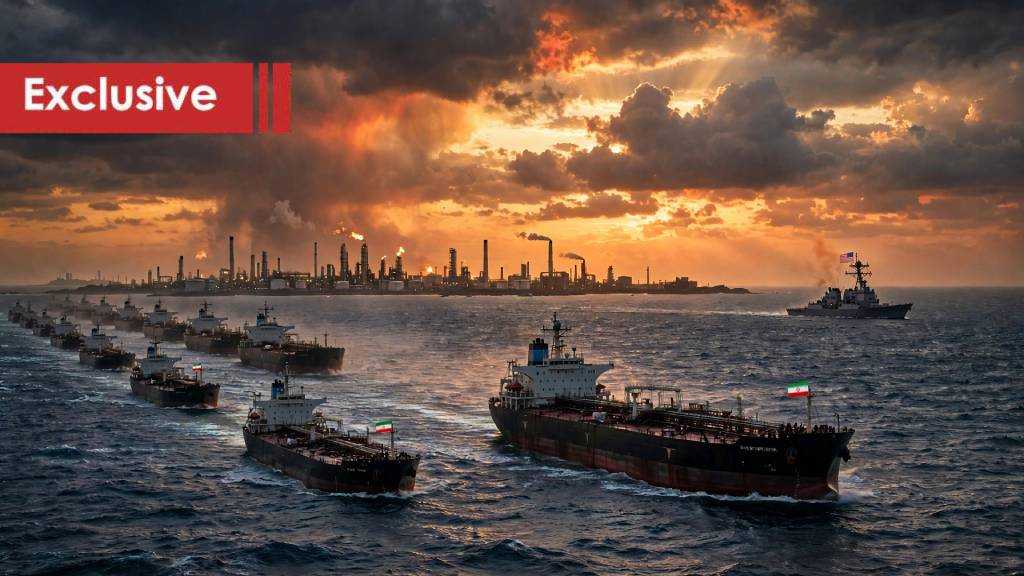
The repercussions of the US-“Israeli” aggression against Iran are no longer confined to the military arena. They have extended to energy markets and the global economy, with the Strait of Hormuz emerging as a strategic pressure point that threatens US oil reserves and poses mounting challenges to the American economy.
As the United States attempts to contain rising prices by drawing on its Strategic Petroleum Reserve [SPR], the limitations of this tool are becoming increasingly apparent in the face of a prolonged crisis, particularly as the gap between US oil production and consumption widens and the cost of securing supplies rises. Consequently, the US Strategic Petroleum Reserve has fallen to its lowest level since August 1982, with the Department of Energy announcing that stocks stood at 273.5 million barrels as of November 20. How, then, has Iran managed to bring the confrontation to the heart of the US economy? And how much longer can Washington withstand the consequences of depleting its oil reserves?
Speaking to Al-Ahed News, Dr. Mamdouh Salameh, an expert on oil and the global economy, said Iran had demonstrated its ability to withstand the US-“Israeli” war and inflict strategic and economic losses on the United States. He noted that the repercussions of the confrontation extend beyond the two warring parties to affect the global economy, energy markets and supply chains.
US Oil Reserves Under Pressure
Salameh explains that the US Strategic Petroleum Reserve was originally established to address emergencies, whether wars or major crises that disrupt the flow of oil to markets. The reserve once held approximately 635 million barrels, while total US oil stocks are estimated at around 800 million barrels.
The strategic reserve plays a vital role in protecting the domestic market against shocks. It allows additional oil to be released when prices rise or supplies are interrupted, helping ease the burden on consumers and curb sharp increases in fuel prices.
However, Salameh argues, this mechanism cannot resolve a prolonged crisis or compensate indefinitely for disrupted supplies. Continued withdrawals from the reserve would mean depleting one of the most important instruments available to protect the US economy.
He notes that the United States, the European Union, China and India have all resorted to drawing on their strategic and commercial reserves in an attempt to increase oil supplies and put downward pressure on prices. However, their ability to continue doing so remains limited, as dwindling stocks would leave their energy security increasingly vulnerable if the crisis drags on.
In the specific case of the United States, Salameh estimates that the strategic reserve has fallen to approximately 180 million barrels, a volume that, in his assessment, would cover no more than nine days of US consumption.
This leaves Washington facing a difficult dilemma: use its reserves to contain price increases in the short term, or preserve part of them to address potentially more serious scenarios should supply disruptions persist.
Iran Takes the Confrontation to the US Economy
Assessing the course of the war, Salameh believes Iran has demonstrated its ability to withstand US-“Israeli” attacks and dealt the United States strategic blows that will remain part of the historical record of international confrontations.
He argues that Tehran views the Strait of Hormuz not merely as a geographical passage, but as a powerful instrument of economic pressure on global energy markets, given the waterway’s vital importance to oil shipments and international trade.
He points out that continued disruption to maritime traffic and supplies directly drives up energy costs, placing mounting pressure on oil-importing economies. The US economy is particularly exposed, as it cannot rely solely on domestic production to meet its oil requirements.
Salameh bases his assessment of the pressure on the United States on the gap between its oil production and consumption. Even assuming the accuracy of US figures indicating production of approximately 13 million barrels per day, consumption stands at nearly 21 million barrels. This leaves a daily shortfall of around eight million barrels that must be sourced elsewhere.
He adds that rising oil prices are making up this shortfall increasingly expensive. According to his estimates, the price of imported oil has risen by more than $40 per barrel compared with its pre-war level. This difference imposes additional costs on the US economy, driving up energy, transportation and production expenses, as well as directly affecting domestic diesel and gasoline prices.
The consequences, however, go beyond higher prices. Salameh believes sustained pressure on oil supplies will compound the financial burden on the US government, which must continue financing public spending while shouldering the costs of the war and its economic repercussions.
He warns that resorting to injecting additional liquidity and printing money to address these imbalances could generate further inflationary pressure at a time when the US economy is already grappling with mounting financial challenges.
In this context, Salameh links the economic repercussions of the war to its domestic political consequences in the United States. He argues that rising fuel prices, declining purchasing power and the growing financial burden on ordinary Americans have contributed to a fall in the popularity of President Donald Trump’s administration, with the effects reflected in the results of the midterm congressional elections.
Oil Prices Set to Surpass $110?
Salameh stresses that Iran’s objective is not simply to cause short-term disruption in the oil market, but to inflict cumulative economic losses on the United States as part of the price Washington must pay for the war. In this regard, the depletion of US strategic reserves, coupled with declining commercial inventories and rising energy prices, could undermine Washington’s ability to contain the crisis if the confrontation continues.
He also believes that negotiations between the United States and Iran are unlikely to produce a successful settlement. He expects oil prices to surge again following the failure of diplomatic efforts, exceeding $110 per barrel and potentially reaching between $115 and $120.
This assessment suggests that the effects of the war will not end simply with a halt to military operations or the announcement of a political understanding. Supply disruptions, depleted inventories and changing calculations among oil-producing and oil-consuming countries will continue to shape the market in the period ahead.
The Global Economy Between Washington and Beijing: Russia as China’s Energy Card
At the global level, Salameh argues that the crisis is not affecting all countries equally. The scale of its impact depends on how heavily each economy relies on imported oil and its ability to secure supplies from alternative sources.
He explains that the United States is not in a position to meet the world’s oil needs. On the contrary, it faces a gap between domestic production and consumption, making claims that it could compensate for a global supply shortfall unrealistic.
He points out that US oil exports, which he estimates at between 3.5 and four million barrels per day, do not mean that the country has a net surplus capable of meeting international market needs.
A significant portion of US oil exports consists of light crude, which is used in blending with heavier grades to facilitate processing and refining, as part of commercial arrangements shaped by the requirements and configurations of refineries.
Consequently, the United States’ role in the global energy market remains constrained by the limits of domestic production, the types of crude available and the scale of internal consumption. US exports cannot therefore be treated as an alternative capable of making up for supply shortages resulting from disruptions in the Gulf.
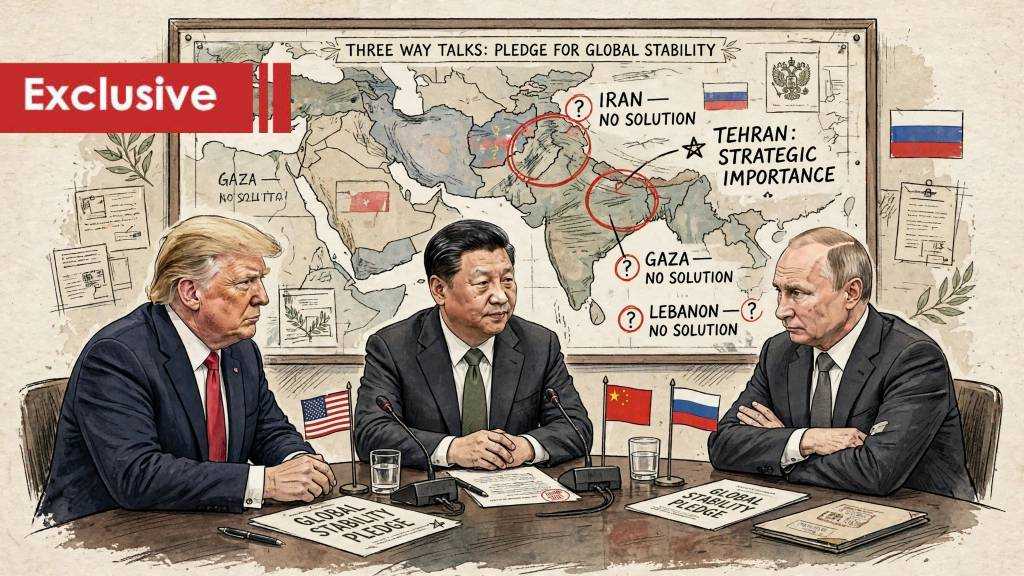
China, by contrast, has important strategic cards at its disposal in dealing with the repercussions of the crisis, Salameh notes. These include the sheer size of its economy, its position in global trade and its energy ties with Russia.
He points out that China’s economy, measured in purchasing power parity [PPP], is larger than that of the United States, giving Beijing considerable economic room to absorb shocks.
Russia, Salameh adds, is a key strategic asset for China, given its vast oil and gas resources and its capacity to supply the Chinese market with substantial volumes of energy, whether through pipelines or other transportation routes.
This interconnected relationship gives Beijing greater flexibility to diversify its supply sources and reduce its exposure to disruptions affecting maritime energy routes.
Hormuz at the Heart of Global Economic Shifts
Salameh’s assessment reveals how the war on Iran has moved beyond the boundaries of military confrontation, placing the global energy system under pressure and testing the ability of major economies to withstand shocks to energy security and supply chains.
The United States, which is seeking to contain the repercussions of the war, finds itself facing mounting challenges involving its oil reserves, import costs, fuel prices and domestic economic pressures. China and Russia, meanwhile, have different tools at their disposal to navigate the shifting energy landscape.
Salameh concludes that the Strait of Hormuz is no longer merely a passageway for oil shipments. It has become a focal point where the calculations of war, economics and international influence converge. As the confrontation continues, the United States’ ability to protect its domestic market and contain the fallout from rising prices remains under pressure, while Iran seeks to translate its military resilience into sustained economic pressure on Washington.
Comments