- Home
- ISLAMIC RESISTANCE
- SECRETARY-GENERAL
-
Full Speeches
- Speeches-2000
- Speeches-2006
- Speeches-2007
- Speeches-2008
- Speeches-2009
- Speeches-2010
- Speeches-2011
- Speeches-2012
- Speeches-2013
- Speeches-2014
- Speeches-2015
- Speeches-2016
- Speeches-2017
- Speeches-2018
- Speeches-2019
- Speeches-2020
- Speeches-2021
- Speeches-2022
- Speeches-2023
- Speeches-2024
- Speeches-2025
- Speeches-2026
- Speech-Reports
- SG
-
Full Speeches
- Voices
- Ten Day Dawn
- The Biggest Crime
- Martyr Leaders

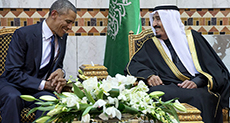
Obama to Host Saudi King: Syria, Yemen on Top of Talks
Local Editor
US President Barack Obama will host Saudi Arabia's King Salman in their first and long-delayed White House summit Friday, with clashing views on Middle Eastern crises coming to the fore.

Salman's inaugural visit as king - originally scheduled for May and canceled by Riyadh - has been billed as a way of reinforcing US-Saudi relations.
But behind public statements of partnership, the meeting looks likely to be dominated by disagreements on Syria and Yemen as well as lingering doubts about the nuclear deal with Iran.
Obama has now won enough votes to push the deal through Congress, easing the need for public Saudi endorsement.
But the White House would still like to assuage Saudi concerns that the deal equates to turning a blind eye to Iran's activities.
These meetings normally end in "some kind of public statement that puts as positive a spin as possible on the meeting," said Anthony Cordesman of the Center for Strategic and International Studies.
This meeting "is unlikely to be an exception," he said. "Both nations are close strategic partners in spite of their differences, and both states need each other."
Differences over Iran have exacerbated tensions between the United States and Saudi Arabia over the crises in Syria and Yemen.
"We are looking to isolate more extremist elements of the opposition, that's been an ongoing conversation with Saudi Arabia," he said.
Both Washington and Riyadh would like to see an end to Syria's brutal civil war and see leader Bashar Assad pushed from power.
In July, Obama and Salman discussed the "urgent" need to end fighting "and the importance of ensuring that assistance can reach Yemenis on all sides of the conflict."
In late August the White House expressed concern about Saudi-led airstrikes on the post city of Hodeida, a "crucial lifeline used to provide medicine, food and fuel to Yemen's population."
"I do think we will see an expression of concern," said Jeff Prescott, the National Security Council's Senior Director for the Middle East.
He stressed the need for ports to reopen and for infrastructure not to be damaged.
"We have been urging all the parties involved, including the Yemen government, coalition members and others to take steps to allow for unfettered humanitarian access to all parts of Yemen," he said.
"There is no military solution to the crisis in Yemen."
Source: Newws Agencies, Edited by website team
Comments
- Related News