Trump Slams US Intel Chiefs as «Naive and Passive» on Iran
Local Editor
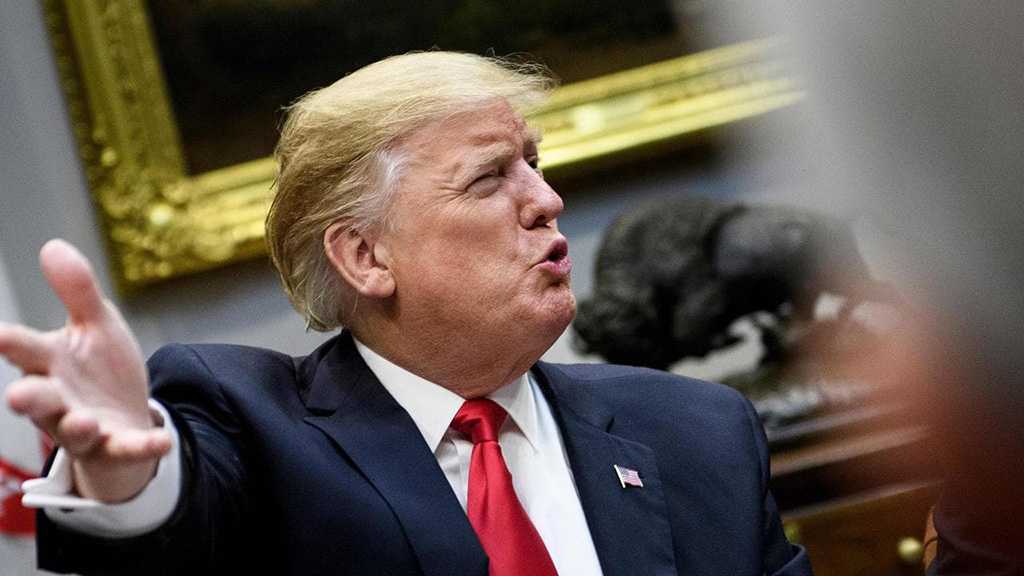
President Donald Trump Wednesday called US intelligence chiefs “extremely passive and naive” on Iran and dismissed their assessments of the threat posed by North Korea a day after they contradicted his views during congressional testimony.
Leaders of the US intelligence community told a Senate committee Tuesday the nuclear threat from North Korea persists and that Iran is not taking steps toward making a nuclear bomb, conclusions that contrasted starkly with Trump’s assessments of those countries.
“The Intelligence people seem to be extremely passive and naive when it comes to the dangers of Iran. They are wrong!” Trump, whose has criticized US intelligence agencies starting even before he took office, said in a Twitter post.
Trump cited Iranian rocket launches and said that Tehran was “coming very close to the edge.”
“Perhaps Intelligence should go back to school!” Trump said.
Trump last year pulled out of an international nuclear deal with Iran put in place under his Democratic predecessor Barack Obama, saying Tehran was “not living up to the spirit” of the agreement, and re-imposed sanctions. Under the 2015 deal, Iran agreed to restrictions on its nuclear activities in exchange for the lifting of sanctions.
The US intelligence officials told the Senate Intelligence Committee Iran was not developing nuclear weapons in violation of the agreement. Their assessments also broke with other assertions by Trump, including on the threat posed by Russia to US elections, the threat that Wahhabi Daesh [Arabic acronym “ISIS” / “ISIL”] poses in Syria and North Korea’s commitment to denuclearize.
“The President has a dangerous habit of undermining the intelligence community to fit his alternate reality,” Senator Mark Warner, the Intelligence Committee’s top Democrat, wrote on Twitter. “People risk their lives for the intelligence he just tosses aside on Twitter.”
Republican US Representative Mike Gallagher, who served as a Marine Corps intelligence officer during the Iraq war, defended the intelligence agencies, saying, “They are doing a very difficult job and they are actually trying to advance the president’s priorities.”
Trump has challenged US intelligence agencies’ findings in the past, including casting doubt on their conclusion that Russia interfered in the 2016 US election with a campaign of hacking and propaganda to help him win the presidency.
Former CIA Director John Brennan last year called Trump’s performance at a joint news conference with Russian President Vladimir Putin “nothing short of treasonous” after Trump seemed to give credence to Putin’s denial of Russia meddling in the 2016 election.
In retaliation, Trump revoked Brennan’s security clearance.
Wednesday, Brennan called Trump’s refusal to accept the intelligence assessments a sign of “intellectual bankruptcy”.
The CIA and the Director of National Intelligence office did not comment on Trump’s remarks.
Trump has invested heavily in improving relations with North Korea in hopes of getting the reclusive communist nation to abandon its nuclear ambitions.
He broke with decades of US policy when he agreed to meet with North Korean leader Kim Jong-Un last June and has planned a second summit in February.
“North Korea relationship is best it has ever been with US No testing, getting remains, hostages returned. Decent chance of Denuclearization,” Trump said on Twitter.
“I look forward to seeing Kim Jong-Un shortly. Progress being made-big difference!”
Director of National Intelligence Dan Coats and CIA Director Gina Haspel told senators that North Korea viewed its nuclear program as vital to its survival and was unlikely to give it up. Trump also defended his decision to withdraw 2,000 US troops from Syria on grounds that Daesh no longer poses a threat, saying “we’ve beaten them.”
“Caliphate will soon be destroyed, unthinkable two years ago,” Trump wrote on Twitter.
Trump has given the Pentagon about four months to withdraw US troops from Syria, backtracking from his abrupt December order for a pullout within 30 days.
The US intelligence chiefs said Daesh would continue to pursue attacks from Syria and Iraq against regional and Western adversaries, including the United States.
Source: News Agencies, Edited by website team
Comments
US Military Faces Strain as Iran War Continues
one month ago