Pfizer Says Coronavirus Vaccine Over 90% Effective
By Staff, Agencies
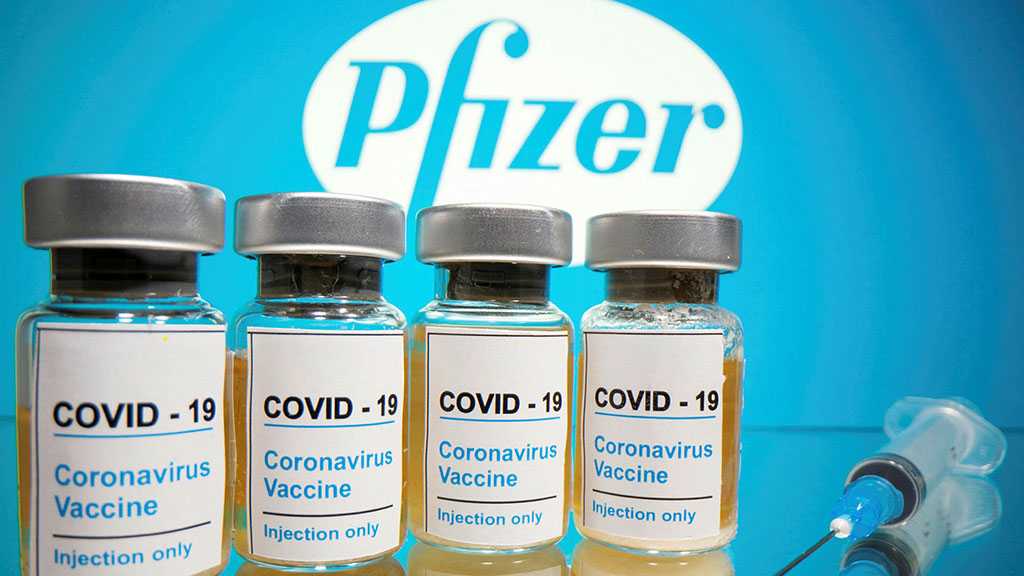
Pfizer Inc's experimental COVID-19 vaccine was more than 90% effective based on initial trial results, the company said on Monday, a major victory in the fight against a pandemic that has killed over a million people and battered the world's economy.
Experts welcomed the first successful interim data from a large-scale clinical test as a watershed moment that showed vaccines could halt the pandemic though mass roll-outs of the shot, which needs regulatory approval, won't happen this year.
Pfizer and its German partner BioNTech SE said they had so far found no serious safety concerns and expected to seek US authorization this month for emergency use of the vaccine, raising the possibility of a regulatory decision as soon as December.
If granted, the companies estimate they can roll out up to 50 million doses this year, enough to protect 25 million people, and then produce up to 1.3 billion doses in 2021.
"Today is a great day for science and humanity," Albert Bourla, Pfizer's chairman and chief executive, said.
"We are reaching this critical milestone in our vaccine development program at a time when the world needs it most with infection rates setting new records, hospitals nearing over-capacity and economies struggling to reopen."
Experts cautioned that they still needed to see the full trial data, which have yet to be peer-reviewed or published in a medical journal, but the preliminary results looked encouraging so far.
There are still many questions around the vaccine, such as how effective it is for vulnerable groups and how long it will provide immunity, and the "new normal" of social distancing and face masks looks set to remain for the foreseeable future.
BioNTech Chief Executive Ugur Sahin told Reuters he was optimistic the immunization effect of the vaccine would last for a year though that was not yet certain.
"This news made me smile from ear to ear. It is a relief to see such positive results on this vaccine and bodes well for COVID-19 vaccines in general," said Peter Horby, professor of emerging infectious diseases at the University of Oxford.
Pfizer expects to seek broad US authorization for emergency use of the vaccine for people aged 16 to 85. To do so, it will need two months of safety data from about half the study's 44,000 participants, which is expected in the third week of November.
"I'm near ecstatic," Bill Gruber, one of Pfizer's top vaccine scientists, said in an interview. "This is a great day for public health and for the potential to get us all out of the circumstances we're now in."
To break the dynamic of the spread of the coronavirus, between 55% and 65% of the population will need to be vaccinated, Germany's health minister Jens Spahn told a news conference on Monday, adding that he doesn't expect a shot to be available before the first quarter of 2021.
Pfizer and BioNTech have a $1.95 billion contract with the US government to deliver 100 million vaccine doses beginning this year. They have also reached supply agreements with the European Union, the United Kingdom, Canada and Japan.
The US drug-maker said the interim analysis was conducted after 94 participants in the trial developed COVID-19, examining how many of them had received the vaccine versus a placebo.
Pfizer did not break down exactly how many of those who fell ill received the vaccine. Still, over 90% effectiveness implies that no more than 8 of the 94 had been given the vaccine, which was administered in two shots about three weeks apart.
The efficacy rate is well above the 50% effectiveness required by the US Food and Drug Administration for a coronavirus vaccine.
To confirm the efficacy rate, Pfizer said it would continue the trial until there are 164 COVID-19 cases among participants. Bourla told CNBC on Monday that based on rising infection rates, the trial could be completed before the end of November.
Pfizer said its data would be peer reviewed once it has results from the entire trial.
"These are interesting first signals, but again they are only communicated in press releases," said Marylyn Addo, head of tropical medicine at the University Medical Center Hamburg-Eppendorf in Germany.
"Primary data are not yet available and a peer-reviewed publication is still pending. We still have to wait for the exact data before we can make a final assessment."
The global race for a vaccine has seen wealthier countries forge multibillion-dollar supply deals with drug-makers such as Pfizer, AstraZeneca Plc and Johnson & Johnson, raising questions over when middle income and poorer nations will get access to inoculations.
The US has spent billions of dollars to spur vaccine development at six pharma companies including Moderna and Johnson & Johnson through Operation Warp Speed. Pfizer is not part of that research and development program and runs its trial independently, but does have a nearly $2 billion deal to supply vaccines to the United States.
Comments