German Intelligence Chief Warns Connected Tesla Cars Could Be Used for US Espionage
By Staff, Agencies
Germany’s domestic intelligence authorities have raised concerns that internet-connected vehicles, including those manufactured by US electric carmaker Tesla, could potentially be used to collect sensitive information in Germany and transmit it abroad.
Stephan Kramer, head of the Federal Office for the Protection of the Constitution [BfV] in the German state of Thuringia, warned that vehicles equipped with cameras, sensors and location-tracking technology could create security risks, particularly around military and government facilities.
His comments come as German officials consider tighter restrictions on internet-connected vehicles near sensitive military installations. The German military has already introduced measures limiting their access to certain areas of its bases, regardless of the vehicle manufacturer.
“We should not assume that friends do not spy on one another,” Kramer told Handelsblatt on Friday, stressing that the same security standards should apply to Tesla and all other automakers.
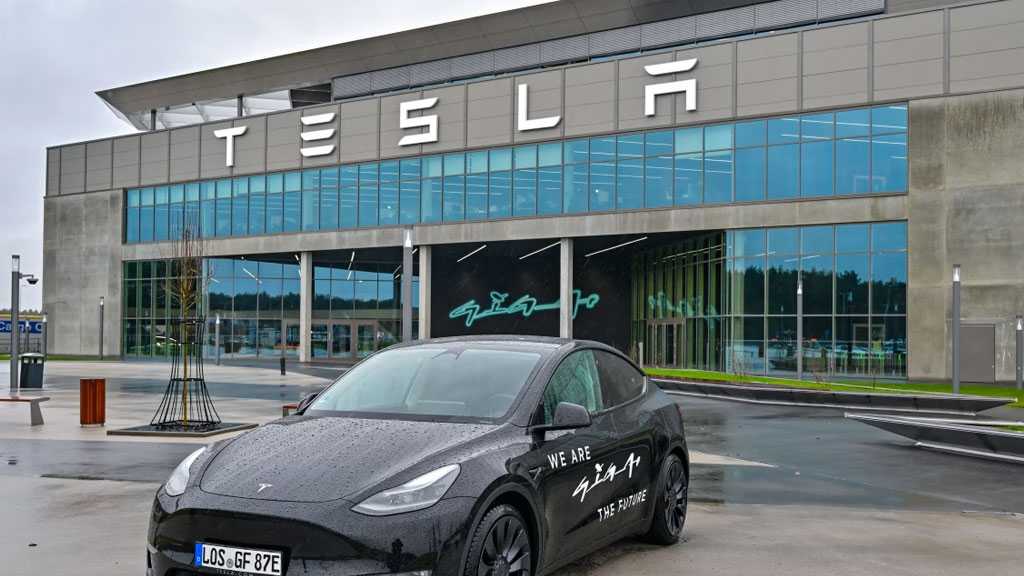
Tesla, led by Elon Musk, an ally of US President Donald Trump, operates a major manufacturing facility near Berlin, giving the American company a significant presence in Germany’s automotive industry.
According to Germany’s Federal Office for Information Security [BSI], most modern vehicles sold in the country possess the technical capability to collect and transmit substantial amounts of information, including location data, camera recordings and sensor readings, to manufacturers’ digital systems.
Although no specific evidence has emerged that such information has been used for espionage, Handelsblatt reported that the BSI has warned that many vehicle owners remain unaware of the extent of the data their cars collect and transmit.
Kramer cautioned that cameras and tracking systems installed in connected vehicles could capture sensitive information about military installations, operational procedures and personnel when cars are parked near military facilities.
He described restrictions on these vehicles around military sites as strongly advisable and proportionate to the potential security risks.
The intelligence chief also called for similar precautions around particularly sensitive government buildings, police stations, intelligence facilities and other security-related institutions.
Among the proposed measures are designated parking areas and restrictions on vehicle access to sensitive locations. Kramer additionally advised civil servants and public employees against discussing confidential matters inside internet-connected cars.
His concerns have received support from German lawmakers across the governing coalition.
Marc Henrichmann, a member of Chancellor Friedrich Merz’s conservative Christian Democratic Union [CDU], warned that modern espionage increasingly relies on technological systems rather than traditional intelligence agents.
Johannes Schaetzl, a digital policy spokesperson for the Social Democratic Party’s parliamentary group, also raised concerns about vehicles manufactured by Chinese automaker BYD, describing them as “black boxes” because of uncertainty surrounding the information they collect and who can access it.
The debate reflects growing concerns in Germany and other Western countries over the security implications of connected vehicles and the potential exposure of sensitive information through advanced automotive technologies.
The concerns also emerge amid increasing competition in the global automotive industry. Tesla recently reported delivering more vehicles worldwide than Mercedes-Benz’s passenger-car division during the third quarter of 2026, while German manufacturers continue to face pressure from US import tariffs and expanding Chinese competitors, including BYD and Xiaomi.